

- Broschiertes Buch
- Merkliste
- Auf die Merkliste
- Bewerten Bewerten
- Teilen
- Produkt teilen
- Produkterinnerung
- Produkterinnerung
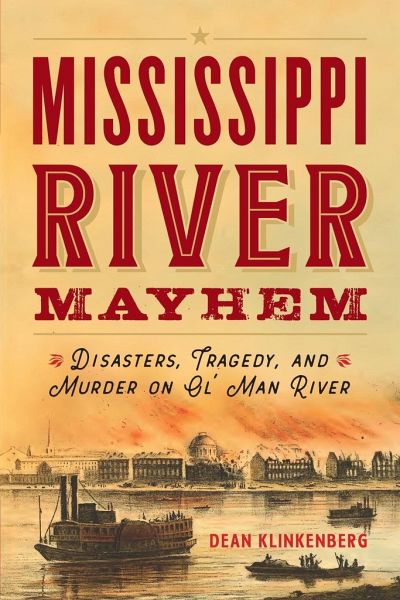
In his memoir, Life on the Mississippi, Mark Twain personified the river as "Sudden Death and General Desolation! Sired by a hurricane, dam’d by an earthquake, half-brother to the cholera, nearly related to the small-pox on the mother’s side! Look at me! I take nineteen alligators and a bar’l of whiskey for breakfast when I’m in robust health, and a bushel of rattlesnakes and a dead body when I’m ailing!" Twain’s time as a steamboat pilot showed him the true character of The Great River, with its unpredictable moods and hidden secrets. Still a vital route for U.S. shipping, the Mississippi…mehr
Andere Kunden interessierten sich auch für
 Leigh Jones HandalStoried & Scandalous Charleston17,99 €
 Nicolas de La SalleRelation Of The Discovery Of The Mississippi River19,99 €
 Van HawkinsSmoke Up the River17,99 €
 The Writing of Natural Disaster in Europe, 1500-182698,99 €
 The Writing of Natural Disaster in Europe, 1500-182698,99 €
") Charles L. SouvaySt. Louis Catholic Historical Review (1918)31,99 €
Charles L. SouvaySt. Louis Catholic Historical Review (1918)31,99 € Shelia WatsonCharleston Celebration17,99 €
-
-
-







In his memoir, Life on the Mississippi, Mark Twain personified the river as "Sudden Death and General Desolation! Sired by a hurricane, dam’d by an earthquake, half-brother to the cholera, nearly related to the small-pox on the mother’s side! Look at me! I take nineteen alligators and a bar’l of whiskey for breakfast when I’m in robust health, and a bushel of rattlesnakes and a dead body when I’m ailing!" Twain’s time as a steamboat pilot showed him the true character of The Great River, with its unpredictable moods and hidden secrets. Still a vital route for U.S. shipping, the Mississippi River has given life to riverside communities, manufacturing industries, fishing, tourism, and other livelihoods. But the Mighty Mississippi has also claimed countless lives as tribute to its muddy waters. Climate and environmental conditions made the Mississippi the perfect incubator for diseases like malaria. Natural disasters, like tornadoes, floods, and even an earthquake, have changed and reshaped the river’s banks over thousands of years. Shipwrecks and steamboat explosions were once common in the difficult-to-navigate waters. But when there was money to be made, there were some willing to risk it all—from the brave steamboat captains who went down with their ships, to the illegal moonshiners and pirates who pillaged the river’s bounty. In this book, author and Mississippi River historian Dean Klinkenberg explores the many disastrous events to have occurred on and along the river in the nineteenth and twentieth centuries—from steamboat explosions, to Yellow Fever epidemics, floods, and Prohibition piracy. Enjoy this journey into the darkest deeds of the Mississippi River.
Produktdetails
- Produktdetails
- Verlag: Globe Pequot
- Seitenzahl: 256
- Erscheinungstermin: 15. September 2022
- Englisch
- Abmessung: 229mm x 152mm x 15mm
- Gewicht: 421g
- ISBN-13: 9781493060726
- ISBN-10: 1493060724
- Artikelnr.: 60558915
- Herstellerkennzeichnung
- Libri GmbH
- Europaallee 1
- 36244 Bad Hersfeld
- gpsr@libri.de
- Verlag: Globe Pequot
- Seitenzahl: 256
- Erscheinungstermin: 15. September 2022
- Englisch
- Abmessung: 229mm x 152mm x 15mm
- Gewicht: 421g
- ISBN-13: 9781493060726
- ISBN-10: 1493060724
- Artikelnr.: 60558915
- Herstellerkennzeichnung
- Libri GmbH
- Europaallee 1
- 36244 Bad Hersfeld
- gpsr@libri.de
By Dean Klinkenberg
1. Introduction
For many of us, the Mississippi River conjures up images of Tom Sawyer
floating on a raft, beautiful sunsets, and barges full of corn. The
Mississippi has, after all, occupies a big space in our cultural
imaginations. The Mississippi has also, unfortunately, been the scene of
multiple disasters and tragedies, including some of the most tragic in
American history.
1. Floods and Natural Disasters
1. New Madrid Earthquake (Cities: New Madrid, St. Louis; States:
Missouri, Illinois)
The middle of North America shook violently for several months in 1811-1812
as the largest earthquakes in US history rolled across the heart of North
America, sending shockwaves as far away as New England. The quakes changed
the course of the Mississippi River, swallowed up islands, and nearly sank
the first steamboat on the Mississippi.
1. Tornadoes (Cities: Natchez, St. Cloud, Sauk Rapids, Camanche, Albany;
States: Mississippi, Minnesota, Iowa, Illinois)
Much of the Mississippi Valley is in the middle of tornado country. In May
1840, witnesses reported that a tornado followed a path directly over the
Mississippi for several miles before wreaking havoc on the city of Natchez,
Mississippi. Tornadoes also left a wake of carnage at St. Cloud and Sauk
Rapids, Minnesota in 1886 and at Camanche, Iowa and Albany, Illinois in
1860.
1. 1844 (Cities: St. Louis, East St. Louis, Kaskaskia; States: Missouri,
Illinois)
The first major flood along the Mississippi in the modern era devastated
communities around St. Louis. Steamboats floated over corn fields and
thousands of people needed rescue, including the Sisters of Charity who had
been trapped in their submerged convent in Kaskaskia, Illinois.
1. 1927 (Cities: multiple, but mainly Greenville, New Orleans, Cairo;
State: Tennessee, Mississippi, Arkansas, Louisiana, Illinois,
Missouri)
One of the worst natural disasters in American history, the flood of 1927
killed hundreds of people along the lower Mississippi River, washed away
farms, and reshaped our relationship with the federal government.
1. Armistice Day Blizzard (Cities: Wabasha, Winona, St. Paul, Alma;
States: Minnesota, Wisconsin)
November 11, 1940, started out unusually warm along the upper Mississippi,
which is one reason hunters and other river folks were caught unprepared
when a blizzard roared through later in the day. Dozens of people would
froze to death on islands and in remote areas along the river.
1. 1965 (Cities: multiple, but mostly Winona, La Crosse, Dubuque, St.
Paul; States: Minnesota, Wisconsin, Iowa)
Heavy snows and ice jams caused the biggest flood along the Upper
Mississippi, forcing volunteers to stack sandbags in freezing weather.
Nineteen people died in the flooding, and forty thousand people suffered
flood damage to their homes.
1. 1993 (Cities: multiple but mostly Hannibal, Quincy, St. Louis,
Valmeyer; States: Missouri, Illinois)
The Great Flood of 1993 smashed records not just for the height of the
river but also for the extraordinary amount of time that the river stayed
high—144 days at St. Louis. One hundred thousand people were displaced and
most of the levees breached along the middle portion of the Mississippi.
The flooding ultimately convinced an entire town to move to higher ground.
1. Steamboat Disasters
1. Steamboat Travel (Cities, primarily New Orleans, Memphis, St. Louis;
States: this chapter will probably touch on most of the Mississippi
River states but mostly on—Louisiana, Mississippi, Arkansas,
Tennessee, Missouri)
In the nineteenth century, a uniquely American form of river transportation
developed that revolutionized travel and knit together far-flung
communities. Romantic images of steamboat travel persist to this day (and
are even replicated by modern cruise companies), but steamboat travel for
most people, while a cheap way to get around, was grueling and often
dangerous. Steamboats faced many dangers as they traveled America’s rivers.
1. Snags (Cities: Baton Rouge, Natchez, St. Louis, Cairo; States:
Louisiana, Mississippi, Missouri, Illinois, primarily)
The Mississippi was full of debris—limbs and even entire trees—that posed a
deadly risk to steamboats. A wayward log—known as a snag—could quickly
puncture a hole in the hull of a steamboat and send it to the bottom of the
river. Snags accounted for the majority of steamboat accidents, including
the one that claimed the first steamboat on the Mississippi.
1. Fires (Cities: St. Louis, New Orleans; States: Missouri, Louisiana)
Steamboats were essentially tall wooden boxes powered by exceptionally hot
furnaces. It didn’t take much to spark a fire that could quickly burn a
boat to the water’s edge.
1. Primed to Blow (Cities: New Orleans, St. Francisville, Vicksburg,
Memphis; States: Ohio, Louisiana, Mississippi, Tennessee)
Steam-producing boilers made travel possible on the inland rivers, but they
also had an unfortunate tendency for catastrophic failure. During the
heyday of steamboat travel, thousands of people died gruesome deaths after
a boiler exploded.
1. The Sultana (Cities: Vicksburg; Memphis; States: Mississippi,
Tennessee, Arkansas)
The worst maritime disaster in American history occurred on the Mississippi
River. Sixteen hundred Union soldiers returning home after being released
from POW camps at Cahaba and Andersonville died when the boat they were on,
the Sultana, sank near Memphis, Tennessee.
1. The Monmouth (Cities: New Orleans; States: Louisiana)
In October 1837, seven hundred Creek Indians were crowded onto an old
steamboat, the Monmouth, as part of their forced relocation from Alabama to
Oklahoma. Not long after leaving New Orleans, the Monmouth collided with
another steamboat. In the ensuing chaos, three hundred of the Creek Indians
died.
1. The Sea Wing (Cities: Red Wing, Lake City; States: Minnesota,
Wisconsin)
On July 13, 1890, the Sea Wing transported 215 people on a day trip from
Red Wing to Lake City, Minnesota. Only half would make it home. On the
return trip, a storm blew in over Lake Pepin that overturned the boat,
killing ninety-eight people. Among those who died were the wife and
eight-year-old child of the captain.
1. Crimes and Criminals
1. Pirates (Cities: New Orleans, Shawneetown; States: Louisiana,
Mississippi, Illinois)
Sure, Jean Lafitte called New Orleans home (and helped American forces
defeat the British at the Battle of New Orleans), but the Mississippi River
isn’t generally famous for pirates. Still, there was a time in the
eighteenth and early nineteenth centuries when pirates posed a serious
threat to boat traffic, especially around Illinois’ Cave-in-Rock and the
island known as the Crow’s Nest.
1. Brothels (Cities: St. Louis, New Orleans, Winona; States: Missouri,
Louisiana, Minnesota)
In the nineteenth century, nearly every river town had a brothel or two.
One city, St. Louis, even experimented with outright legalization in the
nineteenth century. Most communities just looked the other way, which made
it easy for brothels to operate with little interference well into the
twentieth century.
1. Moonshiners (Cities: St. Cloud, Dubuque; States: Minnesota, Iowa)
The thickly forested islands and swamps of the Mississippi River made
perfect hiding places for stills and moonshiners. Rumors of river hideaways
for gangsters like Al Capone persist to this day. Many river towns lacked
the enthusiasm to enforce Prohibition, so speakeasies and homemade hooch
were abundant. One version of moonshine, a whiskey from St. Cloud known as
Minnesota 13, gained a nationwide fanbase.
1. Murder (Cities: Vicksburg; States: Mississippi)
On July 12, 1964, a fisherman found a partially decomposed body along the
Mississippi River south of Vicksburg, Mississippi. The next day, another
body was found five miles from the first one. The two African American men,
Charles Moore and Henry Dee, had been murdered nearby and their bodies
dumped into the Mississippi River. Even though authorities were relatively
sure they knew who the killers were, it would take a generation to hold
them accountable.
1. Accidents
1. St. Louis Fire of 1849 (Cities: St. Louis; States: Missouri)
On May 17, 1849, the White Cloud caught fire while docked at St. Louis.
Strong winds pushed the boat toward shore and spread the fire to adjacent
boats and into the city, eventually destroying twenty-three boats and four
hundred buildings.
1. Milford Mine Disaster (Cities: Crosby; States: Minnesota)
Mining in Minnesota’s Iron Ranges was always a dangerous occupation. In
1924, workers in the Cuyuna Iron Range got a grim reminder of that fact
when a wall collapsed in an underground mine, sending the contents of Foley
Lake flooding through adjacent tunnels. After the water had been drained
into the Mississippi River, rescue teams recovered the bodies of the
forty-one men who died in the disaster.
1. Rhythm Night Club Fire (Cities: Natchez; States: Mississippi)
The Rhythm Club was a popular joint to enjoy live music in Natchez,
Mississippi, attracting some of the best bands in the area. On the evening
of April 23, 1940, though, the club became infamous for the wrong reason
when a fire erupted on a busy night, killing 209 people.
1. I-90 Bridge collapse in Minneapolis (Cities: Minneapolis; States:
Minnesota)
The first bridge to span the Mississippi River was completed in 1855 in
Minneapolis, which is also the location for the most tragic Mississippi
River bridge collapse. On August 1, 2007, the Interstate 90 bridge over the
river collapsed during rush hour, killing thirteen people. Dozens of others
were saved, pulled from the wreckage by heroic first responders.
1. Deepwater Horizon Explosion (Cities: New Orleans; States: Louisiana,
Mississippi)
Eleven people died when the Deepwater Horizon off-shore drilling platform
exploded in 2010, but another part of the tragedy is the long-term impact
of the worst environmental disaster in US history. The Mississippi River
Delta and the people who rely on it for their livelihoods will be living
with the consequences for a generation or longer.
1. Tragedies
1. Malaria (States: Louisiana, Mississippi, Arkansas)
Europeans brought malaria to North America, a disease that found an
accommodating environment along the Mississippi River. Malaria threatened
the health of people living along the Mississippi well into the twentieth
century.
1. Louisiana Slave Rebellion (Cities: New Orleans; States: Louisiana)
In 1811, hundreds of enslaved Africans near New Orleans revolted. For two
days, they marched from the river parishes of the German Coast toward New
Orleans, burning down plantation houses along the way. White militias
eventually caught up to them, killing dozens immediately; dozens more were
summarily executed in subsequent days.
1. Yellow Fever (Cities: New Orleans, Memphis; States: Louisiana,
Tennessee)
Yellow fever wasn’t native to North America, either. It came with sailors
on ships from the Caribbean and found a hospitable home in big cities.
While the initial epidemics hit cities along the East Coast, yellow fever
would later exact its heaviest toll in Mississippi River communities,
devastating New Orleans in 1853 and Memphis in 1878.
1. Suicides/Bridge Jumpers (Cities: St. Paul, St. Louis, Memphis, New
Orleans; States: Minnesota, Missouri, Tennessee, Louisiana)
The Golden Gate Bridge may be infamous for its jumpers, but collectively,
the bridges over the Mississippi may be deadlier. Every year, dozens of
people end their lives by diving into the Mississippi, like acclaimed poet
John Berryman did in 1972.
1. Drownings (Cities: La Crosse; States: Wisconsin)
In La Crosse, Wisconsin, nine college-aged men drowned in the Mississippi
River between 1997 and 2010. Were those deaths the work of a serial killer
or just tragic accidents?
For many of us, the Mississippi River conjures up images of Tom Sawyer
floating on a raft, beautiful sunsets, and barges full of corn. The
Mississippi has, after all, occupies a big space in our cultural
imaginations. The Mississippi has also, unfortunately, been the scene of
multiple disasters and tragedies, including some of the most tragic in
American history.
1. Floods and Natural Disasters
1. New Madrid Earthquake (Cities: New Madrid, St. Louis; States:
Missouri, Illinois)
The middle of North America shook violently for several months in 1811-1812
as the largest earthquakes in US history rolled across the heart of North
America, sending shockwaves as far away as New England. The quakes changed
the course of the Mississippi River, swallowed up islands, and nearly sank
the first steamboat on the Mississippi.
1. Tornadoes (Cities: Natchez, St. Cloud, Sauk Rapids, Camanche, Albany;
States: Mississippi, Minnesota, Iowa, Illinois)
Much of the Mississippi Valley is in the middle of tornado country. In May
1840, witnesses reported that a tornado followed a path directly over the
Mississippi for several miles before wreaking havoc on the city of Natchez,
Mississippi. Tornadoes also left a wake of carnage at St. Cloud and Sauk
Rapids, Minnesota in 1886 and at Camanche, Iowa and Albany, Illinois in
1860.
1. 1844 (Cities: St. Louis, East St. Louis, Kaskaskia; States: Missouri,
Illinois)
The first major flood along the Mississippi in the modern era devastated
communities around St. Louis. Steamboats floated over corn fields and
thousands of people needed rescue, including the Sisters of Charity who had
been trapped in their submerged convent in Kaskaskia, Illinois.
1. 1927 (Cities: multiple, but mainly Greenville, New Orleans, Cairo;
State: Tennessee, Mississippi, Arkansas, Louisiana, Illinois,
Missouri)
One of the worst natural disasters in American history, the flood of 1927
killed hundreds of people along the lower Mississippi River, washed away
farms, and reshaped our relationship with the federal government.
1. Armistice Day Blizzard (Cities: Wabasha, Winona, St. Paul, Alma;
States: Minnesota, Wisconsin)
November 11, 1940, started out unusually warm along the upper Mississippi,
which is one reason hunters and other river folks were caught unprepared
when a blizzard roared through later in the day. Dozens of people would
froze to death on islands and in remote areas along the river.
1. 1965 (Cities: multiple, but mostly Winona, La Crosse, Dubuque, St.
Paul; States: Minnesota, Wisconsin, Iowa)
Heavy snows and ice jams caused the biggest flood along the Upper
Mississippi, forcing volunteers to stack sandbags in freezing weather.
Nineteen people died in the flooding, and forty thousand people suffered
flood damage to their homes.
1. 1993 (Cities: multiple but mostly Hannibal, Quincy, St. Louis,
Valmeyer; States: Missouri, Illinois)
The Great Flood of 1993 smashed records not just for the height of the
river but also for the extraordinary amount of time that the river stayed
high—144 days at St. Louis. One hundred thousand people were displaced and
most of the levees breached along the middle portion of the Mississippi.
The flooding ultimately convinced an entire town to move to higher ground.
1. Steamboat Disasters
1. Steamboat Travel (Cities, primarily New Orleans, Memphis, St. Louis;
States: this chapter will probably touch on most of the Mississippi
River states but mostly on—Louisiana, Mississippi, Arkansas,
Tennessee, Missouri)
In the nineteenth century, a uniquely American form of river transportation
developed that revolutionized travel and knit together far-flung
communities. Romantic images of steamboat travel persist to this day (and
are even replicated by modern cruise companies), but steamboat travel for
most people, while a cheap way to get around, was grueling and often
dangerous. Steamboats faced many dangers as they traveled America’s rivers.
1. Snags (Cities: Baton Rouge, Natchez, St. Louis, Cairo; States:
Louisiana, Mississippi, Missouri, Illinois, primarily)
The Mississippi was full of debris—limbs and even entire trees—that posed a
deadly risk to steamboats. A wayward log—known as a snag—could quickly
puncture a hole in the hull of a steamboat and send it to the bottom of the
river. Snags accounted for the majority of steamboat accidents, including
the one that claimed the first steamboat on the Mississippi.
1. Fires (Cities: St. Louis, New Orleans; States: Missouri, Louisiana)
Steamboats were essentially tall wooden boxes powered by exceptionally hot
furnaces. It didn’t take much to spark a fire that could quickly burn a
boat to the water’s edge.
1. Primed to Blow (Cities: New Orleans, St. Francisville, Vicksburg,
Memphis; States: Ohio, Louisiana, Mississippi, Tennessee)
Steam-producing boilers made travel possible on the inland rivers, but they
also had an unfortunate tendency for catastrophic failure. During the
heyday of steamboat travel, thousands of people died gruesome deaths after
a boiler exploded.
1. The Sultana (Cities: Vicksburg; Memphis; States: Mississippi,
Tennessee, Arkansas)
The worst maritime disaster in American history occurred on the Mississippi
River. Sixteen hundred Union soldiers returning home after being released
from POW camps at Cahaba and Andersonville died when the boat they were on,
the Sultana, sank near Memphis, Tennessee.
1. The Monmouth (Cities: New Orleans; States: Louisiana)
In October 1837, seven hundred Creek Indians were crowded onto an old
steamboat, the Monmouth, as part of their forced relocation from Alabama to
Oklahoma. Not long after leaving New Orleans, the Monmouth collided with
another steamboat. In the ensuing chaos, three hundred of the Creek Indians
died.
1. The Sea Wing (Cities: Red Wing, Lake City; States: Minnesota,
Wisconsin)
On July 13, 1890, the Sea Wing transported 215 people on a day trip from
Red Wing to Lake City, Minnesota. Only half would make it home. On the
return trip, a storm blew in over Lake Pepin that overturned the boat,
killing ninety-eight people. Among those who died were the wife and
eight-year-old child of the captain.
1. Crimes and Criminals
1. Pirates (Cities: New Orleans, Shawneetown; States: Louisiana,
Mississippi, Illinois)
Sure, Jean Lafitte called New Orleans home (and helped American forces
defeat the British at the Battle of New Orleans), but the Mississippi River
isn’t generally famous for pirates. Still, there was a time in the
eighteenth and early nineteenth centuries when pirates posed a serious
threat to boat traffic, especially around Illinois’ Cave-in-Rock and the
island known as the Crow’s Nest.
1. Brothels (Cities: St. Louis, New Orleans, Winona; States: Missouri,
Louisiana, Minnesota)
In the nineteenth century, nearly every river town had a brothel or two.
One city, St. Louis, even experimented with outright legalization in the
nineteenth century. Most communities just looked the other way, which made
it easy for brothels to operate with little interference well into the
twentieth century.
1. Moonshiners (Cities: St. Cloud, Dubuque; States: Minnesota, Iowa)
The thickly forested islands and swamps of the Mississippi River made
perfect hiding places for stills and moonshiners. Rumors of river hideaways
for gangsters like Al Capone persist to this day. Many river towns lacked
the enthusiasm to enforce Prohibition, so speakeasies and homemade hooch
were abundant. One version of moonshine, a whiskey from St. Cloud known as
Minnesota 13, gained a nationwide fanbase.
1. Murder (Cities: Vicksburg; States: Mississippi)
On July 12, 1964, a fisherman found a partially decomposed body along the
Mississippi River south of Vicksburg, Mississippi. The next day, another
body was found five miles from the first one. The two African American men,
Charles Moore and Henry Dee, had been murdered nearby and their bodies
dumped into the Mississippi River. Even though authorities were relatively
sure they knew who the killers were, it would take a generation to hold
them accountable.
1. Accidents
1. St. Louis Fire of 1849 (Cities: St. Louis; States: Missouri)
On May 17, 1849, the White Cloud caught fire while docked at St. Louis.
Strong winds pushed the boat toward shore and spread the fire to adjacent
boats and into the city, eventually destroying twenty-three boats and four
hundred buildings.
1. Milford Mine Disaster (Cities: Crosby; States: Minnesota)
Mining in Minnesota’s Iron Ranges was always a dangerous occupation. In
1924, workers in the Cuyuna Iron Range got a grim reminder of that fact
when a wall collapsed in an underground mine, sending the contents of Foley
Lake flooding through adjacent tunnels. After the water had been drained
into the Mississippi River, rescue teams recovered the bodies of the
forty-one men who died in the disaster.
1. Rhythm Night Club Fire (Cities: Natchez; States: Mississippi)
The Rhythm Club was a popular joint to enjoy live music in Natchez,
Mississippi, attracting some of the best bands in the area. On the evening
of April 23, 1940, though, the club became infamous for the wrong reason
when a fire erupted on a busy night, killing 209 people.
1. I-90 Bridge collapse in Minneapolis (Cities: Minneapolis; States:
Minnesota)
The first bridge to span the Mississippi River was completed in 1855 in
Minneapolis, which is also the location for the most tragic Mississippi
River bridge collapse. On August 1, 2007, the Interstate 90 bridge over the
river collapsed during rush hour, killing thirteen people. Dozens of others
were saved, pulled from the wreckage by heroic first responders.
1. Deepwater Horizon Explosion (Cities: New Orleans; States: Louisiana,
Mississippi)
Eleven people died when the Deepwater Horizon off-shore drilling platform
exploded in 2010, but another part of the tragedy is the long-term impact
of the worst environmental disaster in US history. The Mississippi River
Delta and the people who rely on it for their livelihoods will be living
with the consequences for a generation or longer.
1. Tragedies
1. Malaria (States: Louisiana, Mississippi, Arkansas)
Europeans brought malaria to North America, a disease that found an
accommodating environment along the Mississippi River. Malaria threatened
the health of people living along the Mississippi well into the twentieth
century.
1. Louisiana Slave Rebellion (Cities: New Orleans; States: Louisiana)
In 1811, hundreds of enslaved Africans near New Orleans revolted. For two
days, they marched from the river parishes of the German Coast toward New
Orleans, burning down plantation houses along the way. White militias
eventually caught up to them, killing dozens immediately; dozens more were
summarily executed in subsequent days.
1. Yellow Fever (Cities: New Orleans, Memphis; States: Louisiana,
Tennessee)
Yellow fever wasn’t native to North America, either. It came with sailors
on ships from the Caribbean and found a hospitable home in big cities.
While the initial epidemics hit cities along the East Coast, yellow fever
would later exact its heaviest toll in Mississippi River communities,
devastating New Orleans in 1853 and Memphis in 1878.
1. Suicides/Bridge Jumpers (Cities: St. Paul, St. Louis, Memphis, New
Orleans; States: Minnesota, Missouri, Tennessee, Louisiana)
The Golden Gate Bridge may be infamous for its jumpers, but collectively,
the bridges over the Mississippi may be deadlier. Every year, dozens of
people end their lives by diving into the Mississippi, like acclaimed poet
John Berryman did in 1972.
1. Drownings (Cities: La Crosse; States: Wisconsin)
In La Crosse, Wisconsin, nine college-aged men drowned in the Mississippi
River between 1997 and 2010. Were those deaths the work of a serial killer
or just tragic accidents?
1. Introduction
For many of us, the Mississippi River conjures up images of Tom Sawyer
floating on a raft, beautiful sunsets, and barges full of corn. The
Mississippi has, after all, occupies a big space in our cultural
imaginations. The Mississippi has also, unfortunately, been the scene of
multiple disasters and tragedies, including some of the most tragic in
American history.
1. Floods and Natural Disasters
1. New Madrid Earthquake (Cities: New Madrid, St. Louis; States:
Missouri, Illinois)
The middle of North America shook violently for several months in 1811-1812
as the largest earthquakes in US history rolled across the heart of North
America, sending shockwaves as far away as New England. The quakes changed
the course of the Mississippi River, swallowed up islands, and nearly sank
the first steamboat on the Mississippi.
1. Tornadoes (Cities: Natchez, St. Cloud, Sauk Rapids, Camanche, Albany;
States: Mississippi, Minnesota, Iowa, Illinois)
Much of the Mississippi Valley is in the middle of tornado country. In May
1840, witnesses reported that a tornado followed a path directly over the
Mississippi for several miles before wreaking havoc on the city of Natchez,
Mississippi. Tornadoes also left a wake of carnage at St. Cloud and Sauk
Rapids, Minnesota in 1886 and at Camanche, Iowa and Albany, Illinois in
1860.
1. 1844 (Cities: St. Louis, East St. Louis, Kaskaskia; States: Missouri,
Illinois)
The first major flood along the Mississippi in the modern era devastated
communities around St. Louis. Steamboats floated over corn fields and
thousands of people needed rescue, including the Sisters of Charity who had
been trapped in their submerged convent in Kaskaskia, Illinois.
1. 1927 (Cities: multiple, but mainly Greenville, New Orleans, Cairo;
State: Tennessee, Mississippi, Arkansas, Louisiana, Illinois,
Missouri)
One of the worst natural disasters in American history, the flood of 1927
killed hundreds of people along the lower Mississippi River, washed away
farms, and reshaped our relationship with the federal government.
1. Armistice Day Blizzard (Cities: Wabasha, Winona, St. Paul, Alma;
States: Minnesota, Wisconsin)
November 11, 1940, started out unusually warm along the upper Mississippi,
which is one reason hunters and other river folks were caught unprepared
when a blizzard roared through later in the day. Dozens of people would
froze to death on islands and in remote areas along the river.
1. 1965 (Cities: multiple, but mostly Winona, La Crosse, Dubuque, St.
Paul; States: Minnesota, Wisconsin, Iowa)
Heavy snows and ice jams caused the biggest flood along the Upper
Mississippi, forcing volunteers to stack sandbags in freezing weather.
Nineteen people died in the flooding, and forty thousand people suffered
flood damage to their homes.
1. 1993 (Cities: multiple but mostly Hannibal, Quincy, St. Louis,
Valmeyer; States: Missouri, Illinois)
The Great Flood of 1993 smashed records not just for the height of the
river but also for the extraordinary amount of time that the river stayed
high—144 days at St. Louis. One hundred thousand people were displaced and
most of the levees breached along the middle portion of the Mississippi.
The flooding ultimately convinced an entire town to move to higher ground.
1. Steamboat Disasters
1. Steamboat Travel (Cities, primarily New Orleans, Memphis, St. Louis;
States: this chapter will probably touch on most of the Mississippi
River states but mostly on—Louisiana, Mississippi, Arkansas,
Tennessee, Missouri)
In the nineteenth century, a uniquely American form of river transportation
developed that revolutionized travel and knit together far-flung
communities. Romantic images of steamboat travel persist to this day (and
are even replicated by modern cruise companies), but steamboat travel for
most people, while a cheap way to get around, was grueling and often
dangerous. Steamboats faced many dangers as they traveled America’s rivers.
1. Snags (Cities: Baton Rouge, Natchez, St. Louis, Cairo; States:
Louisiana, Mississippi, Missouri, Illinois, primarily)
The Mississippi was full of debris—limbs and even entire trees—that posed a
deadly risk to steamboats. A wayward log—known as a snag—could quickly
puncture a hole in the hull of a steamboat and send it to the bottom of the
river. Snags accounted for the majority of steamboat accidents, including
the one that claimed the first steamboat on the Mississippi.
1. Fires (Cities: St. Louis, New Orleans; States: Missouri, Louisiana)
Steamboats were essentially tall wooden boxes powered by exceptionally hot
furnaces. It didn’t take much to spark a fire that could quickly burn a
boat to the water’s edge.
1. Primed to Blow (Cities: New Orleans, St. Francisville, Vicksburg,
Memphis; States: Ohio, Louisiana, Mississippi, Tennessee)
Steam-producing boilers made travel possible on the inland rivers, but they
also had an unfortunate tendency for catastrophic failure. During the
heyday of steamboat travel, thousands of people died gruesome deaths after
a boiler exploded.
1. The Sultana (Cities: Vicksburg; Memphis; States: Mississippi,
Tennessee, Arkansas)
The worst maritime disaster in American history occurred on the Mississippi
River. Sixteen hundred Union soldiers returning home after being released
from POW camps at Cahaba and Andersonville died when the boat they were on,
the Sultana, sank near Memphis, Tennessee.
1. The Monmouth (Cities: New Orleans; States: Louisiana)
In October 1837, seven hundred Creek Indians were crowded onto an old
steamboat, the Monmouth, as part of their forced relocation from Alabama to
Oklahoma. Not long after leaving New Orleans, the Monmouth collided with
another steamboat. In the ensuing chaos, three hundred of the Creek Indians
died.
1. The Sea Wing (Cities: Red Wing, Lake City; States: Minnesota,
Wisconsin)
On July 13, 1890, the Sea Wing transported 215 people on a day trip from
Red Wing to Lake City, Minnesota. Only half would make it home. On the
return trip, a storm blew in over Lake Pepin that overturned the boat,
killing ninety-eight people. Among those who died were the wife and
eight-year-old child of the captain.
1. Crimes and Criminals
1. Pirates (Cities: New Orleans, Shawneetown; States: Louisiana,
Mississippi, Illinois)
Sure, Jean Lafitte called New Orleans home (and helped American forces
defeat the British at the Battle of New Orleans), but the Mississippi River
isn’t generally famous for pirates. Still, there was a time in the
eighteenth and early nineteenth centuries when pirates posed a serious
threat to boat traffic, especially around Illinois’ Cave-in-Rock and the
island known as the Crow’s Nest.
1. Brothels (Cities: St. Louis, New Orleans, Winona; States: Missouri,
Louisiana, Minnesota)
In the nineteenth century, nearly every river town had a brothel or two.
One city, St. Louis, even experimented with outright legalization in the
nineteenth century. Most communities just looked the other way, which made
it easy for brothels to operate with little interference well into the
twentieth century.
1. Moonshiners (Cities: St. Cloud, Dubuque; States: Minnesota, Iowa)
The thickly forested islands and swamps of the Mississippi River made
perfect hiding places for stills and moonshiners. Rumors of river hideaways
for gangsters like Al Capone persist to this day. Many river towns lacked
the enthusiasm to enforce Prohibition, so speakeasies and homemade hooch
were abundant. One version of moonshine, a whiskey from St. Cloud known as
Minnesota 13, gained a nationwide fanbase.
1. Murder (Cities: Vicksburg; States: Mississippi)
On July 12, 1964, a fisherman found a partially decomposed body along the
Mississippi River south of Vicksburg, Mississippi. The next day, another
body was found five miles from the first one. The two African American men,
Charles Moore and Henry Dee, had been murdered nearby and their bodies
dumped into the Mississippi River. Even though authorities were relatively
sure they knew who the killers were, it would take a generation to hold
them accountable.
1. Accidents
1. St. Louis Fire of 1849 (Cities: St. Louis; States: Missouri)
On May 17, 1849, the White Cloud caught fire while docked at St. Louis.
Strong winds pushed the boat toward shore and spread the fire to adjacent
boats and into the city, eventually destroying twenty-three boats and four
hundred buildings.
1. Milford Mine Disaster (Cities: Crosby; States: Minnesota)
Mining in Minnesota’s Iron Ranges was always a dangerous occupation. In
1924, workers in the Cuyuna Iron Range got a grim reminder of that fact
when a wall collapsed in an underground mine, sending the contents of Foley
Lake flooding through adjacent tunnels. After the water had been drained
into the Mississippi River, rescue teams recovered the bodies of the
forty-one men who died in the disaster.
1. Rhythm Night Club Fire (Cities: Natchez; States: Mississippi)
The Rhythm Club was a popular joint to enjoy live music in Natchez,
Mississippi, attracting some of the best bands in the area. On the evening
of April 23, 1940, though, the club became infamous for the wrong reason
when a fire erupted on a busy night, killing 209 people.
1. I-90 Bridge collapse in Minneapolis (Cities: Minneapolis; States:
Minnesota)
The first bridge to span the Mississippi River was completed in 1855 in
Minneapolis, which is also the location for the most tragic Mississippi
River bridge collapse. On August 1, 2007, the Interstate 90 bridge over the
river collapsed during rush hour, killing thirteen people. Dozens of others
were saved, pulled from the wreckage by heroic first responders.
1. Deepwater Horizon Explosion (Cities: New Orleans; States: Louisiana,
Mississippi)
Eleven people died when the Deepwater Horizon off-shore drilling platform
exploded in 2010, but another part of the tragedy is the long-term impact
of the worst environmental disaster in US history. The Mississippi River
Delta and the people who rely on it for their livelihoods will be living
with the consequences for a generation or longer.
1. Tragedies
1. Malaria (States: Louisiana, Mississippi, Arkansas)
Europeans brought malaria to North America, a disease that found an
accommodating environment along the Mississippi River. Malaria threatened
the health of people living along the Mississippi well into the twentieth
century.
1. Louisiana Slave Rebellion (Cities: New Orleans; States: Louisiana)
In 1811, hundreds of enslaved Africans near New Orleans revolted. For two
days, they marched from the river parishes of the German Coast toward New
Orleans, burning down plantation houses along the way. White militias
eventually caught up to them, killing dozens immediately; dozens more were
summarily executed in subsequent days.
1. Yellow Fever (Cities: New Orleans, Memphis; States: Louisiana,
Tennessee)
Yellow fever wasn’t native to North America, either. It came with sailors
on ships from the Caribbean and found a hospitable home in big cities.
While the initial epidemics hit cities along the East Coast, yellow fever
would later exact its heaviest toll in Mississippi River communities,
devastating New Orleans in 1853 and Memphis in 1878.
1. Suicides/Bridge Jumpers (Cities: St. Paul, St. Louis, Memphis, New
Orleans; States: Minnesota, Missouri, Tennessee, Louisiana)
The Golden Gate Bridge may be infamous for its jumpers, but collectively,
the bridges over the Mississippi may be deadlier. Every year, dozens of
people end their lives by diving into the Mississippi, like acclaimed poet
John Berryman did in 1972.
1. Drownings (Cities: La Crosse; States: Wisconsin)
In La Crosse, Wisconsin, nine college-aged men drowned in the Mississippi
River between 1997 and 2010. Were those deaths the work of a serial killer
or just tragic accidents?
For many of us, the Mississippi River conjures up images of Tom Sawyer
floating on a raft, beautiful sunsets, and barges full of corn. The
Mississippi has, after all, occupies a big space in our cultural
imaginations. The Mississippi has also, unfortunately, been the scene of
multiple disasters and tragedies, including some of the most tragic in
American history.
1. Floods and Natural Disasters
1. New Madrid Earthquake (Cities: New Madrid, St. Louis; States:
Missouri, Illinois)
The middle of North America shook violently for several months in 1811-1812
as the largest earthquakes in US history rolled across the heart of North
America, sending shockwaves as far away as New England. The quakes changed
the course of the Mississippi River, swallowed up islands, and nearly sank
the first steamboat on the Mississippi.
1. Tornadoes (Cities: Natchez, St. Cloud, Sauk Rapids, Camanche, Albany;
States: Mississippi, Minnesota, Iowa, Illinois)
Much of the Mississippi Valley is in the middle of tornado country. In May
1840, witnesses reported that a tornado followed a path directly over the
Mississippi for several miles before wreaking havoc on the city of Natchez,
Mississippi. Tornadoes also left a wake of carnage at St. Cloud and Sauk
Rapids, Minnesota in 1886 and at Camanche, Iowa and Albany, Illinois in
1860.
1. 1844 (Cities: St. Louis, East St. Louis, Kaskaskia; States: Missouri,
Illinois)
The first major flood along the Mississippi in the modern era devastated
communities around St. Louis. Steamboats floated over corn fields and
thousands of people needed rescue, including the Sisters of Charity who had
been trapped in their submerged convent in Kaskaskia, Illinois.
1. 1927 (Cities: multiple, but mainly Greenville, New Orleans, Cairo;
State: Tennessee, Mississippi, Arkansas, Louisiana, Illinois,
Missouri)
One of the worst natural disasters in American history, the flood of 1927
killed hundreds of people along the lower Mississippi River, washed away
farms, and reshaped our relationship with the federal government.
1. Armistice Day Blizzard (Cities: Wabasha, Winona, St. Paul, Alma;
States: Minnesota, Wisconsin)
November 11, 1940, started out unusually warm along the upper Mississippi,
which is one reason hunters and other river folks were caught unprepared
when a blizzard roared through later in the day. Dozens of people would
froze to death on islands and in remote areas along the river.
1. 1965 (Cities: multiple, but mostly Winona, La Crosse, Dubuque, St.
Paul; States: Minnesota, Wisconsin, Iowa)
Heavy snows and ice jams caused the biggest flood along the Upper
Mississippi, forcing volunteers to stack sandbags in freezing weather.
Nineteen people died in the flooding, and forty thousand people suffered
flood damage to their homes.
1. 1993 (Cities: multiple but mostly Hannibal, Quincy, St. Louis,
Valmeyer; States: Missouri, Illinois)
The Great Flood of 1993 smashed records not just for the height of the
river but also for the extraordinary amount of time that the river stayed
high—144 days at St. Louis. One hundred thousand people were displaced and
most of the levees breached along the middle portion of the Mississippi.
The flooding ultimately convinced an entire town to move to higher ground.
1. Steamboat Disasters
1. Steamboat Travel (Cities, primarily New Orleans, Memphis, St. Louis;
States: this chapter will probably touch on most of the Mississippi
River states but mostly on—Louisiana, Mississippi, Arkansas,
Tennessee, Missouri)
In the nineteenth century, a uniquely American form of river transportation
developed that revolutionized travel and knit together far-flung
communities. Romantic images of steamboat travel persist to this day (and
are even replicated by modern cruise companies), but steamboat travel for
most people, while a cheap way to get around, was grueling and often
dangerous. Steamboats faced many dangers as they traveled America’s rivers.
1. Snags (Cities: Baton Rouge, Natchez, St. Louis, Cairo; States:
Louisiana, Mississippi, Missouri, Illinois, primarily)
The Mississippi was full of debris—limbs and even entire trees—that posed a
deadly risk to steamboats. A wayward log—known as a snag—could quickly
puncture a hole in the hull of a steamboat and send it to the bottom of the
river. Snags accounted for the majority of steamboat accidents, including
the one that claimed the first steamboat on the Mississippi.
1. Fires (Cities: St. Louis, New Orleans; States: Missouri, Louisiana)
Steamboats were essentially tall wooden boxes powered by exceptionally hot
furnaces. It didn’t take much to spark a fire that could quickly burn a
boat to the water’s edge.
1. Primed to Blow (Cities: New Orleans, St. Francisville, Vicksburg,
Memphis; States: Ohio, Louisiana, Mississippi, Tennessee)
Steam-producing boilers made travel possible on the inland rivers, but they
also had an unfortunate tendency for catastrophic failure. During the
heyday of steamboat travel, thousands of people died gruesome deaths after
a boiler exploded.
1. The Sultana (Cities: Vicksburg; Memphis; States: Mississippi,
Tennessee, Arkansas)
The worst maritime disaster in American history occurred on the Mississippi
River. Sixteen hundred Union soldiers returning home after being released
from POW camps at Cahaba and Andersonville died when the boat they were on,
the Sultana, sank near Memphis, Tennessee.
1. The Monmouth (Cities: New Orleans; States: Louisiana)
In October 1837, seven hundred Creek Indians were crowded onto an old
steamboat, the Monmouth, as part of their forced relocation from Alabama to
Oklahoma. Not long after leaving New Orleans, the Monmouth collided with
another steamboat. In the ensuing chaos, three hundred of the Creek Indians
died.
1. The Sea Wing (Cities: Red Wing, Lake City; States: Minnesota,
Wisconsin)
On July 13, 1890, the Sea Wing transported 215 people on a day trip from
Red Wing to Lake City, Minnesota. Only half would make it home. On the
return trip, a storm blew in over Lake Pepin that overturned the boat,
killing ninety-eight people. Among those who died were the wife and
eight-year-old child of the captain.
1. Crimes and Criminals
1. Pirates (Cities: New Orleans, Shawneetown; States: Louisiana,
Mississippi, Illinois)
Sure, Jean Lafitte called New Orleans home (and helped American forces
defeat the British at the Battle of New Orleans), but the Mississippi River
isn’t generally famous for pirates. Still, there was a time in the
eighteenth and early nineteenth centuries when pirates posed a serious
threat to boat traffic, especially around Illinois’ Cave-in-Rock and the
island known as the Crow’s Nest.
1. Brothels (Cities: St. Louis, New Orleans, Winona; States: Missouri,
Louisiana, Minnesota)
In the nineteenth century, nearly every river town had a brothel or two.
One city, St. Louis, even experimented with outright legalization in the
nineteenth century. Most communities just looked the other way, which made
it easy for brothels to operate with little interference well into the
twentieth century.
1. Moonshiners (Cities: St. Cloud, Dubuque; States: Minnesota, Iowa)
The thickly forested islands and swamps of the Mississippi River made
perfect hiding places for stills and moonshiners. Rumors of river hideaways
for gangsters like Al Capone persist to this day. Many river towns lacked
the enthusiasm to enforce Prohibition, so speakeasies and homemade hooch
were abundant. One version of moonshine, a whiskey from St. Cloud known as
Minnesota 13, gained a nationwide fanbase.
1. Murder (Cities: Vicksburg; States: Mississippi)
On July 12, 1964, a fisherman found a partially decomposed body along the
Mississippi River south of Vicksburg, Mississippi. The next day, another
body was found five miles from the first one. The two African American men,
Charles Moore and Henry Dee, had been murdered nearby and their bodies
dumped into the Mississippi River. Even though authorities were relatively
sure they knew who the killers were, it would take a generation to hold
them accountable.
1. Accidents
1. St. Louis Fire of 1849 (Cities: St. Louis; States: Missouri)
On May 17, 1849, the White Cloud caught fire while docked at St. Louis.
Strong winds pushed the boat toward shore and spread the fire to adjacent
boats and into the city, eventually destroying twenty-three boats and four
hundred buildings.
1. Milford Mine Disaster (Cities: Crosby; States: Minnesota)
Mining in Minnesota’s Iron Ranges was always a dangerous occupation. In
1924, workers in the Cuyuna Iron Range got a grim reminder of that fact
when a wall collapsed in an underground mine, sending the contents of Foley
Lake flooding through adjacent tunnels. After the water had been drained
into the Mississippi River, rescue teams recovered the bodies of the
forty-one men who died in the disaster.
1. Rhythm Night Club Fire (Cities: Natchez; States: Mississippi)
The Rhythm Club was a popular joint to enjoy live music in Natchez,
Mississippi, attracting some of the best bands in the area. On the evening
of April 23, 1940, though, the club became infamous for the wrong reason
when a fire erupted on a busy night, killing 209 people.
1. I-90 Bridge collapse in Minneapolis (Cities: Minneapolis; States:
Minnesota)
The first bridge to span the Mississippi River was completed in 1855 in
Minneapolis, which is also the location for the most tragic Mississippi
River bridge collapse. On August 1, 2007, the Interstate 90 bridge over the
river collapsed during rush hour, killing thirteen people. Dozens of others
were saved, pulled from the wreckage by heroic first responders.
1. Deepwater Horizon Explosion (Cities: New Orleans; States: Louisiana,
Mississippi)
Eleven people died when the Deepwater Horizon off-shore drilling platform
exploded in 2010, but another part of the tragedy is the long-term impact
of the worst environmental disaster in US history. The Mississippi River
Delta and the people who rely on it for their livelihoods will be living
with the consequences for a generation or longer.
1. Tragedies
1. Malaria (States: Louisiana, Mississippi, Arkansas)
Europeans brought malaria to North America, a disease that found an
accommodating environment along the Mississippi River. Malaria threatened
the health of people living along the Mississippi well into the twentieth
century.
1. Louisiana Slave Rebellion (Cities: New Orleans; States: Louisiana)
In 1811, hundreds of enslaved Africans near New Orleans revolted. For two
days, they marched from the river parishes of the German Coast toward New
Orleans, burning down plantation houses along the way. White militias
eventually caught up to them, killing dozens immediately; dozens more were
summarily executed in subsequent days.
1. Yellow Fever (Cities: New Orleans, Memphis; States: Louisiana,
Tennessee)
Yellow fever wasn’t native to North America, either. It came with sailors
on ships from the Caribbean and found a hospitable home in big cities.
While the initial epidemics hit cities along the East Coast, yellow fever
would later exact its heaviest toll in Mississippi River communities,
devastating New Orleans in 1853 and Memphis in 1878.
1. Suicides/Bridge Jumpers (Cities: St. Paul, St. Louis, Memphis, New
Orleans; States: Minnesota, Missouri, Tennessee, Louisiana)
The Golden Gate Bridge may be infamous for its jumpers, but collectively,
the bridges over the Mississippi may be deadlier. Every year, dozens of
people end their lives by diving into the Mississippi, like acclaimed poet
John Berryman did in 1972.
1. Drownings (Cities: La Crosse; States: Wisconsin)
In La Crosse, Wisconsin, nine college-aged men drowned in the Mississippi
River between 1997 and 2010. Were those deaths the work of a serial killer
or just tragic accidents?