
Andere Kunden interessierten sich auch für
 Las guerras del mundo moderno : del fin de la II Guerra Mundial a los conflictos actuales14,99 €
 Los mitos del franquismo14,99 €
") Del Moderno Teatro Comico Italiano, E Del Suo Restauratore Carlo Goldoni (1794)15,99 €
Del Moderno Teatro Comico Italiano, E Del Suo Restauratore Carlo Goldoni (1794)15,99 €") La Ragione Naturale Ed Il Moderno Filosofismo (1888)18,99 €
La Ragione Naturale Ed Il Moderno Filosofismo (1888)18,99 € El hombre, su isla y la fábula17,99 €
 Mitos de Cthulhu de Lovecraft, Los28,99 €
 Frankenstein O El Moderno Prometeo11,99 €




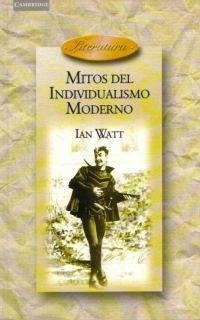
In their original versions, the ultimate fates of Faust, Don Quixote, and Don Juan reflect the anti-individuals of their time: Faust and Don Juan are punished in hellfire, and Don Quixote is mocked. A century later, Defoe’s Robinson Crusoe embodies a more favourable consideration of the individual. Ian Watt examines these four myths of the modern world, all created in the sixteenth to eighteenth centuries, as distinctive products of a historically new society.