- Gebundenes Buch
- Merkliste
- Auf die Merkliste
- Bewerten Bewerten
- Teilen
- Produkt teilen
- Produkterinnerung
- Produkterinnerung
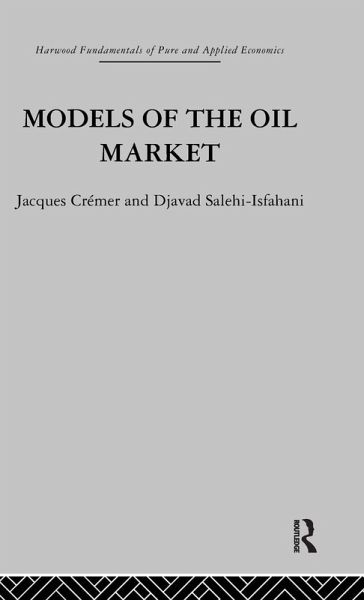
Economists have proposed a large variety of models of the oil market and this survey integrates them in a coherent framework.
Andere Kunden interessierten sich auch für
E. JamesThe Non-profit Enterprise in Market Economics248,99 €
E. GrinolsUncertainty and the Theory of International Trade211,99 €
James J. F. ForestOil and Terrorism in the New Gulf125,99 €
Oil Lands in Indian Territory and Territory of Oklahoma: Hearings Before the Secretary of the Interior On Leasinng of Oil Lands and Natural-Gas Wells.28,99 €
Pure Oil Trust Vs. Standard Oil Company: Being The Report Of An Investigation By The United States Industrial Commission40,99 €
Soala AriweriokumaThe Political Economy of Oil and Gas in Africa187,99 €
Owain JohnsonThe Price Reporters169,99 €-
-
-
Economists have proposed a large variety of models of the oil market and this survey integrates them in a coherent framework.
Produktdetails
- Produktdetails
- Verlag: Taylor & Francis
- Seitenzahl: 120
- Erscheinungstermin: 6. Dezember 2001
- Englisch
- Abmessung: 222mm x 145mm x 10mm
- Gewicht: 292g
- ISBN-13: 9780415274616
- ISBN-10: 0415274613
- Artikelnr.: 21523234
- Herstellerkennzeichnung
- Libri GmbH
- Europaallee 1
- 36244 Bad Hersfeld
- gpsr@libri.de
- Verlag: Taylor & Francis
- Seitenzahl: 120
- Erscheinungstermin: 6. Dezember 2001
- Englisch
- Abmessung: 222mm x 145mm x 10mm
- Gewicht: 292g
- ISBN-13: 9780415274616
- ISBN-10: 0415274613
- Artikelnr.: 21523234
- Herstellerkennzeichnung
- Libri GmbH
- Europaallee 1
- 36244 Bad Hersfeld
- gpsr@libri.de
Crémer, J.; Salehi-Isfahani, D.
1. Introduction
2. Historical Overview of the Market
2.1. Introduction
2.2. 1945 to 1970
2.3. 1970 to 1973
2.4. The 1973 price increase
2.5. 1974 to 1978
2.6. The 1979-1980 price increases
2.7. 1981 to the present
3. Informal Models
3.1. Introduction
3.2. The relevance of exhaustibility
3.3. Competitive supply of oil
3.4. Demand
3.5. Models emphasizing monopoly behavior
3.5.1. The cartel model: theory
3.5.2. Dominant firm: theory
3.5.3. The cartel model: application to the oil market
3.5.4. The dominant firm model: application to the oil market
3.6. Models emphasizing competitive behavior
3.6.1. Backward bending supply curve
3.6.2. Property rights model
3.6.3. Supply shock models
3.7. Conclusion
4. Simulation Models
4.1. Introduction
4.2. Model building for the oil market
4.2.1. The 'ideal' model
4.2.2. Problems of implementation of the ideal model
4.3. Results
4.4. Conclusion
5. Theoretical Models
5.1. Introduction
5.2. Modeling production
5.3. Games between producers and consumers
6. Empirical Tests of the Oil Market
6.1. Introduction
6.2. Econometric tests
7. Consensus and Open Issues
8. Conclusion
Bibliography
Epilogue
Index
2. Historical Overview of the Market
2.1. Introduction
2.2. 1945 to 1970
2.3. 1970 to 1973
2.4. The 1973 price increase
2.5. 1974 to 1978
2.6. The 1979-1980 price increases
2.7. 1981 to the present
3. Informal Models
3.1. Introduction
3.2. The relevance of exhaustibility
3.3. Competitive supply of oil
3.4. Demand
3.5. Models emphasizing monopoly behavior
3.5.1. The cartel model: theory
3.5.2. Dominant firm: theory
3.5.3. The cartel model: application to the oil market
3.5.4. The dominant firm model: application to the oil market
3.6. Models emphasizing competitive behavior
3.6.1. Backward bending supply curve
3.6.2. Property rights model
3.6.3. Supply shock models
3.7. Conclusion
4. Simulation Models
4.1. Introduction
4.2. Model building for the oil market
4.2.1. The 'ideal' model
4.2.2. Problems of implementation of the ideal model
4.3. Results
4.4. Conclusion
5. Theoretical Models
5.1. Introduction
5.2. Modeling production
5.3. Games between producers and consumers
6. Empirical Tests of the Oil Market
6.1. Introduction
6.2. Econometric tests
7. Consensus and Open Issues
8. Conclusion
Bibliography
Epilogue
Index
1. Introduction
2. Historical Overview of the Market
2.1. Introduction
2.2. 1945 to 1970
2.3. 1970 to 1973
2.4. The 1973 price increase
2.5. 1974 to 1978
2.6. The 1979-1980 price increases
2.7. 1981 to the present
3. Informal Models
3.1. Introduction
3.2. The relevance of exhaustibility
3.3. Competitive supply of oil
3.4. Demand
3.5. Models emphasizing monopoly behavior
3.5.1. The cartel model: theory
3.5.2. Dominant firm: theory
3.5.3. The cartel model: application to the oil market
3.5.4. The dominant firm model: application to the oil market
3.6. Models emphasizing competitive behavior
3.6.1. Backward bending supply curve
3.6.2. Property rights model
3.6.3. Supply shock models
3.7. Conclusion
4. Simulation Models
4.1. Introduction
4.2. Model building for the oil market
4.2.1. The 'ideal' model
4.2.2. Problems of implementation of the ideal model
4.3. Results
4.4. Conclusion
5. Theoretical Models
5.1. Introduction
5.2. Modeling production
5.3. Games between producers and consumers
6. Empirical Tests of the Oil Market
6.1. Introduction
6.2. Econometric tests
7. Consensus and Open Issues
8. Conclusion
Bibliography
Epilogue
Index
2. Historical Overview of the Market
2.1. Introduction
2.2. 1945 to 1970
2.3. 1970 to 1973
2.4. The 1973 price increase
2.5. 1974 to 1978
2.6. The 1979-1980 price increases
2.7. 1981 to the present
3. Informal Models
3.1. Introduction
3.2. The relevance of exhaustibility
3.3. Competitive supply of oil
3.4. Demand
3.5. Models emphasizing monopoly behavior
3.5.1. The cartel model: theory
3.5.2. Dominant firm: theory
3.5.3. The cartel model: application to the oil market
3.5.4. The dominant firm model: application to the oil market
3.6. Models emphasizing competitive behavior
3.6.1. Backward bending supply curve
3.6.2. Property rights model
3.6.3. Supply shock models
3.7. Conclusion
4. Simulation Models
4.1. Introduction
4.2. Model building for the oil market
4.2.1. The 'ideal' model
4.2.2. Problems of implementation of the ideal model
4.3. Results
4.4. Conclusion
5. Theoretical Models
5.1. Introduction
5.2. Modeling production
5.3. Games between producers and consumers
6. Empirical Tests of the Oil Market
6.1. Introduction
6.2. Econometric tests
7. Consensus and Open Issues
8. Conclusion
Bibliography
Epilogue
Index