Modern Physical Metallurgy describes, in a very readable form, the fundamental principles of physical metallurgy and the basic techniques for assessing microstructure. This book enables you to understand the properties and applications of metals and alloys at a deeper level than that provided in an introductory materials course.The eighth edition of this classic text has been updated to provide a balanced coverage of properties, characterization, phase transformations, crystal structure, and corrosion not available in other texts, and includes updated illustrations along with extensive new real-world examples and homework problems.…mehr
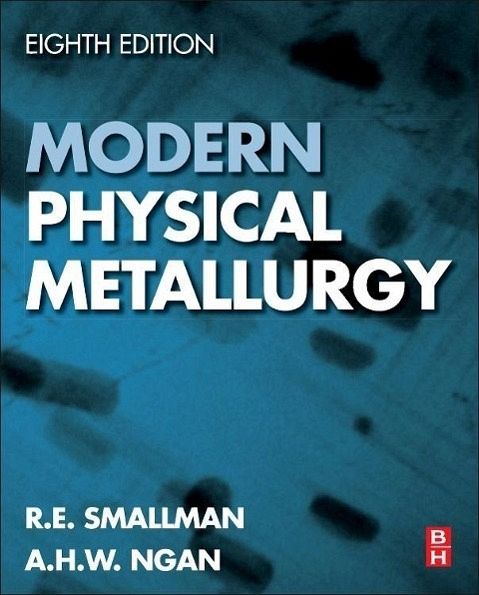
Modern Physical Metallurgy describes, in a very readable form, the fundamental principles of physical metallurgy and the basic techniques for assessing microstructure. This book enables you to understand the properties and applications of metals and alloys at a deeper level than that provided in an introductory materials course.The eighth edition of this classic text has been updated to provide a balanced coverage of properties, characterization, phase transformations, crystal structure, and corrosion not available in other texts, and includes updated illustrations along with extensive new real-world examples and homework problems.
After gaining his PhD in 1953, Professor Smallman spent five years at the Atomic Energy Research Establishment at Harwell before returning to the University of Birmingham, where he became Professor of Physical Metallurgy in 1964 and Feeney Professor and Head of the Department of Physical Metallurgy and Science of Materials in 1969. He subsequently became Head of the amalgamated Department of Metallurgy and Materials (1981), Dean of the Faculty of Science and Engineering, and the first Dean of the newly created Engineering Faculty in 1985. For five years he wasVice-Principal of the University (1987-92). He has held visiting professorship appointments at the University of Stanford, Berkeley, Pennsylvania (USA), New SouthWales (Australia), Hong Kong and Cape Town, and has received Honorary Doctorates from the University of Novi Sad (Yugoslavia), University ofWales and Cranfield University. His research work has been recognized by the award of the Sir George Beilby Gold Medal of the Royal Institute of Chemistry and Institute of Metals (1969), the Rosenhain Medal of the Institute of Metals for contributions to Physical Metallurgy (1972), the Platinum Medal, the premier medal of the Institute of Materials (1989), and the Acta Materialia Gold Medal (2004). Hewas elected a Fellowof the Royal Society (1986), a Fellowof the RoyalAcademy of Engineering (1990), a Foreign Associate of the United States National Academy of Engineering (2005), and appointed a Commander of the British Empire (CBE) in 1992. A former Council Member of the Science and Engineering Research Council, he has been Vice-President of the Institute of Materials and President of the Federated European Materials Societies. Since retirement he has been academic consultant for a number of institutions both in the UK and overseas.
Inhaltsangabe
1. Atoms and atomic arrangements 2. Phase equilibria and structure 3. Crystal defects 4. Characterization and analysis 5. Physical properties 6. Mechanical properties I 7. Mechanical Properties II 8. Strengthening and toughening 9. Advanced alloys 10. Oxidation, corrosion and surface treatment 11. Non-metallics I - Ceramics, glass, glass-ceramics 12. Non-metallics II - Polymers, plastics, composites 13. Case examination of biomaterials, sports materials and nanomaterials 14. Numerical answers to problems
Appendix 1: SI units Appendix 2: Conversion factors, constants and physical data
1. Atoms and atomic arrangements 2. Phase equilibria and structure 3. Crystal defects 4. Characterization and analysis 5. Physical properties 6. Mechanical properties I 7. Mechanical Properties II 8. Strengthening and toughening 9. Advanced alloys 10. Oxidation, corrosion and surface treatment 11. Non-metallics I - Ceramics, glass, glass-ceramics 12. Non-metallics II - Polymers, plastics, composites 13. Case examination of biomaterials, sports materials and nanomaterials 14. Numerical answers to problems
Appendix 1: SI units Appendix 2: Conversion factors, constants and physical data
Rezensionen
".this edition of the textbook has dropped the coverage of such materials as polymers, ceramics, biomaterials, sports materials, and nano-materials that appeared in earlier edition. The focus returns to the original physical metallurgy, and the material has been rearranged so that separate chapter deal with solidification, point defect behavior, interfaces and grain boundaries, precipitation hardening, and other matters." --ProtoView.com, January 2014
Es gelten unsere Allgemeinen Geschäftsbedingungen: www.buecher.de/agb
Impressum
www.buecher.de ist ein Internetauftritt der buecher.de internetstores GmbH
Geschäftsführung: Monica Sawhney | Roland Kölbl | Günter Hilger
Sitz der Gesellschaft: Batheyer Straße 115 - 117, 58099 Hagen
Postanschrift: Bürgermeister-Wegele-Str. 12, 86167 Augsburg
Amtsgericht Hagen HRB 13257
Steuernummer: 321/5800/1497
USt-IdNr: DE450055826