

Andere Kunden interessierten sich auch für
 Textile Production and Consumption in the Ancient Near East46,99 €
 Ceramic Production in Early Hispanic California80,99 €
 The Archaeology of the North American Fur Trade66,99 €
 Subsistence Strategies and Craft Production at the Ancient Egyptian Ramesside Fort of Zawiyet Umm El-Rakham113,99 €
 The Living Inca Town64,99 €
 Silver "Thieves, Tin Barons, and Conquistadors74,99 €
 Production Technology of Faience and Related Early Vitreous Materials64,99 €




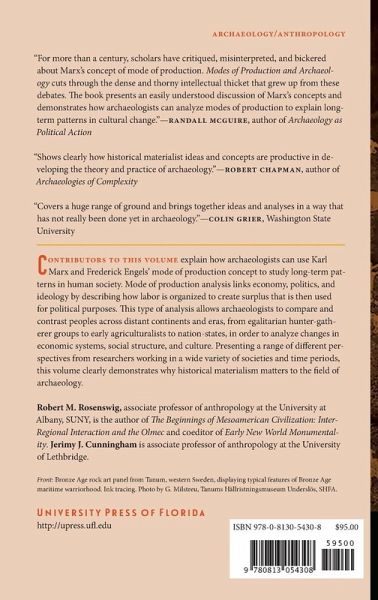
This volume explains how archaeologists can use Karl Marx and Frederick Engels’ mode of production concept to study long-term patterns in human society. Modes of production describes how labor is organized to create surplus which is then used for political purposes. This type of analysis allows archaeologists to compare and contrast peoples across distant continents and eras, from hunter-gatherer groups to early agriculturalists to nation-states. Presenting a range of different perspectives from researchers working in a wide variety of societies and time periods, this volume clearly demonstrates why historical materialism matters to the field of archaeology.