Versandkostenfrei innerhalb Deutschlands
90,99 €
inkl. MwSt.
Versandkostenfrei*
Erscheint vorauss. 4. Februar 2026
Melden Sie sich
hier
hier
für den Produktalarm an, um über die Verfügbarkeit des Produkts informiert zu werden.
oder sofort lesen als eBook
45 °P sammeln
- Gebundenes Buch
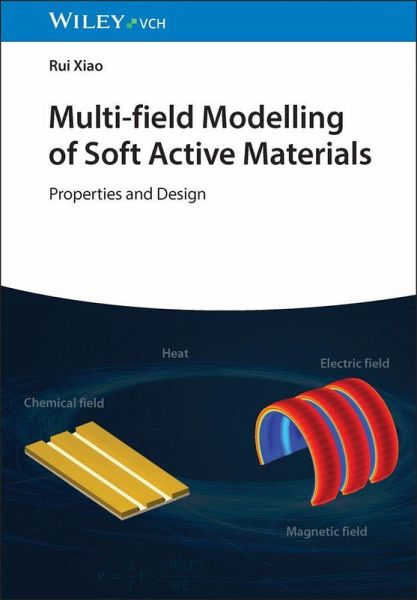
provides the general knowledge of developing multi-field models for stimulus-responsive polymers.
Andere Kunden interessierten sich auch für
Polymer Nanocomposite Materials104,99 €
J WuPiezoelectric Materials140,99 €
Li ZhangUntethered Miniature Soft Robots97,99 €
High Temperature Polymer Dielectrics105,99 €
Haoyang MiFunctional Polymer Foams104,99 €
Z LiOrganocatalysts in Polymer Chemistry118,99 €
Catalin I. PruncuModeling and Optimization in Manufacturing104,99 €-
-
-
provides the general knowledge of developing multi-field models for stimulus-responsive polymers.
Produktdetails
- Produktdetails
- Verlag: Wiley-VCH
- Artikelnr. des Verlages: 1135468 000
- 1. Auflage
- Seitenzahl: 176
- Erscheinungstermin: 4. Februar 2026
- Englisch
- Abmessung: 244mm x 170mm
- ISBN-13: 9783527354689
- ISBN-10: 3527354689
- Artikelnr.: 75168598
- Herstellerkennzeichnung
- Wiley-VCH GmbH
- Boschstraße 12
- 69469 Weinheim
- wiley-vch@kolibri360.de
- Verlag: Wiley-VCH
- Artikelnr. des Verlages: 1135468 000
- 1. Auflage
- Seitenzahl: 176
- Erscheinungstermin: 4. Februar 2026
- Englisch
- Abmessung: 244mm x 170mm
- ISBN-13: 9783527354689
- ISBN-10: 3527354689
- Artikelnr.: 75168598
- Herstellerkennzeichnung
- Wiley-VCH GmbH
- Boschstraße 12
- 69469 Weinheim
- wiley-vch@kolibri360.de
Rui Xiao, PhD, is a Professor in the Department of Engineering Mechanics at Zhejiang University. His research focuses on the constitutive relationship of polymers, smart materials and structures, and the mechanics of soft materials.
Foreword
Preface
1 BASICS OF CONTINUUM MECHANICS
1.1 Vectors and Tensors
1.2 Kinematics
1.3 Stress
1.4 Balance Principles
2 HYPERELASTIC AND VISCOELASTIC MODELS
2.1 Introduction
2.2 Hyperelastic Models
2.3 Viscoelastic Models
2.4 Conclusion
3 A THERMO-MECHANICAL COUPLED MODEL FOR AMORPHOUS SHAPE-MEMORY POLYMERS
3.1 Introduction
3.2 Thermodynamics
3.3 Parameter Determination
3.4 Results
3.5 Discussion
3.6 Conclusion
4 AN ELECTRO-MECHANICAL COUPLED MODEL FOR DIELECTRIC ELASTOMERS
4.1 Introduction
4.2 Theory
4.3 Finite Element Implementation
4.4 Conclusion
5 A MAGNETIC-MECHANICAL COUPLED MODEL FOR MAGNETOACTIVE SOFT MATERIALS
5.1 Introduction
5.2 A Magnetic-mechanical Coupled Model for h-MREs
5.3 Magnetic-activated Shape-memory Polymers
5.4 Conclusion
6 MULTI-FIELD MODELING OF LIQUID CRYSTAL ELASTOMERS
6.1 Introduction
6.2 General Theory for Liquid Crystal Elasotmers
6.3 Thermo-mechanical Coupled Model for Monodmain Liquid Crystal Elastomers
6.4 A Viscoelastic Micropolar Theory for Monodomain Liquid Crystal Elastomers
6.5 Theory for Polydomain Liquid Crystal Elastomers
6.6 Conclusion
7 A CHEMO-MECHANICAL MODEL FOR HYDROGELS
7.1 Introduction
7.2 Thermodynamics
7.3 Constitutive Relations
7.4 Results
7.5 Conclusion
Preface
1 BASICS OF CONTINUUM MECHANICS
1.1 Vectors and Tensors
1.2 Kinematics
1.3 Stress
1.4 Balance Principles
2 HYPERELASTIC AND VISCOELASTIC MODELS
2.1 Introduction
2.2 Hyperelastic Models
2.3 Viscoelastic Models
2.4 Conclusion
3 A THERMO-MECHANICAL COUPLED MODEL FOR AMORPHOUS SHAPE-MEMORY POLYMERS
3.1 Introduction
3.2 Thermodynamics
3.3 Parameter Determination
3.4 Results
3.5 Discussion
3.6 Conclusion
4 AN ELECTRO-MECHANICAL COUPLED MODEL FOR DIELECTRIC ELASTOMERS
4.1 Introduction
4.2 Theory
4.3 Finite Element Implementation
4.4 Conclusion
5 A MAGNETIC-MECHANICAL COUPLED MODEL FOR MAGNETOACTIVE SOFT MATERIALS
5.1 Introduction
5.2 A Magnetic-mechanical Coupled Model for h-MREs
5.3 Magnetic-activated Shape-memory Polymers
5.4 Conclusion
6 MULTI-FIELD MODELING OF LIQUID CRYSTAL ELASTOMERS
6.1 Introduction
6.2 General Theory for Liquid Crystal Elasotmers
6.3 Thermo-mechanical Coupled Model for Monodmain Liquid Crystal Elastomers
6.4 A Viscoelastic Micropolar Theory for Monodomain Liquid Crystal Elastomers
6.5 Theory for Polydomain Liquid Crystal Elastomers
6.6 Conclusion
7 A CHEMO-MECHANICAL MODEL FOR HYDROGELS
7.1 Introduction
7.2 Thermodynamics
7.3 Constitutive Relations
7.4 Results
7.5 Conclusion
Foreword
Preface
1 BASICS OF CONTINUUM MECHANICS
1.1 Vectors and Tensors
1.2 Kinematics
1.3 Stress
1.4 Balance Principles
2 HYPERELASTIC AND VISCOELASTIC MODELS
2.1 Introduction
2.2 Hyperelastic Models
2.3 Viscoelastic Models
2.4 Conclusion
3 A THERMO-MECHANICAL COUPLED MODEL FOR AMORPHOUS SHAPE-MEMORY POLYMERS
3.1 Introduction
3.2 Thermodynamics
3.3 Parameter Determination
3.4 Results
3.5 Discussion
3.6 Conclusion
4 AN ELECTRO-MECHANICAL COUPLED MODEL FOR DIELECTRIC ELASTOMERS
4.1 Introduction
4.2 Theory
4.3 Finite Element Implementation
4.4 Conclusion
5 A MAGNETIC-MECHANICAL COUPLED MODEL FOR MAGNETOACTIVE SOFT MATERIALS
5.1 Introduction
5.2 A Magnetic-mechanical Coupled Model for h-MREs
5.3 Magnetic-activated Shape-memory Polymers
5.4 Conclusion
6 MULTI-FIELD MODELING OF LIQUID CRYSTAL ELASTOMERS
6.1 Introduction
6.2 General Theory for Liquid Crystal Elasotmers
6.3 Thermo-mechanical Coupled Model for Monodmain Liquid Crystal Elastomers
6.4 A Viscoelastic Micropolar Theory for Monodomain Liquid Crystal Elastomers
6.5 Theory for Polydomain Liquid Crystal Elastomers
6.6 Conclusion
7 A CHEMO-MECHANICAL MODEL FOR HYDROGELS
7.1 Introduction
7.2 Thermodynamics
7.3 Constitutive Relations
7.4 Results
7.5 Conclusion
Preface
1 BASICS OF CONTINUUM MECHANICS
1.1 Vectors and Tensors
1.2 Kinematics
1.3 Stress
1.4 Balance Principles
2 HYPERELASTIC AND VISCOELASTIC MODELS
2.1 Introduction
2.2 Hyperelastic Models
2.3 Viscoelastic Models
2.4 Conclusion
3 A THERMO-MECHANICAL COUPLED MODEL FOR AMORPHOUS SHAPE-MEMORY POLYMERS
3.1 Introduction
3.2 Thermodynamics
3.3 Parameter Determination
3.4 Results
3.5 Discussion
3.6 Conclusion
4 AN ELECTRO-MECHANICAL COUPLED MODEL FOR DIELECTRIC ELASTOMERS
4.1 Introduction
4.2 Theory
4.3 Finite Element Implementation
4.4 Conclusion
5 A MAGNETIC-MECHANICAL COUPLED MODEL FOR MAGNETOACTIVE SOFT MATERIALS
5.1 Introduction
5.2 A Magnetic-mechanical Coupled Model for h-MREs
5.3 Magnetic-activated Shape-memory Polymers
5.4 Conclusion
6 MULTI-FIELD MODELING OF LIQUID CRYSTAL ELASTOMERS
6.1 Introduction
6.2 General Theory for Liquid Crystal Elasotmers
6.3 Thermo-mechanical Coupled Model for Monodmain Liquid Crystal Elastomers
6.4 A Viscoelastic Micropolar Theory for Monodomain Liquid Crystal Elastomers
6.5 Theory for Polydomain Liquid Crystal Elastomers
6.6 Conclusion
7 A CHEMO-MECHANICAL MODEL FOR HYDROGELS
7.1 Introduction
7.2 Thermodynamics
7.3 Constitutive Relations
7.4 Results
7.5 Conclusion