
Williams
Musics of the World
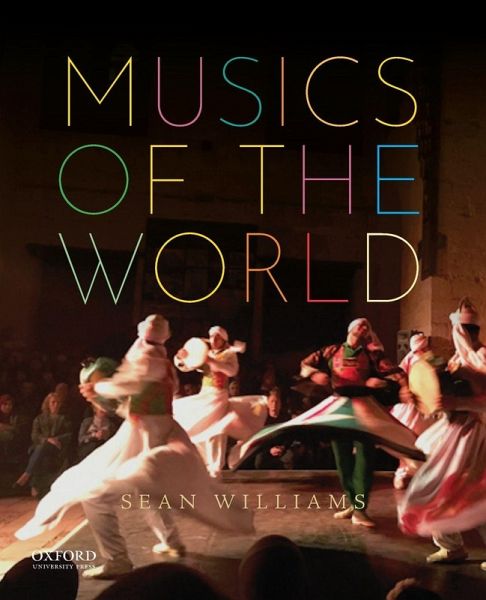

Williams
Musics of the World
- Broschiertes Buch
Andere Kunden interessierten sich auch für
 The Art Song in East Asia and Australia, 1900 to 195037,99 €
 Janet Topp FargionTaarab Music in Zanzibar in the Twentieth Century70,99 €
 SumarsamJavanese Gamelan and the West28,99 €
 Robert FitzgeraldHardcore Punk in the Age of Reagan36,99 €
 Ian BiddleMusic, Masculinity and the Claims of History70,99 €
 SchmelzALFRED SCHNIT CONCER GROSSO NO. 1 OKS P26,99 €
 Wesley DoyleConform to Deform23,99 €
-
-
-





Produktdetails
- Verlag: ACADEMIC
- Seitenzahl: 382
- Erscheinungstermin: 15. Juli 2021
- Englisch
- Abmessung: 235mm x 191mm x 25mm
- Gewicht: 1055g
- ISBN-13: 9780190235864
- ISBN-10: 0190235861
- Artikelnr.: 62111432
- Herstellerkennzeichnung
- Libri GmbH
- Europaallee 1
- 36244 Bad Hersfeld
- gpsr@libri.de
Sean Williams has taught ethnomusicology and area studies for over 30 years at The Evergreen State College in Olympia, Washington.
* Contents
* Preface
* How This Book Works
* Acknowledgements
* I. Introduction to Ethnomusicology
* Chapter 1. Welcome to Ethnomusicology!
* What Ethnomusicologists Do
* Being Interdisciplinary
* Music Can Identify You
* Are You an "Ethnomusicologist" or an "Insider"? Or Both?
* What Is It about Music?
* Learning to Play
* What Lens Do You Use?
* Are You Ready?
* Chapter 2. The Elements of Music
* Rhythm
* Meter and Tempo
* Notating Rhythm
* Melody
* Timbre
* Harmony
* Texture
* Mode
* Range
* Silence
* Putting It All Together
* Chapter 3. Music and...: Focusing Your Work
* Fine-Tuning Your Approach
* Issues of Identity
* Issues of Performance Practice
* Issues of Power and Control
* Issues of Belief
* Other Issues
* II. Africa and the Middle East
* Chapter 4. West Africa
* West African Development and Colonization
* Common Musical Features
* The Role of the Jali: A West African Bard in Gambia
* Listening Guide 4.1: "Kelefaba" and "Kuruntu Kelefa" by Foday Musa
Suso
* Ghanaian Fontomfrom Drumming
* Listening Guide 4.2: "Fontomfrom" by the Eyisam Mbensuon Group
* Nigerian Jùjú Music
* Listening Guide 4.3: "Asiko Mi Ti To" by Chief Commander Ebenezer
Obey
* Chapter 5. South Africa
* Colonial History
* Apartheid
* South African Music
* Marabi: Early Zulu Township Music
* Listening Guide 5.1: "Pata Pata" by Miriam Makeba
* Mbaquanga: Later Zulu Township Music
* Listening Guide 5.2: "Kazet" by Mahlathini and the Mahotella Queens
* Isicathamiya: Zulu Choral Music
* Listening Guide 5.3: "Rain Rain Beautiful Rain" by Ladysmith Black
Mambazo
* Chapter 6. The Arab World
* The History of Music Making in the Arab World
* Understanding Islam
* Tonal and Rhythmic Modes in Arabic Music
* Improvising within the Constraints of a Melodic Mode
* Listening Guide 6.1: "Taqasim" by Simon Shaheen
* Takht Ensemble Music
* Listening Guide 6.2: "Longa Farahfaza" by Simon Shaheen ensemble
* Post-Revolutionary Egyptian Protest Music
* Listening Guide 6.3: "Es'ha" by Arabian Knightz (feat. DC Amin)
* III. The Americas
* Chapter 7. Brazil
* Legacies of Colonization
* Legacies of Slavery
* Mixing European and African Spirituality
* Samba
* Listening Guide 7.1: "Quilombo, O El Dorado Negro" by Gilberto Gil
* Bossa Nova
* Listening Guide 7.2: "Chega de Saudade" by João Gilberto
* Forró
* Listening Guide 7.3: "O Fole Roncou" by Luis Gonzaga
* Chapter 8. African America
* The Development of African America
* Blues
* Listening Guide 8.1: "(I'm Your) Hoochie Coochie Man" by Muddy Waters
* Gospel
* Listening Guide 8.2: "Move On Up a Little Higher," by Mahalia Jackson
* Rap within Hip Hop
* Listening Guide 8.3: "The Message" by Grandmaster Flash and the
Furious Five
* Chapter 9. Native North America
* Colonization Was Not the Beginning
* Native North American Music is Alive
* The Experience of Powwow
* Listening Guide 9.1: "Blackfeet Flag Song," by the Black Lodge
Singers
* The Power and Importance of the Voice
* Listening Guide 9.2: "My People, My Land," by Ulali
* Tribal Hip Hop
* Listening Guide 9.3: "Prayer Loop Song," by Supaman
* IV. Asia and the Pacific
* Chapter 10. China
* Chinese Musical Culture Over Time
* A Short Guide to Chinese Religious Philosophy
* Scholarly Sounds from Ancient China: the Guqin
* Listening Guide 10.1: "Wild Geese Descending on the Sandbank," by Lin
Youren
* Jiangnan Sizhu (Silk and Bamboo Music) and Heterophony
* Listening Guide 10.2: "Moonlight Over the River in Spring," by the
Shanghai Chinese Orchestra
* Jingjú (Beijing Opera) and the Embodiment of Religious Philosophy
* Listening Guide 10.3: "Chu Ko Liang and Two Attendants," Chinese
opera
* Chapter 11. India
* The History of the Indian Subcontinent
* Hinduism in India and its Influence on the Performing Arts
* Raga and Tala, the Performance of Indian Melodic and Rhythmic Modes
* North Indian Khyal Performance
* Listening Guide 11.1: "Raga Gaud Malhar" by Kishori Amonkar
* South Indian Vina Performance
* Listening Guide 11.2: "RagaPurvikalyani" by Ranganayaki Rajagopalan
* Bollywood Songs: Filmi G?t
* Listening Guide 11.3: "Did Tera Devar Deewana" by Lata Mangeshkar and
S.P. Balasubrahmanyam
*
* Chapter 12. Indonesia
* Religious and Colonial Influences
* Central Javanese Gamelan
* Listening Guide 12.1: "Ketawang: Puspawarna" by K.R.T. Wasitodipuro
* Balinese Gamelan
* Listening Guide 12.2: "Sekar Jupun" by Peliatan Dance Troupe
* Dangdut Popular Music
* Listening Guide 12.3: "Begadang II" by Rhoma Irama
* V. Europe
* Chapter 13. Ireland
* The Historical Context of Irish Music
* Irish Melodies and Modes
* Singing in Irish-Gaelic and English
* Listening Guide 13.1: "Anach Cuain" by Joe Heaney
* Instrumental Music for Dancing and Listening
* Listening Guide 13.2: "The Maids of Mount Cisco/The Old Pigeon on the
Gate" by David Power
* Listening Guide 13.3: "Gift from the Fairies/Drops of Brandy/Is the
Big Man Within?" by James Kelly and Zan McLeod
* Chapter 14. Spain
* The Historical Background
* Flamenco Music of Andalucia
* Listening Guide 14.1: "Soleá" by María de la Burra
* The Jota of Aragón
* Listening Guide 14.2: "Jota Antigua" by La Orquestina del Fabirol
* The Sound of the Local in Galicia
* Listening Guide 14.3: "Vals de Libunca" by Milladoiro
* Chapter 15. Russia
* A History of Russia
* Nation Building through Classical Composers and Folkloric Troupes
* Music and Culture after the Revolution
* The Russian Orthodox Chant
* Listening Guide 15.1: "Hymn for the Day" by the Choir of the
Dormition Church of the Novodevichy Covent
* The Balalaika as both Musical Instrument and Symbol
* Listening Guide 15.2: "Kokhanochka" by the Andreyev Balalaika
Ensemble
* Throat Singing in Tuva, Southern Siberia
* Listening Guide 15.3: "Kozhamik with Khoomei, Sigit, and Kargiraa" by
Kara-ool Tumat
* e-Book Exclusive Chapters
* Chapter 16. Turkey
* Orientalism and its Appearance in Music
* Tonal and Rhythmic Modes in Turkish Music
* Music of the Sufi Mevlevi Orders (The "Whirling Dervishes")
* Listening Guide 16.1: "Hicaz Taksim" by Aka Gündüz Kutbay
* Fasil Instrumental Suites
* Listening Guide 16.2: "Ud Taksim; Nihavent Saz Semaisi" by Necdet
Yasar Ensemble
* Arabesk Popular Urban Music
* Listening Guide 16.3: "Bir Teselli Ver" by Orhan Gencebay
* Chapter 17. The Andes
* The Incan Empire, Colonialism, and Chaos
* The Arrival of the Spanish
* Modern Times
* The Panpipes in Andean Music: Wind and Breath
* Listening Guide 17.1: "Akamani" by Musicians of the Kaalaya Community
* The Charango
* Listening Guide 17.2: "Huayno from Ayacucho," by Louis Lamasca
* Brass Bands
* Listening Guide 17.3: "Danza del Turco" by Banda San Santiago de
Madrigal
* The Fiesta in Highland Life (written with Ellen Koskoff)
* Chapter 18. The Texas-Mexico Borderlands
* The Development of the Tejano Sound
* Conjunto
* Listening Guide 18.1: "Margarita, Margarita" by Flaco Jiménez
* Banda-Orquesta
* Listening Guide 18.2: "El Tejano Enamorado" by Oscar Martinez
* Grupo
* Listening Guide 18.3: "Bidi Bidi Bom Bom" by Selena Quintanilla
* Chapter 19. Japan
* Japan's History and People
* Solo Shakuhachi (Bamboo Flute) Music
* Listening Guide 19.1: "Sagari Ha" by Tajima Tadashi
* Gagaku (Imperial Court Ensemble) Music
* Listening Guide 19.2: "Etenraku" by the Imperial Court Ensemble of
Japan
* Kumi-daiko (taiko drumming ensemble)
* Listening Guide 19.3: "Suwa-Ikazuchi" by the O-Suwa Daiko Drums
ensemble
* Chapter 20. Hawai'i
* Early Sound and Movement
* Colonization
* Contemporary Hawaiian Music and Dance
* Mele Hula Chant and Song
* Listening Guide 20.1: "Hole Waimea" by Lokalia Montgomery
* The 'Ukulele
* Listening Guide 20.2: "Aloha 'Oe" by Eddie Kamae
* Slack Key Guitar
* Listening Guide 20.3: "Hi'ilawe" by Gabby Pahinui
* Chapter 21. Bulgaria
* Who Are the Roma?
* Bulgarian Wedding Dance Music
* Listening Guide 21.1: "Hristianova Kopanitsa" by Ivo Papasov
* Vocal Harmony
* Listening Guide 21.2: "Dimyaninka" by the Filip Koutev Ensemble
* Bulgarian Music Abroad
* Listening Guide 21.3: "Bulgarian Chicks" by Balkan Beat Box
* Chapter 22. Fieldwork
* How Does One Do "Fieldwork"?
* Case Studies in Fieldwork
* Writing about Fieldwork
* Glossary and Pronunciation Guide
* List of Suggested Resources for Further Study
* Bibliography
* Index
* Preface
* How This Book Works
* Acknowledgements
* I. Introduction to Ethnomusicology
* Chapter 1. Welcome to Ethnomusicology!
* What Ethnomusicologists Do
* Being Interdisciplinary
* Music Can Identify You
* Are You an "Ethnomusicologist" or an "Insider"? Or Both?
* What Is It about Music?
* Learning to Play
* What Lens Do You Use?
* Are You Ready?
* Chapter 2. The Elements of Music
* Rhythm
* Meter and Tempo
* Notating Rhythm
* Melody
* Timbre
* Harmony
* Texture
* Mode
* Range
* Silence
* Putting It All Together
* Chapter 3. Music and...: Focusing Your Work
* Fine-Tuning Your Approach
* Issues of Identity
* Issues of Performance Practice
* Issues of Power and Control
* Issues of Belief
* Other Issues
* II. Africa and the Middle East
* Chapter 4. West Africa
* West African Development and Colonization
* Common Musical Features
* The Role of the Jali: A West African Bard in Gambia
* Listening Guide 4.1: "Kelefaba" and "Kuruntu Kelefa" by Foday Musa
Suso
* Ghanaian Fontomfrom Drumming
* Listening Guide 4.2: "Fontomfrom" by the Eyisam Mbensuon Group
* Nigerian Jùjú Music
* Listening Guide 4.3: "Asiko Mi Ti To" by Chief Commander Ebenezer
Obey
* Chapter 5. South Africa
* Colonial History
* Apartheid
* South African Music
* Marabi: Early Zulu Township Music
* Listening Guide 5.1: "Pata Pata" by Miriam Makeba
* Mbaquanga: Later Zulu Township Music
* Listening Guide 5.2: "Kazet" by Mahlathini and the Mahotella Queens
* Isicathamiya: Zulu Choral Music
* Listening Guide 5.3: "Rain Rain Beautiful Rain" by Ladysmith Black
Mambazo
* Chapter 6. The Arab World
* The History of Music Making in the Arab World
* Understanding Islam
* Tonal and Rhythmic Modes in Arabic Music
* Improvising within the Constraints of a Melodic Mode
* Listening Guide 6.1: "Taqasim" by Simon Shaheen
* Takht Ensemble Music
* Listening Guide 6.2: "Longa Farahfaza" by Simon Shaheen ensemble
* Post-Revolutionary Egyptian Protest Music
* Listening Guide 6.3: "Es'ha" by Arabian Knightz (feat. DC Amin)
* III. The Americas
* Chapter 7. Brazil
* Legacies of Colonization
* Legacies of Slavery
* Mixing European and African Spirituality
* Samba
* Listening Guide 7.1: "Quilombo, O El Dorado Negro" by Gilberto Gil
* Bossa Nova
* Listening Guide 7.2: "Chega de Saudade" by João Gilberto
* Forró
* Listening Guide 7.3: "O Fole Roncou" by Luis Gonzaga
* Chapter 8. African America
* The Development of African America
* Blues
* Listening Guide 8.1: "(I'm Your) Hoochie Coochie Man" by Muddy Waters
* Gospel
* Listening Guide 8.2: "Move On Up a Little Higher," by Mahalia Jackson
* Rap within Hip Hop
* Listening Guide 8.3: "The Message" by Grandmaster Flash and the
Furious Five
* Chapter 9. Native North America
* Colonization Was Not the Beginning
* Native North American Music is Alive
* The Experience of Powwow
* Listening Guide 9.1: "Blackfeet Flag Song," by the Black Lodge
Singers
* The Power and Importance of the Voice
* Listening Guide 9.2: "My People, My Land," by Ulali
* Tribal Hip Hop
* Listening Guide 9.3: "Prayer Loop Song," by Supaman
* IV. Asia and the Pacific
* Chapter 10. China
* Chinese Musical Culture Over Time
* A Short Guide to Chinese Religious Philosophy
* Scholarly Sounds from Ancient China: the Guqin
* Listening Guide 10.1: "Wild Geese Descending on the Sandbank," by Lin
Youren
* Jiangnan Sizhu (Silk and Bamboo Music) and Heterophony
* Listening Guide 10.2: "Moonlight Over the River in Spring," by the
Shanghai Chinese Orchestra
* Jingjú (Beijing Opera) and the Embodiment of Religious Philosophy
* Listening Guide 10.3: "Chu Ko Liang and Two Attendants," Chinese
opera
* Chapter 11. India
* The History of the Indian Subcontinent
* Hinduism in India and its Influence on the Performing Arts
* Raga and Tala, the Performance of Indian Melodic and Rhythmic Modes
* North Indian Khyal Performance
* Listening Guide 11.1: "Raga Gaud Malhar" by Kishori Amonkar
* South Indian Vina Performance
* Listening Guide 11.2: "RagaPurvikalyani" by Ranganayaki Rajagopalan
* Bollywood Songs: Filmi G?t
* Listening Guide 11.3: "Did Tera Devar Deewana" by Lata Mangeshkar and
S.P. Balasubrahmanyam
*
* Chapter 12. Indonesia
* Religious and Colonial Influences
* Central Javanese Gamelan
* Listening Guide 12.1: "Ketawang: Puspawarna" by K.R.T. Wasitodipuro
* Balinese Gamelan
* Listening Guide 12.2: "Sekar Jupun" by Peliatan Dance Troupe
* Dangdut Popular Music
* Listening Guide 12.3: "Begadang II" by Rhoma Irama
* V. Europe
* Chapter 13. Ireland
* The Historical Context of Irish Music
* Irish Melodies and Modes
* Singing in Irish-Gaelic and English
* Listening Guide 13.1: "Anach Cuain" by Joe Heaney
* Instrumental Music for Dancing and Listening
* Listening Guide 13.2: "The Maids of Mount Cisco/The Old Pigeon on the
Gate" by David Power
* Listening Guide 13.3: "Gift from the Fairies/Drops of Brandy/Is the
Big Man Within?" by James Kelly and Zan McLeod
* Chapter 14. Spain
* The Historical Background
* Flamenco Music of Andalucia
* Listening Guide 14.1: "Soleá" by María de la Burra
* The Jota of Aragón
* Listening Guide 14.2: "Jota Antigua" by La Orquestina del Fabirol
* The Sound of the Local in Galicia
* Listening Guide 14.3: "Vals de Libunca" by Milladoiro
* Chapter 15. Russia
* A History of Russia
* Nation Building through Classical Composers and Folkloric Troupes
* Music and Culture after the Revolution
* The Russian Orthodox Chant
* Listening Guide 15.1: "Hymn for the Day" by the Choir of the
Dormition Church of the Novodevichy Covent
* The Balalaika as both Musical Instrument and Symbol
* Listening Guide 15.2: "Kokhanochka" by the Andreyev Balalaika
Ensemble
* Throat Singing in Tuva, Southern Siberia
* Listening Guide 15.3: "Kozhamik with Khoomei, Sigit, and Kargiraa" by
Kara-ool Tumat
* e-Book Exclusive Chapters
* Chapter 16. Turkey
* Orientalism and its Appearance in Music
* Tonal and Rhythmic Modes in Turkish Music
* Music of the Sufi Mevlevi Orders (The "Whirling Dervishes")
* Listening Guide 16.1: "Hicaz Taksim" by Aka Gündüz Kutbay
* Fasil Instrumental Suites
* Listening Guide 16.2: "Ud Taksim; Nihavent Saz Semaisi" by Necdet
Yasar Ensemble
* Arabesk Popular Urban Music
* Listening Guide 16.3: "Bir Teselli Ver" by Orhan Gencebay
* Chapter 17. The Andes
* The Incan Empire, Colonialism, and Chaos
* The Arrival of the Spanish
* Modern Times
* The Panpipes in Andean Music: Wind and Breath
* Listening Guide 17.1: "Akamani" by Musicians of the Kaalaya Community
* The Charango
* Listening Guide 17.2: "Huayno from Ayacucho," by Louis Lamasca
* Brass Bands
* Listening Guide 17.3: "Danza del Turco" by Banda San Santiago de
Madrigal
* The Fiesta in Highland Life (written with Ellen Koskoff)
* Chapter 18. The Texas-Mexico Borderlands
* The Development of the Tejano Sound
* Conjunto
* Listening Guide 18.1: "Margarita, Margarita" by Flaco Jiménez
* Banda-Orquesta
* Listening Guide 18.2: "El Tejano Enamorado" by Oscar Martinez
* Grupo
* Listening Guide 18.3: "Bidi Bidi Bom Bom" by Selena Quintanilla
* Chapter 19. Japan
* Japan's History and People
* Solo Shakuhachi (Bamboo Flute) Music
* Listening Guide 19.1: "Sagari Ha" by Tajima Tadashi
* Gagaku (Imperial Court Ensemble) Music
* Listening Guide 19.2: "Etenraku" by the Imperial Court Ensemble of
Japan
* Kumi-daiko (taiko drumming ensemble)
* Listening Guide 19.3: "Suwa-Ikazuchi" by the O-Suwa Daiko Drums
ensemble
* Chapter 20. Hawai'i
* Early Sound and Movement
* Colonization
* Contemporary Hawaiian Music and Dance
* Mele Hula Chant and Song
* Listening Guide 20.1: "Hole Waimea" by Lokalia Montgomery
* The 'Ukulele
* Listening Guide 20.2: "Aloha 'Oe" by Eddie Kamae
* Slack Key Guitar
* Listening Guide 20.3: "Hi'ilawe" by Gabby Pahinui
* Chapter 21. Bulgaria
* Who Are the Roma?
* Bulgarian Wedding Dance Music
* Listening Guide 21.1: "Hristianova Kopanitsa" by Ivo Papasov
* Vocal Harmony
* Listening Guide 21.2: "Dimyaninka" by the Filip Koutev Ensemble
* Bulgarian Music Abroad
* Listening Guide 21.3: "Bulgarian Chicks" by Balkan Beat Box
* Chapter 22. Fieldwork
* How Does One Do "Fieldwork"?
* Case Studies in Fieldwork
* Writing about Fieldwork
* Glossary and Pronunciation Guide
* List of Suggested Resources for Further Study
* Bibliography
* Index
* Contents
* Preface
* How This Book Works
* Acknowledgements
* I. Introduction to Ethnomusicology
* Chapter 1. Welcome to Ethnomusicology!
* What Ethnomusicologists Do
* Being Interdisciplinary
* Music Can Identify You
* Are You an "Ethnomusicologist" or an "Insider"? Or Both?
* What Is It about Music?
* Learning to Play
* What Lens Do You Use?
* Are You Ready?
* Chapter 2. The Elements of Music
* Rhythm
* Meter and Tempo
* Notating Rhythm
* Melody
* Timbre
* Harmony
* Texture
* Mode
* Range
* Silence
* Putting It All Together
* Chapter 3. Music and...: Focusing Your Work
* Fine-Tuning Your Approach
* Issues of Identity
* Issues of Performance Practice
* Issues of Power and Control
* Issues of Belief
* Other Issues
* II. Africa and the Middle East
* Chapter 4. West Africa
* West African Development and Colonization
* Common Musical Features
* The Role of the Jali: A West African Bard in Gambia
* Listening Guide 4.1: "Kelefaba" and "Kuruntu Kelefa" by Foday Musa
Suso
* Ghanaian Fontomfrom Drumming
* Listening Guide 4.2: "Fontomfrom" by the Eyisam Mbensuon Group
* Nigerian Jùjú Music
* Listening Guide 4.3: "Asiko Mi Ti To" by Chief Commander Ebenezer
Obey
* Chapter 5. South Africa
* Colonial History
* Apartheid
* South African Music
* Marabi: Early Zulu Township Music
* Listening Guide 5.1: "Pata Pata" by Miriam Makeba
* Mbaquanga: Later Zulu Township Music
* Listening Guide 5.2: "Kazet" by Mahlathini and the Mahotella Queens
* Isicathamiya: Zulu Choral Music
* Listening Guide 5.3: "Rain Rain Beautiful Rain" by Ladysmith Black
Mambazo
* Chapter 6. The Arab World
* The History of Music Making in the Arab World
* Understanding Islam
* Tonal and Rhythmic Modes in Arabic Music
* Improvising within the Constraints of a Melodic Mode
* Listening Guide 6.1: "Taqasim" by Simon Shaheen
* Takht Ensemble Music
* Listening Guide 6.2: "Longa Farahfaza" by Simon Shaheen ensemble
* Post-Revolutionary Egyptian Protest Music
* Listening Guide 6.3: "Es'ha" by Arabian Knightz (feat. DC Amin)
* III. The Americas
* Chapter 7. Brazil
* Legacies of Colonization
* Legacies of Slavery
* Mixing European and African Spirituality
* Samba
* Listening Guide 7.1: "Quilombo, O El Dorado Negro" by Gilberto Gil
* Bossa Nova
* Listening Guide 7.2: "Chega de Saudade" by João Gilberto
* Forró
* Listening Guide 7.3: "O Fole Roncou" by Luis Gonzaga
* Chapter 8. African America
* The Development of African America
* Blues
* Listening Guide 8.1: "(I'm Your) Hoochie Coochie Man" by Muddy Waters
* Gospel
* Listening Guide 8.2: "Move On Up a Little Higher," by Mahalia Jackson
* Rap within Hip Hop
* Listening Guide 8.3: "The Message" by Grandmaster Flash and the
Furious Five
* Chapter 9. Native North America
* Colonization Was Not the Beginning
* Native North American Music is Alive
* The Experience of Powwow
* Listening Guide 9.1: "Blackfeet Flag Song," by the Black Lodge
Singers
* The Power and Importance of the Voice
* Listening Guide 9.2: "My People, My Land," by Ulali
* Tribal Hip Hop
* Listening Guide 9.3: "Prayer Loop Song," by Supaman
* IV. Asia and the Pacific
* Chapter 10. China
* Chinese Musical Culture Over Time
* A Short Guide to Chinese Religious Philosophy
* Scholarly Sounds from Ancient China: the Guqin
* Listening Guide 10.1: "Wild Geese Descending on the Sandbank," by Lin
Youren
* Jiangnan Sizhu (Silk and Bamboo Music) and Heterophony
* Listening Guide 10.2: "Moonlight Over the River in Spring," by the
Shanghai Chinese Orchestra
* Jingjú (Beijing Opera) and the Embodiment of Religious Philosophy
* Listening Guide 10.3: "Chu Ko Liang and Two Attendants," Chinese
opera
* Chapter 11. India
* The History of the Indian Subcontinent
* Hinduism in India and its Influence on the Performing Arts
* Raga and Tala, the Performance of Indian Melodic and Rhythmic Modes
* North Indian Khyal Performance
* Listening Guide 11.1: "Raga Gaud Malhar" by Kishori Amonkar
* South Indian Vina Performance
* Listening Guide 11.2: "RagaPurvikalyani" by Ranganayaki Rajagopalan
* Bollywood Songs: Filmi G?t
* Listening Guide 11.3: "Did Tera Devar Deewana" by Lata Mangeshkar and
S.P. Balasubrahmanyam
*
* Chapter 12. Indonesia
* Religious and Colonial Influences
* Central Javanese Gamelan
* Listening Guide 12.1: "Ketawang: Puspawarna" by K.R.T. Wasitodipuro
* Balinese Gamelan
* Listening Guide 12.2: "Sekar Jupun" by Peliatan Dance Troupe
* Dangdut Popular Music
* Listening Guide 12.3: "Begadang II" by Rhoma Irama
* V. Europe
* Chapter 13. Ireland
* The Historical Context of Irish Music
* Irish Melodies and Modes
* Singing in Irish-Gaelic and English
* Listening Guide 13.1: "Anach Cuain" by Joe Heaney
* Instrumental Music for Dancing and Listening
* Listening Guide 13.2: "The Maids of Mount Cisco/The Old Pigeon on the
Gate" by David Power
* Listening Guide 13.3: "Gift from the Fairies/Drops of Brandy/Is the
Big Man Within?" by James Kelly and Zan McLeod
* Chapter 14. Spain
* The Historical Background
* Flamenco Music of Andalucia
* Listening Guide 14.1: "Soleá" by María de la Burra
* The Jota of Aragón
* Listening Guide 14.2: "Jota Antigua" by La Orquestina del Fabirol
* The Sound of the Local in Galicia
* Listening Guide 14.3: "Vals de Libunca" by Milladoiro
* Chapter 15. Russia
* A History of Russia
* Nation Building through Classical Composers and Folkloric Troupes
* Music and Culture after the Revolution
* The Russian Orthodox Chant
* Listening Guide 15.1: "Hymn for the Day" by the Choir of the
Dormition Church of the Novodevichy Covent
* The Balalaika as both Musical Instrument and Symbol
* Listening Guide 15.2: "Kokhanochka" by the Andreyev Balalaika
Ensemble
* Throat Singing in Tuva, Southern Siberia
* Listening Guide 15.3: "Kozhamik with Khoomei, Sigit, and Kargiraa" by
Kara-ool Tumat
* e-Book Exclusive Chapters
* Chapter 16. Turkey
* Orientalism and its Appearance in Music
* Tonal and Rhythmic Modes in Turkish Music
* Music of the Sufi Mevlevi Orders (The "Whirling Dervishes")
* Listening Guide 16.1: "Hicaz Taksim" by Aka Gündüz Kutbay
* Fasil Instrumental Suites
* Listening Guide 16.2: "Ud Taksim; Nihavent Saz Semaisi" by Necdet
Yasar Ensemble
* Arabesk Popular Urban Music
* Listening Guide 16.3: "Bir Teselli Ver" by Orhan Gencebay
* Chapter 17. The Andes
* The Incan Empire, Colonialism, and Chaos
* The Arrival of the Spanish
* Modern Times
* The Panpipes in Andean Music: Wind and Breath
* Listening Guide 17.1: "Akamani" by Musicians of the Kaalaya Community
* The Charango
* Listening Guide 17.2: "Huayno from Ayacucho," by Louis Lamasca
* Brass Bands
* Listening Guide 17.3: "Danza del Turco" by Banda San Santiago de
Madrigal
* The Fiesta in Highland Life (written with Ellen Koskoff)
* Chapter 18. The Texas-Mexico Borderlands
* The Development of the Tejano Sound
* Conjunto
* Listening Guide 18.1: "Margarita, Margarita" by Flaco Jiménez
* Banda-Orquesta
* Listening Guide 18.2: "El Tejano Enamorado" by Oscar Martinez
* Grupo
* Listening Guide 18.3: "Bidi Bidi Bom Bom" by Selena Quintanilla
* Chapter 19. Japan
* Japan's History and People
* Solo Shakuhachi (Bamboo Flute) Music
* Listening Guide 19.1: "Sagari Ha" by Tajima Tadashi
* Gagaku (Imperial Court Ensemble) Music
* Listening Guide 19.2: "Etenraku" by the Imperial Court Ensemble of
Japan
* Kumi-daiko (taiko drumming ensemble)
* Listening Guide 19.3: "Suwa-Ikazuchi" by the O-Suwa Daiko Drums
ensemble
* Chapter 20. Hawai'i
* Early Sound and Movement
* Colonization
* Contemporary Hawaiian Music and Dance
* Mele Hula Chant and Song
* Listening Guide 20.1: "Hole Waimea" by Lokalia Montgomery
* The 'Ukulele
* Listening Guide 20.2: "Aloha 'Oe" by Eddie Kamae
* Slack Key Guitar
* Listening Guide 20.3: "Hi'ilawe" by Gabby Pahinui
* Chapter 21. Bulgaria
* Who Are the Roma?
* Bulgarian Wedding Dance Music
* Listening Guide 21.1: "Hristianova Kopanitsa" by Ivo Papasov
* Vocal Harmony
* Listening Guide 21.2: "Dimyaninka" by the Filip Koutev Ensemble
* Bulgarian Music Abroad
* Listening Guide 21.3: "Bulgarian Chicks" by Balkan Beat Box
* Chapter 22. Fieldwork
* How Does One Do "Fieldwork"?
* Case Studies in Fieldwork
* Writing about Fieldwork
* Glossary and Pronunciation Guide
* List of Suggested Resources for Further Study
* Bibliography
* Index
* Preface
* How This Book Works
* Acknowledgements
* I. Introduction to Ethnomusicology
* Chapter 1. Welcome to Ethnomusicology!
* What Ethnomusicologists Do
* Being Interdisciplinary
* Music Can Identify You
* Are You an "Ethnomusicologist" or an "Insider"? Or Both?
* What Is It about Music?
* Learning to Play
* What Lens Do You Use?
* Are You Ready?
* Chapter 2. The Elements of Music
* Rhythm
* Meter and Tempo
* Notating Rhythm
* Melody
* Timbre
* Harmony
* Texture
* Mode
* Range
* Silence
* Putting It All Together
* Chapter 3. Music and...: Focusing Your Work
* Fine-Tuning Your Approach
* Issues of Identity
* Issues of Performance Practice
* Issues of Power and Control
* Issues of Belief
* Other Issues
* II. Africa and the Middle East
* Chapter 4. West Africa
* West African Development and Colonization
* Common Musical Features
* The Role of the Jali: A West African Bard in Gambia
* Listening Guide 4.1: "Kelefaba" and "Kuruntu Kelefa" by Foday Musa
Suso
* Ghanaian Fontomfrom Drumming
* Listening Guide 4.2: "Fontomfrom" by the Eyisam Mbensuon Group
* Nigerian Jùjú Music
* Listening Guide 4.3: "Asiko Mi Ti To" by Chief Commander Ebenezer
Obey
* Chapter 5. South Africa
* Colonial History
* Apartheid
* South African Music
* Marabi: Early Zulu Township Music
* Listening Guide 5.1: "Pata Pata" by Miriam Makeba
* Mbaquanga: Later Zulu Township Music
* Listening Guide 5.2: "Kazet" by Mahlathini and the Mahotella Queens
* Isicathamiya: Zulu Choral Music
* Listening Guide 5.3: "Rain Rain Beautiful Rain" by Ladysmith Black
Mambazo
* Chapter 6. The Arab World
* The History of Music Making in the Arab World
* Understanding Islam
* Tonal and Rhythmic Modes in Arabic Music
* Improvising within the Constraints of a Melodic Mode
* Listening Guide 6.1: "Taqasim" by Simon Shaheen
* Takht Ensemble Music
* Listening Guide 6.2: "Longa Farahfaza" by Simon Shaheen ensemble
* Post-Revolutionary Egyptian Protest Music
* Listening Guide 6.3: "Es'ha" by Arabian Knightz (feat. DC Amin)
* III. The Americas
* Chapter 7. Brazil
* Legacies of Colonization
* Legacies of Slavery
* Mixing European and African Spirituality
* Samba
* Listening Guide 7.1: "Quilombo, O El Dorado Negro" by Gilberto Gil
* Bossa Nova
* Listening Guide 7.2: "Chega de Saudade" by João Gilberto
* Forró
* Listening Guide 7.3: "O Fole Roncou" by Luis Gonzaga
* Chapter 8. African America
* The Development of African America
* Blues
* Listening Guide 8.1: "(I'm Your) Hoochie Coochie Man" by Muddy Waters
* Gospel
* Listening Guide 8.2: "Move On Up a Little Higher," by Mahalia Jackson
* Rap within Hip Hop
* Listening Guide 8.3: "The Message" by Grandmaster Flash and the
Furious Five
* Chapter 9. Native North America
* Colonization Was Not the Beginning
* Native North American Music is Alive
* The Experience of Powwow
* Listening Guide 9.1: "Blackfeet Flag Song," by the Black Lodge
Singers
* The Power and Importance of the Voice
* Listening Guide 9.2: "My People, My Land," by Ulali
* Tribal Hip Hop
* Listening Guide 9.3: "Prayer Loop Song," by Supaman
* IV. Asia and the Pacific
* Chapter 10. China
* Chinese Musical Culture Over Time
* A Short Guide to Chinese Religious Philosophy
* Scholarly Sounds from Ancient China: the Guqin
* Listening Guide 10.1: "Wild Geese Descending on the Sandbank," by Lin
Youren
* Jiangnan Sizhu (Silk and Bamboo Music) and Heterophony
* Listening Guide 10.2: "Moonlight Over the River in Spring," by the
Shanghai Chinese Orchestra
* Jingjú (Beijing Opera) and the Embodiment of Religious Philosophy
* Listening Guide 10.3: "Chu Ko Liang and Two Attendants," Chinese
opera
* Chapter 11. India
* The History of the Indian Subcontinent
* Hinduism in India and its Influence on the Performing Arts
* Raga and Tala, the Performance of Indian Melodic and Rhythmic Modes
* North Indian Khyal Performance
* Listening Guide 11.1: "Raga Gaud Malhar" by Kishori Amonkar
* South Indian Vina Performance
* Listening Guide 11.2: "RagaPurvikalyani" by Ranganayaki Rajagopalan
* Bollywood Songs: Filmi G?t
* Listening Guide 11.3: "Did Tera Devar Deewana" by Lata Mangeshkar and
S.P. Balasubrahmanyam
*
* Chapter 12. Indonesia
* Religious and Colonial Influences
* Central Javanese Gamelan
* Listening Guide 12.1: "Ketawang: Puspawarna" by K.R.T. Wasitodipuro
* Balinese Gamelan
* Listening Guide 12.2: "Sekar Jupun" by Peliatan Dance Troupe
* Dangdut Popular Music
* Listening Guide 12.3: "Begadang II" by Rhoma Irama
* V. Europe
* Chapter 13. Ireland
* The Historical Context of Irish Music
* Irish Melodies and Modes
* Singing in Irish-Gaelic and English
* Listening Guide 13.1: "Anach Cuain" by Joe Heaney
* Instrumental Music for Dancing and Listening
* Listening Guide 13.2: "The Maids of Mount Cisco/The Old Pigeon on the
Gate" by David Power
* Listening Guide 13.3: "Gift from the Fairies/Drops of Brandy/Is the
Big Man Within?" by James Kelly and Zan McLeod
* Chapter 14. Spain
* The Historical Background
* Flamenco Music of Andalucia
* Listening Guide 14.1: "Soleá" by María de la Burra
* The Jota of Aragón
* Listening Guide 14.2: "Jota Antigua" by La Orquestina del Fabirol
* The Sound of the Local in Galicia
* Listening Guide 14.3: "Vals de Libunca" by Milladoiro
* Chapter 15. Russia
* A History of Russia
* Nation Building through Classical Composers and Folkloric Troupes
* Music and Culture after the Revolution
* The Russian Orthodox Chant
* Listening Guide 15.1: "Hymn for the Day" by the Choir of the
Dormition Church of the Novodevichy Covent
* The Balalaika as both Musical Instrument and Symbol
* Listening Guide 15.2: "Kokhanochka" by the Andreyev Balalaika
Ensemble
* Throat Singing in Tuva, Southern Siberia
* Listening Guide 15.3: "Kozhamik with Khoomei, Sigit, and Kargiraa" by
Kara-ool Tumat
* e-Book Exclusive Chapters
* Chapter 16. Turkey
* Orientalism and its Appearance in Music
* Tonal and Rhythmic Modes in Turkish Music
* Music of the Sufi Mevlevi Orders (The "Whirling Dervishes")
* Listening Guide 16.1: "Hicaz Taksim" by Aka Gündüz Kutbay
* Fasil Instrumental Suites
* Listening Guide 16.2: "Ud Taksim; Nihavent Saz Semaisi" by Necdet
Yasar Ensemble
* Arabesk Popular Urban Music
* Listening Guide 16.3: "Bir Teselli Ver" by Orhan Gencebay
* Chapter 17. The Andes
* The Incan Empire, Colonialism, and Chaos
* The Arrival of the Spanish
* Modern Times
* The Panpipes in Andean Music: Wind and Breath
* Listening Guide 17.1: "Akamani" by Musicians of the Kaalaya Community
* The Charango
* Listening Guide 17.2: "Huayno from Ayacucho," by Louis Lamasca
* Brass Bands
* Listening Guide 17.3: "Danza del Turco" by Banda San Santiago de
Madrigal
* The Fiesta in Highland Life (written with Ellen Koskoff)
* Chapter 18. The Texas-Mexico Borderlands
* The Development of the Tejano Sound
* Conjunto
* Listening Guide 18.1: "Margarita, Margarita" by Flaco Jiménez
* Banda-Orquesta
* Listening Guide 18.2: "El Tejano Enamorado" by Oscar Martinez
* Grupo
* Listening Guide 18.3: "Bidi Bidi Bom Bom" by Selena Quintanilla
* Chapter 19. Japan
* Japan's History and People
* Solo Shakuhachi (Bamboo Flute) Music
* Listening Guide 19.1: "Sagari Ha" by Tajima Tadashi
* Gagaku (Imperial Court Ensemble) Music
* Listening Guide 19.2: "Etenraku" by the Imperial Court Ensemble of
Japan
* Kumi-daiko (taiko drumming ensemble)
* Listening Guide 19.3: "Suwa-Ikazuchi" by the O-Suwa Daiko Drums
ensemble
* Chapter 20. Hawai'i
* Early Sound and Movement
* Colonization
* Contemporary Hawaiian Music and Dance
* Mele Hula Chant and Song
* Listening Guide 20.1: "Hole Waimea" by Lokalia Montgomery
* The 'Ukulele
* Listening Guide 20.2: "Aloha 'Oe" by Eddie Kamae
* Slack Key Guitar
* Listening Guide 20.3: "Hi'ilawe" by Gabby Pahinui
* Chapter 21. Bulgaria
* Who Are the Roma?
* Bulgarian Wedding Dance Music
* Listening Guide 21.1: "Hristianova Kopanitsa" by Ivo Papasov
* Vocal Harmony
* Listening Guide 21.2: "Dimyaninka" by the Filip Koutev Ensemble
* Bulgarian Music Abroad
* Listening Guide 21.3: "Bulgarian Chicks" by Balkan Beat Box
* Chapter 22. Fieldwork
* How Does One Do "Fieldwork"?
* Case Studies in Fieldwork
* Writing about Fieldwork
* Glossary and Pronunciation Guide
* List of Suggested Resources for Further Study
* Bibliography
* Index