
Andere Kunden interessierten sich auch für
 Naming and Othering in Africa54,99 €
 Rhetorics of Names and Naming208,99 €
 Rhetorics of Names and Naming59,99 €
othering Labeled Children") (M)othering Labeled Children120,99 €
(M)othering Labeled Children120,99 € Names and Naming137,99 €
 Names and Naming54,99 €
 An Introduction to Discourse Analysis198,99 €

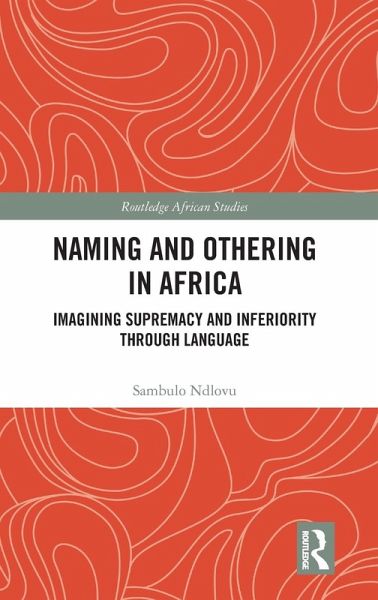
This book examines how names in Africa have been fashioned to create dominance and subjugation, inclusion and exclusion, others and self. Drawing on global and African examples, but with particular reference to Zimbabwe, the author demonstrates how names are used in class, race, ethnic, national, gender, sexuality, religious and business struggles in society as weapons by ingroups and outgroups. Using Othering theory as a framework, the chapters explore themes such as globalised names and their demonstration of the other; onomastic erasure in colonial naming and the subsequent decoloniality in African name changes; othering of women in onomastics and crude and sophisticated phaulisms in the areas of race, ethnicity, nationality, disability and sexuality. Highlighting social power dynamics through onomastics, this book will be of interest to researchers of onomastics, social anthropology, sociolinguistics and African culture and history.
As much of his material is from southern Africa, notably his home country Zimbabwe, and to a lesser extent South Africa, onomasticians from this part of the world will take delight in seeing something that they already know looked at with a fresh critical lens, and fitted within the single theme of othering. To those from other parts of the world, Ndlovu's material and the way he has interpreted it, will be an eye-opener. His work is likely to become a standard text on this aspect of naming.
Adrian Koopman, University of KwaZulu-Natal, Pietermaritzburg, South Africa
Adrian Koopman, University of KwaZulu-Natal, Pietermaritzburg, South Africa