
Andere Kunden interessierten sich auch für
 Investigation on the effect of ZnONP in the aggregation of lysozyme24,99 €
 Photosystem-based biosensors for water biomonitoring27,99 €
 Nanobiotechnology49,99 €
 Tissue Barriers in Disease, Injury and Regeneration100,99 €
 MOLECULAR TOOLS IN CANCER DIAGNOSIS & CLINICAL RESEARCH26,99 €
 Green NanoBiotechnolgy41,99 €
 L-arginine Biosensors: a comprehensive study29,99 €




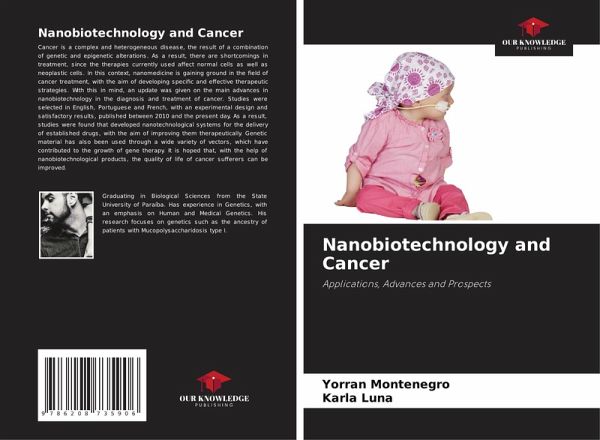
Cancer is a complex and heterogeneous disease, the result of a combination of genetic and epigenetic alterations. As a result, there are shortcomings in treatment, since the therapies currently used affect normal cells as well as neoplastic cells. In this context, nanomedicine is gaining ground in the field of cancer treatment, with the aim of developing specific and effective therapeutic strategies. With this in mind, an update was given on the main advances in nanobiotechnology in the diagnosis and treatment of cancer. Studies were selected in English, Portuguese and French, with an experimental design and satisfactory results, published between 2010 and the present day. As a result, studies were found that developed nanotechnological systems for the delivery of established drugs, with the aim of improving them therapeutically. Genetic material has also been used through a wide variety of vectors, which have contributed to the growth of gene therapy. It is hoped that, with the help of nanobiotechnological products, the quality of life of cancer sufferers can be improved.