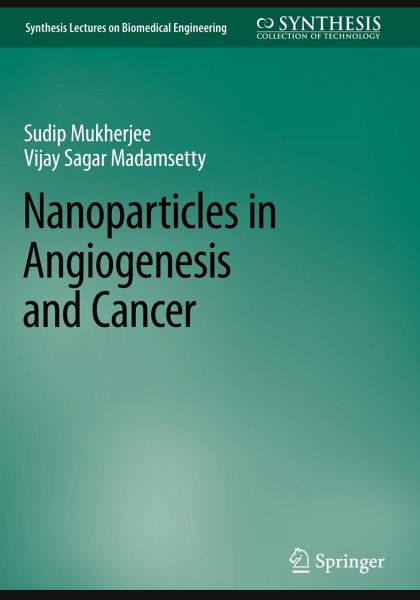
This book highlights recent developments of organic and inorganic nanomedicine that play a major role in anti-angiogenic cancer therapy. In addition, the authors present examples of nanomedicine based anti-angiogenic agents and their applications in cancer therapy. Angiogenesis is a pathophysiological phenomenon that modulates cell proliferation and cell migration and plays important roles in cancer. Anti-angiogenic nanotherapies have gained immense attention in recent times as alternative cost-effective therapies that opened a new dimension in cancer theranostics. Further the challenges of…mehr
This book highlights recent developments of organic and inorganic nanomedicine that play a major role in anti-angiogenic cancer therapy. In addition, the authors present examples of nanomedicine based anti-angiogenic agents and their applications in cancer therapy. Angiogenesis is a pathophysiological phenomenon that modulates cell proliferation and cell migration and plays important roles in cancer. Anti-angiogenic nanotherapies have gained immense attention in recent times as alternative cost-effective therapies that opened a new dimension in cancer theranostics. Further the challenges of the anti-angiogenic nanotherapies and possible future perspective are detailed.
Sudip Mukherjee, Ph.D., MRSC, is an Assistant Professor at the Indian Institute of Technology, BHU. Dr. Mukherjee serves as an Associate Editor for BMC Cancer and Frontiers in Chemistry. Dr. Mukherjee is a member of Royal Society of Chemistry, UK (MRSC). He has published 4 books and over 50 articles. He has 10 US patents filed/granted and has been part of cell engineering-based technologies that is licensed for clinical trials. His research interests include the development of advanced biomaterials for cell therapy and drug/gene delivery in diabetes, cancer theranostics, angiogenesis, and immunomodulatory applications. Boram Kim is currently pursuing her Ph.D. in Bioengineering at the Rice University. She completed her B.S. in Chemical Engineering at Dongguk University and received her master's degree in Biomedical Science at Soonchunhyang University, where she researched developing biomaterials for tissue engineering and bone regeneration. She has published over 24 research articles. Her thesis work focuses on developing immunomodulatory biomaterials for islet transplantation. She is interested in designing advanced biomaterials and medical devices to improve outcomes in clinical translation for cell-based therapeutics to treat chronic autoimmune diseases. Andrea Hernandez is a graduate student at The University of Texas MD Anderson Cancer Center UTHealth Houston Graduate School of Biomedical Sciences (GSBS) where she is pursuing a doctoral degree in Immunology. She is a recipient of a NIDCR Diversity Supplement, which encourages students from underrepresented backgrounds to work towards a scientific career. In her thesis, Andrea is focusing on using a novel peptide nanofiber hydrogel-based platform for intratumoral delivery of immunomodulatory therapeutics to treat Head and Neck Squamous Cell Cancers. She has contributed to more than 5 articles and poster presentations.
Inhaltsangabe
Chapter 1 - Introduction.- Chapter 2 - Current Anti-angiogenic Therapies and their Limitations.- Chapter 3 - Nanomedicine.- Chapter 4 - Organic Nanoparticles in Anti-angiogenic Cancer Therapy.- Chapter 5 - Inorganic Nanoparticles in Anti-angiogenic Cancer Therapy.- Chapter 6 - Potential Challenges in Anti-angiogenic Nanotherapies.- Chapter 7 - Conclusion.