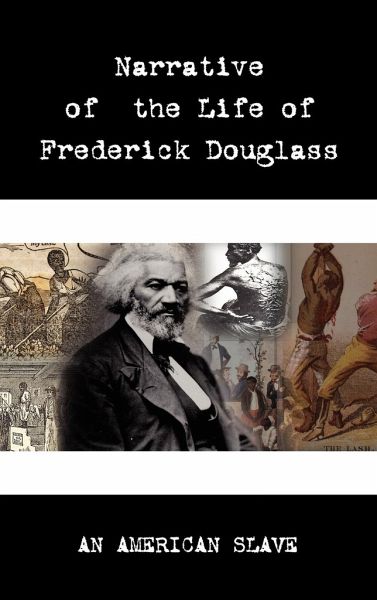
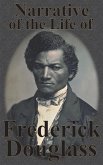
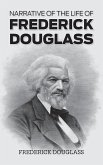
A masterpiece of American literature, Frederick Douglass' "Narrative" is a powerful story of an enslaved youth coming to social and moral consciousness by disobeying his owners and secretly teaching himself to read. Achieving literacy emboldens him to commit further acts of disobedience that ultimately lead him to escape to freedom. Angela Y. Davis explores key passages from Douglass, touching on the philosophical and political importance of self-knowledge, resistance in the pursuit of liberation, and the importance of Douglass to the Obama Generation.
A masterpiece of American literature, Frederick Douglass' "Narrative" is a powerful story of an enslaved youth coming to social and moral consciousness by disobeying his owners and secretly teaching himself to read. Achieving literacy emboldens him to commit further acts of disobedience that ultimately lead him to escape to freedom. Angela Y. Davis explores key passages from Douglass, touching on the philosophical and political importance of self-knowledge, resistance in the pursuit of liberation, and the importance of Douglass to the Obama Generation.
Born into slavery around February 1818 in Talbot County, Maryland, Frederick Douglass was separated from his mother early on and endured the harsh realities of bondage. Despite prohibitions, he secretly learned to read and write, understanding that literacy was a path to freedom. In 1838, he escaped to the North, adopting the surname Douglass to conceal his identity.Settling in New Bedford, Massachusetts, Douglass became a prominent abolitionist, captivating audiences with his eloquent speeches and writings. His 1845 autobiography, Narrative of the Life of Frederick Douglass, an American Slave, detailed his experiences and became instrumental in the anti-slavery movement. He also founded the abolitionist newspaper The North Star, amplifying his advocacy for emancipation and equal rights.Beyond abolition, Douglass championed women's suffrage and held various public offices, including U.S. Marshal for the District of Columbia. His relentless pursuit of justice and equality left an indelible mark on American society. Douglass passed away on February 20, 1895, in Washington, D.C., leaving a legacy that continues to inspire civil rights movements.
Es gelten unsere Allgemeinen Geschäftsbedingungen: www.buecher.de/agb
Impressum
www.buecher.de ist ein Internetauftritt der buecher.de internetstores GmbH
Geschäftsführung: Monica Sawhney | Roland Kölbl | Günter Hilger
Sitz der Gesellschaft: Batheyer Straße 115 - 117, 58099 Hagen
Postanschrift: Bürgermeister-Wegele-Str. 12, 86167 Augsburg
Amtsgericht Hagen HRB 13257
Steuernummer: 321/5800/1497
USt-IdNr: DE450055826