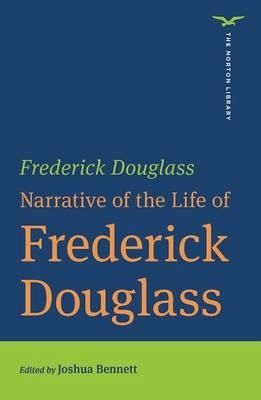
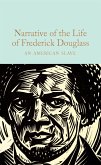
One of the most influential works of literature during the abolitionist movement of the early nineteenth century, Narrative of the Life of Frederick Douglass recounts with powerful eloquence and detail the author's life as a slave and his eventual escape to the North. This Norton Library edition features the original 1845 text and explanatory endnotes that clarify obscure terms and references. An introduction by Joshua Bennett provides historical background, highlights some of the narrative's key themes, and assesses the enduring legacy of Frederick Douglass's vital work.
One of the most influential works of literature during the abolitionist movement of the early nineteenth century, Narrative of the Life of Frederick Douglass recounts with powerful eloquence and detail the author's life as a slave and his eventual escape to the North. This Norton Library edition features the original 1845 text and explanatory endnotes that clarify obscure terms and references. An introduction by Joshua Bennett provides historical background, highlights some of the narrative's key themes, and assesses the enduring legacy of Frederick Douglass's vital work.
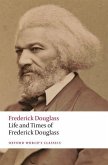
FREDERICK DOUGLASS was born Frederick Augustus Washington Bailey in 1818 on a farm in Talbot County, Maryland. Enslaved from birth, he taught himself to read and write as a boy. At age twenty he escaped to Massachusetts with the help of his future wife, Anna Murray, a freeborn black woman. Adopting the surname Douglass (from an exiled nobleman in Sir Walter Scott's poem The Lady of the Lake), he became prominent in the abolitionist movement and in 1845 published the first of three autobiographies, Narrative of the Life of Frederick Douglass, an American Slave, Written by Himself. It was followed by My Bondage and My Freedom (1855) and Life and Times of Frederick Douglass (1881; rev. 1892). In 1847, a group of British supporters purchased his freedom; five years later, he delivered a fiery address titled "What to the Slave Is the Fourth of July?" that cemented his reputation as one of the greatest orators of his day. After the Civil War, he moved to Washington, D.C., and served in a succession of government posts. He died there on February 20, 1895.
Es gelten unsere Allgemeinen Geschäftsbedingungen: www.buecher.de/agb
Impressum
www.buecher.de ist ein Internetauftritt der buecher.de internetstores GmbH
Geschäftsführung: Monica Sawhney | Roland Kölbl | Günter Hilger
Sitz der Gesellschaft: Batheyer Straße 115 - 117, 58099 Hagen
Postanschrift: Bürgermeister-Wegele-Str. 12, 86167 Augsburg
Amtsgericht Hagen HRB 13257
Steuernummer: 321/5800/1497
USt-IdNr: DE450055826