
Andere Kunden interessierten sich auch für
 Risk Assessment and Preventive Action Planning34,99 €
 Effectiveness of Workplace Conflict Resolution Mechanisms43,99 €
 TRADE MECHANISMS56,99 €
 Impact of accountability and internal governance mechanisms40,99 €
 Jordanian corporate governance framework and mechanisms37,99 €
 Mechanisms and challenges to judicial check56,99 €
 Customary Conflict Resolution Mechanisms in Raya, Ethiopia32,99 €







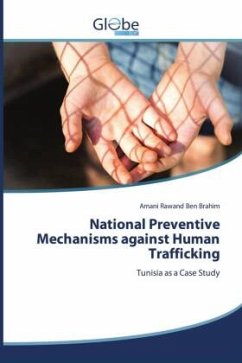
This book examines the effectiveness of National Preventive Mechanisms (NPMs) in combating human trafficking, focusing on Tunisia as a unique case of origin, transit, and destination country. It traces the historical evolution of slavery into modern trafficking, outlines the international legal framework (particularly the Palermo Protocol) and analyses Tunisia's domestic response through its 2016 Anti-Trafficking Law and the work of the National Commission against Trafficking in Persons (INLTP). Drawing on official data, policy analysis, and field challenges, the study evaluates prevention, protection, prosecution, and partnerships. While Tunisia has made significant progress in legal alignment and victim assistance, gaps in prosecution, awareness, and resource allocation persist. The work offers targeted recommendations for strengthening anti-trafficking mechanisms nationally and provides insights for other states considering similar frameworks.