- Broschiertes Buch
- Merkliste
- Auf die Merkliste
- Bewerten Bewerten
- Teilen
- Produkt teilen
- Produkterinnerung
- Produkterinnerung
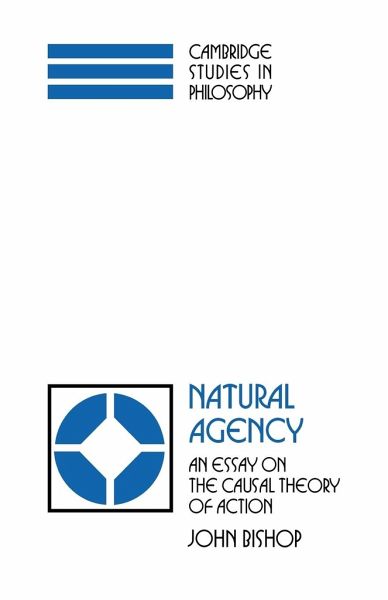
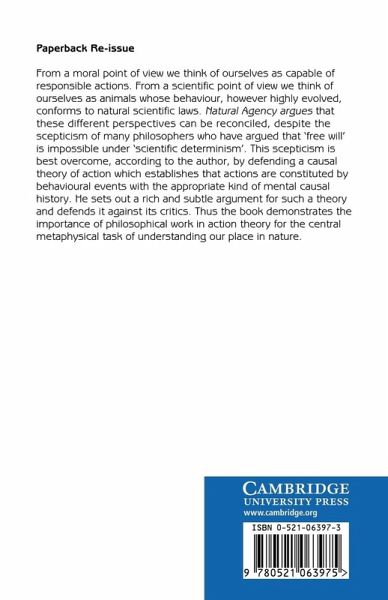
This book demonstrates the importance of philosophical work in action theory for the central metaphysical task of understanding our place in nature.
Andere Kunden interessierten sich auch für
John BishopNatural Agency112,99 €
John Hyman / Helen Steward (eds.)Agency and Action50,99 €
William A. RottschaeferThe Biology and Psychology of Moral Agency111,99 €
Alfred R. MeleMotivation and Agency46,99 €
Allen SpeightHegel, Literature, and the Problem of Agency51,99 €
John F. HortyAgency and Deontic Logic43,99 €
Exploring the Illusion of Free Will and Moral Responsibility64,99 €-
-
-
This book demonstrates the importance of philosophical work in action theory for the central metaphysical task of understanding our place in nature.
Produktdetails
- Produktdetails
- Verlag: Cambridge University Press
- Seitenzahl: 224
- Erscheinungstermin: 23. Februar 2008
- Englisch
- Abmessung: 216mm x 140mm x 14mm
- Gewicht: 322g
- ISBN-13: 9780521063975
- ISBN-10: 0521063973
- Artikelnr.: 23553949
- Herstellerkennzeichnung
- Libri GmbH
- Europaallee 1
- 36244 Bad Hersfeld
- gpsr@libri.de
- Verlag: Cambridge University Press
- Seitenzahl: 224
- Erscheinungstermin: 23. Februar 2008
- Englisch
- Abmessung: 216mm x 140mm x 14mm
- Gewicht: 322g
- ISBN-13: 9780521063975
- ISBN-10: 0521063973
- Artikelnr.: 23553949
- Herstellerkennzeichnung
- Libri GmbH
- Europaallee 1
- 36244 Bad Hersfeld
- gpsr@libri.de
John Bishop is an orthopedic surgeon from Houston, Texas. When he isn't dreaming up new Doc Brady exploits, you can find him on the golf course or playing his piano. Act of Atonement is the sixth book in the Doc Brady Mystery series.
Acknowledgments
Introduction
Notes
Part I. The Problems of Natural Agency: 1. A theory in search of its problem
2. Commitments of the ethical perspective
3. Commitments of the natural perspective
4. The core of the problem of action - and a plausible solution
Part II. The Value of a Causal Theory of Action: 1. A traditional approach to the problem of natural agency
2. Is action possible under determination 3. Is action possible under indeterminism? 4. A comparison with Dennett's elbow room
5. The conditional analysis argument
Part III. Developing a Causal Theory of Action: 1. Causal analyses of action
2. The challenge of Akrasia
Part IV. The Challenge of Causal Deviance: Part V. Coping with Basic Deviance: 1. The promise of the sensitivity strategy 2. Alternative versions of the sensitivity strategy
3. Assessing the sensitivity strategy 4. Sensitive and sustained causation
Part VI. Limits for the Causal Theory of Action: 1. Dealing with the Agent-Causationist syndrome
2. The place of the causal theory of action in the wider project of reconciliatory naturalism
Bibliography
Index.
Introduction
Notes
Part I. The Problems of Natural Agency: 1. A theory in search of its problem
2. Commitments of the ethical perspective
3. Commitments of the natural perspective
4. The core of the problem of action - and a plausible solution
Part II. The Value of a Causal Theory of Action: 1. A traditional approach to the problem of natural agency
2. Is action possible under determination 3. Is action possible under indeterminism? 4. A comparison with Dennett's elbow room
5. The conditional analysis argument
Part III. Developing a Causal Theory of Action: 1. Causal analyses of action
2. The challenge of Akrasia
Part IV. The Challenge of Causal Deviance: Part V. Coping with Basic Deviance: 1. The promise of the sensitivity strategy 2. Alternative versions of the sensitivity strategy
3. Assessing the sensitivity strategy 4. Sensitive and sustained causation
Part VI. Limits for the Causal Theory of Action: 1. Dealing with the Agent-Causationist syndrome
2. The place of the causal theory of action in the wider project of reconciliatory naturalism
Bibliography
Index.
Acknowledgments
Introduction
Notes
Part I. The Problems of Natural Agency: 1. A theory in search of its problem
2. Commitments of the ethical perspective
3. Commitments of the natural perspective
4. The core of the problem of action - and a plausible solution
Part II. The Value of a Causal Theory of Action: 1. A traditional approach to the problem of natural agency
2. Is action possible under determination 3. Is action possible under indeterminism? 4. A comparison with Dennett's elbow room
5. The conditional analysis argument
Part III. Developing a Causal Theory of Action: 1. Causal analyses of action
2. The challenge of Akrasia
Part IV. The Challenge of Causal Deviance: Part V. Coping with Basic Deviance: 1. The promise of the sensitivity strategy 2. Alternative versions of the sensitivity strategy
3. Assessing the sensitivity strategy 4. Sensitive and sustained causation
Part VI. Limits for the Causal Theory of Action: 1. Dealing with the Agent-Causationist syndrome
2. The place of the causal theory of action in the wider project of reconciliatory naturalism
Bibliography
Index.
Introduction
Notes
Part I. The Problems of Natural Agency: 1. A theory in search of its problem
2. Commitments of the ethical perspective
3. Commitments of the natural perspective
4. The core of the problem of action - and a plausible solution
Part II. The Value of a Causal Theory of Action: 1. A traditional approach to the problem of natural agency
2. Is action possible under determination 3. Is action possible under indeterminism? 4. A comparison with Dennett's elbow room
5. The conditional analysis argument
Part III. Developing a Causal Theory of Action: 1. Causal analyses of action
2. The challenge of Akrasia
Part IV. The Challenge of Causal Deviance: Part V. Coping with Basic Deviance: 1. The promise of the sensitivity strategy 2. Alternative versions of the sensitivity strategy
3. Assessing the sensitivity strategy 4. Sensitive and sustained causation
Part VI. Limits for the Causal Theory of Action: 1. Dealing with the Agent-Causationist syndrome
2. The place of the causal theory of action in the wider project of reconciliatory naturalism
Bibliography
Index.