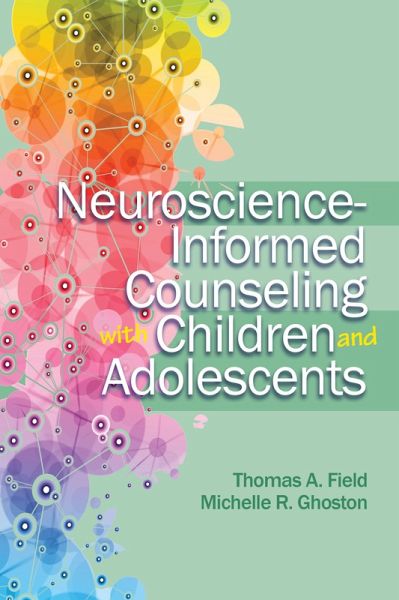
This innovative text is the first to illustrate how neuroscience concepts can be translated and applied to counseling with children and adolescents. Drs. Field and Ghoston discuss general principles for child and adolescent counseling before examining neurophysiological development from birth to age 18. They then provide in-session examples of neuroscience-informed approaches to behavior modification, play therapy, cognitive behavior therapy, biofeedback, neurofeedback, and therapeutic lifestyle change with diverse clients in a variety of settings. Each chapter contains knowledge and…mehr
This innovative text is the first to illustrate how neuroscience concepts can be translated and applied to counseling with children and adolescents. Drs. Field and Ghoston discuss general principles for child and adolescent counseling before examining neurophysiological development from birth to age 18. They then provide in-session examples of neuroscience-informed approaches to behavior modification, play therapy, cognitive behavior therapy, biofeedback, neurofeedback, and therapeutic lifestyle change with diverse clients in a variety of settings. Each chapter contains knowledge and skill-building material for counselors-in-training; counselor educators; and practitioners in schools, hospitals, residential facilities, and outpatient clinics. Text features include learning objectives, alignment with the CACREP Standards specific to child and adolescent counseling, explanatory diagrams, reflection questions to prompt deep processing of the material, case vignettes to demonstrate how to apply neuroscience concepts to counseling work, and quiz questions to test knowledge of key concepts. In addition, the text includes an extensive neuroscience glossary.
Thomas A. Field, PhD, is is an Associate Professor in the College of Education at Oregon State University and formerly an assistant professor of psychiatry in the mental health counseling and behavioral medicine program at Boston University School of Medicine. He has worked as a counselor educator since 2011. He also currently sees clients in private practice. Since 2006, Professor Field has worked with more than 1,000 clients in a variety of settings, including schools, inpatient psychiatric units, and outpatient private practice. He received his doctorate in counseling and supervision from James Madison University. In 2019, he received the Linda Seligman Counselor Educator of the Year Award from the American Mental Health Counselors Association (AMHCA). His primary areas of research are the integration of neuroscience into counseling practice and professional advocacy issues. He is currently the associate editor of the Journal of Mental Health Counseling, the coeditor of Counseling Today’s neurocounseling column, and chair of the AMHCA Neuroscience Interest Network and Neuroscience Taskforce.
Inhaltsangabe
Preface About the Authors Acknowledgments Section I: Foundations Chapter 1. General Principles for Counseling Children and Adolescents Chapter 2. Structure and Function of the Nervous System Chapter 3. Cellular Function and Epigenetics Section II: Childhood Chapter 4. Neurophysiological and Social Development During Childhood Chapter 5. Problems of Childhood Chapter 6. Counseling Approaches I: Behavior Modification and Behavior Analysis Chapter 7. Counseling Approaches II: Play Therapy and the Creative Arts Section III: Adolescence Chapter 8. Neurophysiological and Social Development During Adolescence Chapter 9. Problems of Adolescence Chapter 10. Counseling Approaches III: Cognitive Behavior Therapies Chapter 11. Counseling Approaches IV: Biofeedback, Neurofeedback, and Therapeutic Lifestyle Change Section IV: Conclusion Chapter 12. Delivering Neuroeducation to Children and Adolescents Neuroscience Glossary Answers to Quiz Questions Index
Preface About the Authors Acknowledgments Section I: Foundations Chapter 1. General Principles for Counseling Children and Adolescents Chapter 2. Structure and Function of the Nervous System Chapter 3. Cellular Function and Epigenetics Section II: Childhood Chapter 4. Neurophysiological and Social Development During Childhood Chapter 5. Problems of Childhood Chapter 6. Counseling Approaches I: Behavior Modification and Behavior Analysis Chapter 7. Counseling Approaches II: Play Therapy and the Creative Arts Section III: Adolescence Chapter 8. Neurophysiological and Social Development During Adolescence Chapter 9. Problems of Adolescence Chapter 10. Counseling Approaches III: Cognitive Behavior Therapies Chapter 11. Counseling Approaches IV: Biofeedback, Neurofeedback, and Therapeutic Lifestyle Change Section IV: Conclusion Chapter 12. Delivering Neuroeducation to Children and Adolescents Neuroscience Glossary Answers to Quiz Questions Index
Es gelten unsere Allgemeinen Geschäftsbedingungen: www.buecher.de/agb
Impressum
www.buecher.de ist ein Internetauftritt der buecher.de internetstores GmbH
Geschäftsführung: Monica Sawhney | Roland Kölbl | Günter Hilger
Sitz der Gesellschaft: Batheyer Straße 115 - 117, 58099 Hagen
Postanschrift: Bürgermeister-Wegele-Str. 12, 86167 Augsburg
Amtsgericht Hagen HRB 13257
Steuernummer: 321/5800/1497
USt-IdNr: DE450055826