How has American literature after postmodernism responded to the digital age? Drawing on insights from contemporary media theory, this is the first book to explore the explosion of new media technologies as an animating context for contemporary American literature. Casey Michael Henry examines the intertwining histories of new media forms since the 1970s and literary postmodernism and its aftermath, from William Gaddis's J R and Bret Easton Ellis's American Psycho through to David Foster Wallace's Infinite Jest. Through these histories, the book charts the ways in which print-based postmodern…mehr
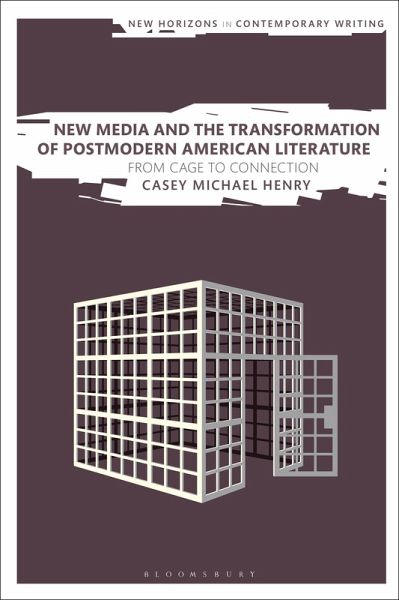
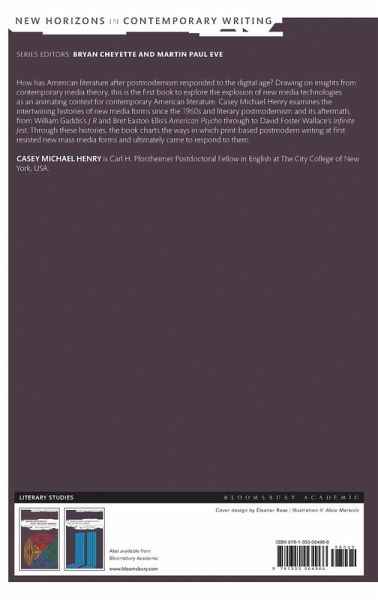
How has American literature after postmodernism responded to the digital age? Drawing on insights from contemporary media theory, this is the first book to explore the explosion of new media technologies as an animating context for contemporary American literature. Casey Michael Henry examines the intertwining histories of new media forms since the 1970s and literary postmodernism and its aftermath, from William Gaddis's J R and Bret Easton Ellis's American Psycho through to David Foster Wallace's Infinite Jest. Through these histories, the book charts the ways in which print-based postmodern writing at first resisted new mass media forms and ultimately came to respond to them.
Casey Michael Henry is Carl H. Pforzheimer Postdoctoral Fellow in English at The City College of New York, USA.
Inhaltsangabe
Acknowledgments Introduction: The Inoperable Machine: A Media History of Late Postmodernism Section One: The Tiny Box Wherein Everything is Solved: New Media Narrative, Communication Technology, and the Conversation Novels of William Gaddis Problems in Two-Dimensions Postmodern Issues / Good Intentions: New Media Art and Method Even Agnostics Have Truth: The Verity of Bill Viola Nauman, Burden, Jokes, and Cruelty Two Sides of a Shadow: Stelarc, Chat Bots, and the Phantom Libido Non-attribution: Corporeal Fluidity in William Gaddis's Conversation Novels Section Two: Grooves on the Feeling Knob: Systematic Transgression in William T. Vollmann's The Rainbow Stories and Bret Easton Ellis's American Psycho Framing Excess: An Introduction to Systematic Transgression Sensory Movements: William T. Vollmann, The Rainbow Stories, and "Emotional Calculus" Less Sad the Second Time Around: American Psycho and the Selfhood of Repetition Section Three: "Way Closer to the Soul than Mere Tastelessness Can Get": David Foster Wallace and Transcendent Extra-Textuality Unforeseen Ruptures: David Foster Wallace's Big Break, or, The Legacy of Experimentalism "Sudden Awakening to the Fact that the Mischief is Irretrievably Done": Epiphanic Structure in Infinite Jest The Great Beyond: Textual Relationality in Brief Interviews with Hideous Men Epilogue References Index
Es gelten unsere Allgemeinen Geschäftsbedingungen: www.buecher.de/agb
Impressum
www.buecher.de ist ein Internetauftritt der buecher.de internetstores GmbH
Geschäftsführung: Monica Sawhney | Roland Kölbl | Günter Hilger
Sitz der Gesellschaft: Batheyer Straße 115 - 117, 58099 Hagen
Postanschrift: Bürgermeister-Wegele-Str. 12, 86167 Augsburg
Amtsgericht Hagen HRB 13257
Steuernummer: 321/5800/1497
USt-IdNr: DE450055826