
Andere Kunden interessierten sich auch für
 Non-Conforming Women in Neoliberal Cities38,99 €
 Venus in the Dark137,99 €
 Venus in the Dark38,99 €
 Women's Imprisonment29,99 €
 Sociology124,99 €
 Aging and Diversity52,99 €
 Abortion and Reproductive Rights in Slovenia38,99 €
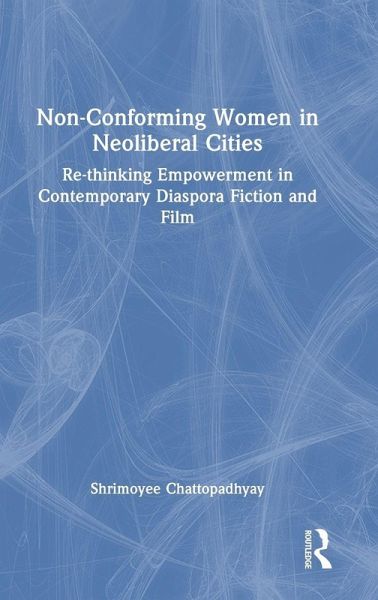
This book investigates the complex role space and movement play in the representation of South Asian diasporic communities in contemporary diaspora literature and films, the question of female empowerment in neoliberal Western cities, and the impact of trauma on female identities. It highlights the literary and cinematic portrayal of South Asian people's migration to the UK and the US after the Second World War and discusses how the identities of the female characters are transformed in neoliberal cities. Focusing on South Asian women writers and directors, who are first- and second-generation immigrants in the West, the volume analyses how their works depict female empowerment in both British and American settings.
The book will be of great interest to scholars and researchers of literature, film studies, diaspora studies, gender studies, and South Asian studies.
The book will be of great interest to scholars and researchers of literature, film studies, diaspora studies, gender studies, and South Asian studies.
"The evolution of the role of the feminine, the typified 'woman' construct, has seen many shifts in immediate history. While the journey of gender identity confrontations have been surveyed and interrogated with lenses that managed to telescope temporal-spatial variances - thereby creating a composite look at the historical and geographical progressions (and regressions) - the focus on the immediate has demanded greater critical deliberation. In the last few decades the global pattern of emigration and diasporic attachments have necessitated substantial departures from the conventional understanding of such phenomena. The political atmosphere of the world has created large-scale movements, mostly involuntary, that had affected the location and situation of those already transplanted. The exploration that this book engages in, is based on those non-conforming stances that translate into literature and the literary. These are positions that can challenge the institutionalised structures. The chapters in this book look at a variety of such positions - theorizing them, interrogating them and celebrating them. Shrimoyee Chattopadhyay takes us on a journey that spans from terrors and trauma to healing and home. Home is perhaps the most significant concept in the world that we live in, and identifying it is identifying the self. The dislocated finding home is perhaps the most poignant dream of today. This book looks at a major part of that dreamscape - which can and does become nightmarish more often than we would like to recognise."
Dr Siddhartha Biswas, University of Calcutta.
Dr Siddhartha Biswas, University of Calcutta.