

Andere Kunden interessierten sich auch für
 Schema Coaching160,99 €
 The Art and Joy of Stuckness for Coaches and their Clients160,99 €
 The Construction Products Directive34,99 €
 Internal control systems within the framework of the 8th EU directive47,95 €
 The Secret of Coaching and Leading by Values45,99 €
 Successful Coaching for Leaders and Managers178,99 €
 Archetypal Coaching170,99 €







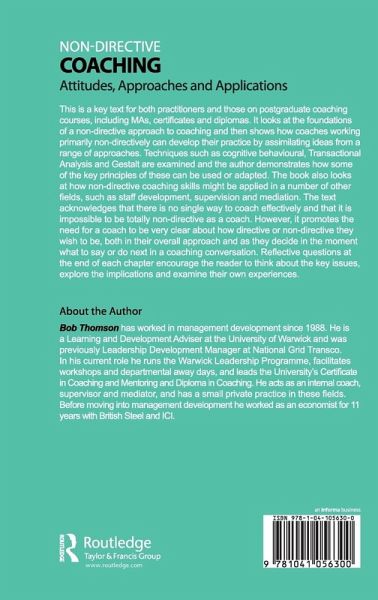
Non-directive Coaching provides a clear outline of what non-directive coaching is and how it can be used to develop and support others. The emphasis of the text is clearly focused on how coaching helps to enable others. Guidance is provided on how to use questioning and listening more effectively to guide learners to explore their own practice in depth with the aim to discover ways forward and refine their practice. What is fantastic about this book is that it also explores the value of silence and thinking time to enable the learner to reflect on practice and explore their own solutions. Strategies are explored and a direct link is made to how coaching can be used to develop others. It is a theory rich, compact read, exploring a wide range of important issues, with a clear focus on the application and how to help others. The text is extremely helpful for both the new and experienced subject/phase tutor and mentor who is keen to continue to develop and support their trainees to the best of their ability.
Lizana Oberholzer, NASBTT
Lizana Oberholzer, NASBTT