
Andere Kunden interessierten sich auch für
 Novelas amorosas y ejemplares21,99 €
") Novelas Ejemplares Y Amorosas De Dona Maria De Zayas Y Sotomayor, Part 1-2 (1847)25,99 €
Novelas Ejemplares Y Amorosas De Dona Maria De Zayas Y Sotomayor, Part 1-2 (1847)25,99 € Novelas Ejemplares24,99 €
 Novelas Ejemplares y Amorosas and Desenganos Amorosos20,99 €
") Novelas Ejemplares De Miguel De Cervantes Saavedra V1 (1877)18,99 €
Novelas Ejemplares De Miguel De Cervantes Saavedra V1 (1877)18,99 €") Nouvelas Exemplares De Miguel De Cervantes Saavedra V3 (1743)32,99 €
Nouvelas Exemplares De Miguel De Cervantes Saavedra V3 (1743)32,99 € Obras Completas De Cervantes: Novelas Ejemplares23,99 €

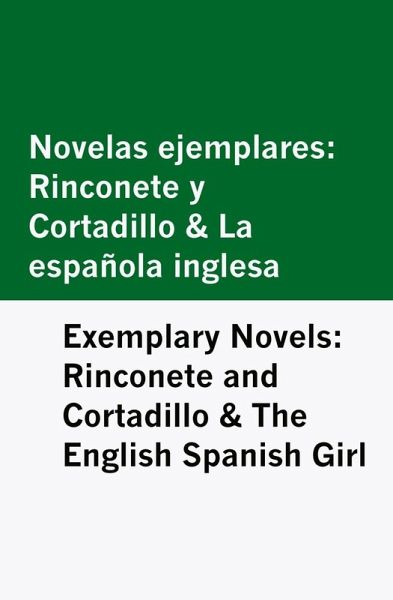
Exemplary Novels: Rinconete and Cortadillo & The English Spanish Girl (Bilingual Edition: Spanish-English) Miguel de Cervantes's Novelas ejemplares helped define the modern short prose narrative. This volume gathers two of its most studied tales-"Rinconete y Cortadillo" and "La española inglesa" ("The English Spanish Girl")-works that combine close social observation with inventive storytelling. The original language of these novellas is Spanish; this edition presents the complete texts in both Spanish and English for comparative reading. "Rinconete y Cortadillo" follows two resourceful youths who drift into Seville's organized underworld, where a thieves' guild runs on ceremony, ledgers, and a curious blend of piety and rule-breaking. Cervantes uses comedy and everyday speech to examine how institutions-lawful or illicit-create their own codes and moral justifications. The novella is a compact portrait of urban life in early modern Spain, attentive to class, language, and the shifting boundaries between respectability and survival. "La española inglesa" turns to cross¿Channel relations in an age of conflict. A Spanish girl raised in an English household navigates love, loyalty, and the pressures of national and religious identity. Through separations, tests, and negotiations across borders, Cervantes explores constancy, cultural encounter, and the possibilities of reconciliation. The story links private lives to the broader currents of European politics and belief. Together, these novellas show Cervantes experimenting with voice, structure, and point of view, drawing on the picaresque, the Italianate novella, and emerging realist techniques. Their influence can be traced in the development of the short story across Europe, as well as in later fiction that probes the gray areas between law and custom, appearance and conviction. Why these stories remain relevant About the bilingual format This edition presents the Spanish originals alongside an English version, offering a practical tool for language learners and readers interested in literary comparison. Parallel texts allow you to: About the Author Miguel de Cervantes Saavedra (1547-1616) is a central figure of world literature. A veteran of the Battle of Lepanto and later a captive in Algiers, he drew on varied experiences to craft fiction that blends realism, humor, and reflection on storytelling itself. Best known for Don Quixote (1605, 1615), he also wrote plays, poetry, and the Novelas ejemplares (1613), a collection that broadened the possibilities of short narrative prose. Cervantes's engagement with voice, perspective, and everyday speech helped shape the evolution of the modern novel. About Möwenstein Books Möwenstein Books publishes bilingual editions of classic works to support close reading, language study, and comparative literature. Each title presents the complete text in two languages so readers can explore style, context, and interpretation across linguistic boundaries. Note: The English translation in this edition was produced with the aid of digital tools and is intended as a learning resource for study and comparison.