
Andere Kunden interessierten sich auch für
 Le Opere Di Galileo Galilei, Volumes 3-437,99 €
 Läsning För Barn, Volumes 26-27...37,99 €
 Travaux De L'observatoire De Lyon, Volumes 2-340,99 €
 Berquin's Children's Friend: New Translation in Two Volumes34,99 €
 Naturwissenschaftliche Volksbücher, Volumes 11-1541,99 €
 Little Susy's Six Birthdays, Volumes 1-230,99 €
 Bird Lore, Volumes 1-1528,99 €



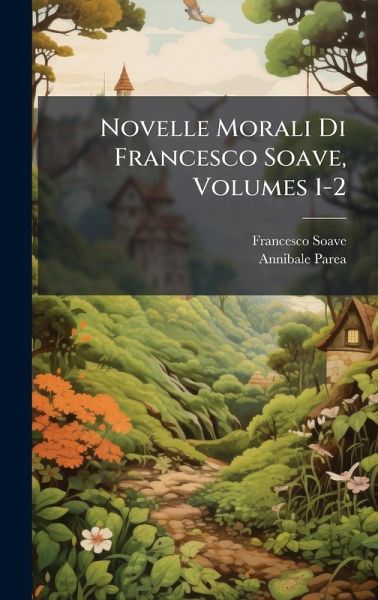
This is a two-volume collection of moral stories, "Novelle Morali Di Francesco Soave, Volumes 1-2," written by Francesco Soave and edited by Annibale Parea. Originally published in 1839, these stories are designed to impart important moral lessons to young readers. Written in Italian, the book offers a glimpse into the educational and social values of the 19th century. Each story presents a scenario or situation followed by a clear moral, making it suitable for use in education or for personal reflection. The accessible language and engaging narratives make these stories timeless and valuable for language learners and those interested in classic Italian children's literature. This work has been selected by scholars as being culturally important, and is part of the knowledge base of civilization as we know it. This work was reproduced from the original artifact, and remains as true to the original work as possible. Therefore, you will see the original copyright references, library stamps (as most of these works have been housed in our most important libraries around the world), and other notations in the work. This work is in the public domain in the United States of America, and possibly other nations. Within the United States, you may freely copy and distribute this work, as no entity (individual or corporate) has a copyright on the body of the work. As a reproduction of a historical artifact, this work may contain missing or blurred pages, poor pictures, errant marks, etc. Scholars believe, and we concur, that this work is important enough to be preserved, reproduced, and made generally available to the public. We appreciate your support of the preservation process, and thank you for being an important part of keeping this knowledge alive and relevant.