
Andere Kunden interessierten sich auch für
 Strategy and Nuclear Deterrence35,99 €
 Ethics and Nuclear Deterrence131,99 €
 Ethics and Nuclear Deterrence45,99 €
 Strategy and Nuclear Deterrence91,99 €
 Deterrence in the 1980s130,99 €
 Deterrence in the 1980s45,99 €
 Nuclear Warfare and Deterrence373,99 €
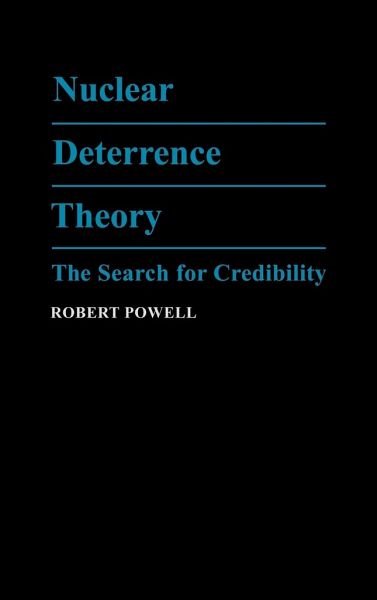
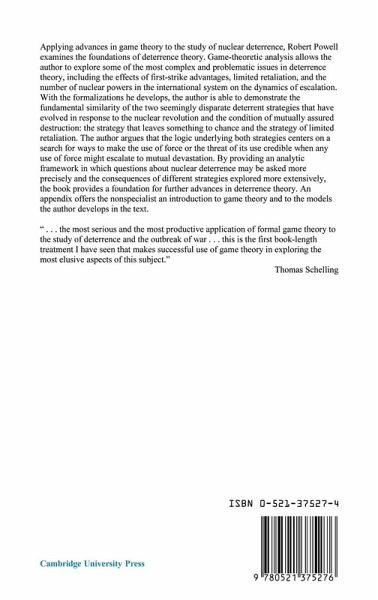
Applying advances in game theory to the study of nuclear deterrence, Robert Powell examines the foundations of deterrence theory. Game-theoretic analysis allows the author to explore some of the most complex and problematic issues in deterrence theory, including the effects of first-strike advantages, limited retaliation, and the number of nuclear powers in the international system on the dynamics of escalation. With the formalizations he develops, the author is able to demonstrate the fundamental similarity of the two seemingly disparate deterrrent strategies that have evolved in response to the nuclear revolution and the condition of mutually assured destruction: the strategy of limited retaliation. The author argues that the logic underlying both strategies centres on a search for ways to make the use of force or the threat of its use credible when any use of force might escalate to mutual devastation.