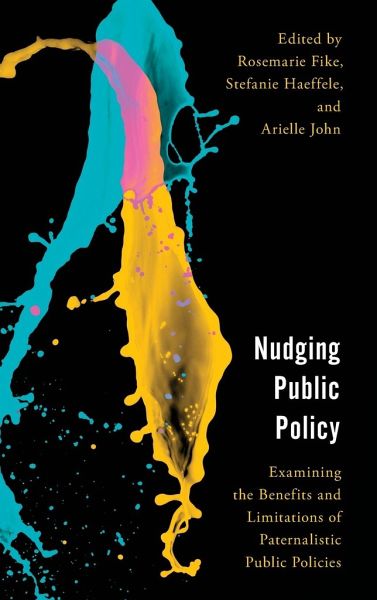
Given the growing popularity of behavioral economics as a means to influence the decisions that individuals make, and the increasing use of choice architecture in public policy, this book offers a critical analysis of the feasibility and limitations of this approach to public policy.
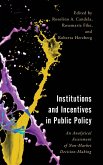
Given the growing popularity of behavioral economics as a means to influence the decisions that individuals make, and the increasing use of choice architecture in public policy, this book offers a critical analysis of the feasibility and limitations of this approach to public policy.
Rosemarie Fike is an Instructor of Economics at Texas Christian University and a Senior Fellow of the Fraser Institute. Stefanie Haeffele is the Deputy Director of Academic and Student Programs and a Senior Fellow for the F. A. Hayek Program for Advanced Study in Philosophy, Politics, and Economics at the Mercatus Center at George Mason University. Arielle John is an Associate Director of Academic and Student Programs and a Senior Fellow for the F. A. Hayek Program for Advanced Study in Philosophy, Politics, and Economics, and Senior Research Fellow at the Mercatus Center at George Mason University.
Inhaltsangabe
Introduction by Rosemarie Fike, Stefanie Haeffele, and Arielle John Chapter 1: Irrationality is not Unreasonable: Behavioral Economics, Rationality, and Implications for Public Policy by Mario J. Rizzo Chapter 2: What Is a Nudge? by Jeffrey Bristol Chapter 3: Why Nudges Should Be Local and Decentralized by Katarina Hall Chapter 4: Incentivized Migration in Colonial Contexts: The Challenge of Asymmetric Information in Public Policy Nudges by Oliver McPherson-Smith Chapter 5: Nudge, Nations, and Cultural Change: The Process of Identity Formation in Singapore by Erin Dunne Chapter 6: Nudging Lobbyists to Register with Online Registration and Grace Periods by James M. Strickland Chapter 7: Nudging Choices in Education Policy by Shannon Lee Chapter 8: Public Policy, the Environment, and the Use of Green Nudges by Cynthia Boruchowicz Chapter 9: The Paradoxes of the Privacy Paradox by Will Rinehart Chapter 10: Nudging, Trust, and the "Sharing Economy" in Latin America by Luis H. Lozano-Paredes
Introduction by Rosemarie Fike, Stefanie Haeffele, and Arielle John Chapter 1: Irrationality is not Unreasonable: Behavioral Economics, Rationality, and Implications for Public Policy by Mario J. Rizzo Chapter 2: What Is a Nudge? by Jeffrey Bristol Chapter 3: Why Nudges Should Be Local and Decentralized by Katarina Hall Chapter 4: Incentivized Migration in Colonial Contexts: The Challenge of Asymmetric Information in Public Policy Nudges by Oliver McPherson-Smith Chapter 5: Nudge, Nations, and Cultural Change: The Process of Identity Formation in Singapore by Erin Dunne Chapter 6: Nudging Lobbyists to Register with Online Registration and Grace Periods by James M. Strickland Chapter 7: Nudging Choices in Education Policy by Shannon Lee Chapter 8: Public Policy, the Environment, and the Use of Green Nudges by Cynthia Boruchowicz Chapter 9: The Paradoxes of the Privacy Paradox by Will Rinehart Chapter 10: Nudging, Trust, and the "Sharing Economy" in Latin America by Luis H. Lozano-Paredes
Es gelten unsere Allgemeinen Geschäftsbedingungen: www.buecher.de/agb
Impressum
www.buecher.de ist ein Internetauftritt der buecher.de internetstores GmbH
Geschäftsführung: Monica Sawhney | Roland Kölbl | Günter Hilger
Sitz der Gesellschaft: Batheyer Straße 115 - 117, 58099 Hagen
Postanschrift: Bürgermeister-Wegele-Str. 12, 86167 Augsburg
Amtsgericht Hagen HRB 13257
Steuernummer: 321/5800/1497
USt-IdNr: DE450055826