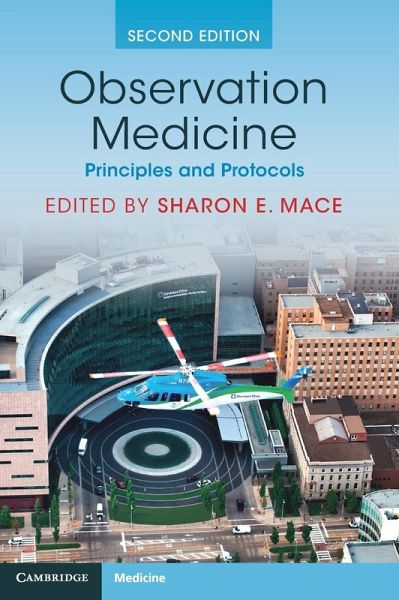
Using comprehensive sample administrative and clinical protocols, this fully updated and practical second edition guide to observation medicine (OM) provides a detailed account of how to establish and run an observation unit (OU) and reviews medical/surgical/obstetrical-gynecologic/psychiatric/social conditions in which OM may be applicable. The book covers clinical topics including improving patient outcomes, avoiding readmissions, and using OM in a pandemic or disaster. Practical topics on design, staffing, and daily operations; fiscal and business aspects, such as coding, billing, and…mehr
Using comprehensive sample administrative and clinical protocols, this fully updated and practical second edition guide to observation medicine (OM) provides a detailed account of how to establish and run an observation unit (OU) and reviews medical/surgical/obstetrical-gynecologic/psychiatric/social conditions in which OM may be applicable. The book covers clinical topics including improving patient outcomes, avoiding readmissions, and using OM in a pandemic or disaster. Practical topics on design, staffing, and daily operations; fiscal and business aspects, such as coding, billing, and reimbursement; regulatory concerns such as aligning case management and utilization review with observation; nursing considerations are all present. The new edition features many new chapters and topics ranging from the geriatric OU, psychiatric observation, telemedicine in OM, to the cancer patient in the OU. Applicable to an international audience, it offers instructions for implementing observation in any setting or locale and in any type of hospital or other appropriate facility.
Foreword Nicholas Jouriles Preface Prologue Section I. Administration: 1. Key concepts of observation medicine: How to start (and maintain) an observation unit - What you need to know: Clinical issues Sharon E. Mace 2. Key concepts of observation medicine: How to start (and maintain) an observation unit: What you need to know: Administrative issues Sharon E. Mace and Michael A. Granovsky 3. Development of observation medicine over time Louis G. Graff 4. Principles of observation medicine Louis G. Graff 5. Design: Features common to successful observation units David J. Robinson 6. Staffing considerations David A. Meguerdichian and Christopher W. Baugh 7. Nursing Sharon E. Mace 8. Risk management Howard Blumstein and Bret A. Nicks 9. Metrics and performance improvement: Patient quality, safety, and experience Sharon E. Mace and Elaine Thallner Section II. Clinical Setting and Education: 10. The community hospital perspective in a suburban/rural setting Ryan Prudoff and Stephen F. Sayles III 11. Observation medicine and the urban community hospital Robert S. Bennett 12. The tertiary care hospital and academic setting Anwar Osborne 13. Rural observation medicine J. Lane Schnell 14. Observation medicine and the critical access hospital Jeffrey E. Goode and Justin Rodgers 15. Observation medicine and the hospitalist David G. Paje 16. Observation medicine and advanced practice providers Stephanie M. Figueroa and Dean T. Harrison 17. Observation medicine training and education - Residents Pawan Suri 18. Observation medicine training and education - medical students/fellows Bradley D.Lepore and Margarita E. Pena Section III. New Developments: 19. Simple, complex, and extended observation Pawan Suri 20. Complex and extended observation Ramupriya Vaithi and Bret A. Nicks 21. Hospital readmissions Sharon E. Mace and Elaine Thallner 22. Level of care determination: Medical necessity risk stratification Louis G. Graff 23. Acute medicine in the United Kingdom Louella Vaughan 24. Point-of-Care ultrasound in the observation unit Courtney M. Smalley and Matthew Kostura 25. Telehealth use in observation medicine George B. Hughes Section IV. Clinical: Subsection 4A clinical - Cardiac 26. Chest pain Stephen Boone and W. Frank Peacock 27. Acute heart failure Edgar Ordonez and W. Frank Peacock 28. Atrial fibrillation Catherine T. Puetz 29. Syncope T. Andrew Windsor, Zachary Rogers, and Amal Mattu 30. Cardiac stress testing Akilesh Honasoge, Kami M. Hu, and Amal Mattu Subsection 4B clinical - Respiratory 31. Asthma Eric Anderson 32. Acute exacerbation of chronic obstructive pulmonary disease and bronchitis Eric Anderson 33. Community acquired pneumonia Eric Anderson 34. Primary spontaneous pneumothorax Chai Chew Yian Subsection 4C clinical - Vascular 35. Venous thromboembolism Carol L. Clark and Hamzeh W. Omar 36. Acute pulmonary embolism David G. Paje 37. Anticoagulants David G. Paje Subsection 4D clinical - neurologic 38. Transient ischemic attack Jill A. Mohr and Jonathan Glauser 39. Headaches Sharon E. Mace and Lucy Franjic 40. Seizures Sharon E. Mace and Lucy Franjic 41. Dizziness and vertigo Saurin Bhatt 42. Central nervous system Shunts David A. Meguerdichian Subsection 4E clinical - Metabolic, endocrine 43. Hyperglycemia Pawan Suri and Taruna K. Aurora 44. Hypoglycemia Pawan Suri and Taruna K. Aurora 45. Electrolyte abnormalities Grace Lambert and Jonathan Glauser Subsection 4F Clinical - Hematologic 46. Sickle cell disease Matthew Lyon, Ann Marie Kuchinski, and Robert W. Gibson 47. Blood product transfusions Ryan Yavorsky and Jonathan Glauser Subsection 4G clinical - Oncologic 48. Oncology Adam Klotzb Subsection 4H clinical - Infections 49. Skin and soft tissue infections Robert S. Bennett Subsection 4I clinical - Gastrointestinal 50. Abdominal pain Louis G. Graff 51. Upper gast
Foreword Nicholas Jouriles Preface Prologue Section I. Administration: 1. Key concepts of observation medicine: How to start (and maintain) an observation unit - What you need to know: Clinical issues Sharon E. Mace 2. Key concepts of observation medicine: How to start (and maintain) an observation unit: What you need to know: Administrative issues Sharon E. Mace and Michael A. Granovsky 3. Development of observation medicine over time Louis G. Graff 4. Principles of observation medicine Louis G. Graff 5. Design: Features common to successful observation units David J. Robinson 6. Staffing considerations David A. Meguerdichian and Christopher W. Baugh 7. Nursing Sharon E. Mace 8. Risk management Howard Blumstein and Bret A. Nicks 9. Metrics and performance improvement: Patient quality, safety, and experience Sharon E. Mace and Elaine Thallner Section II. Clinical Setting and Education: 10. The community hospital perspective in a suburban/rural setting Ryan Prudoff and Stephen F. Sayles III 11. Observation medicine and the urban community hospital Robert S. Bennett 12. The tertiary care hospital and academic setting Anwar Osborne 13. Rural observation medicine J. Lane Schnell 14. Observation medicine and the critical access hospital Jeffrey E. Goode and Justin Rodgers 15. Observation medicine and the hospitalist David G. Paje 16. Observation medicine and advanced practice providers Stephanie M. Figueroa and Dean T. Harrison 17. Observation medicine training and education - Residents Pawan Suri 18. Observation medicine training and education - medical students/fellows Bradley D.Lepore and Margarita E. Pena Section III. New Developments: 19. Simple, complex, and extended observation Pawan Suri 20. Complex and extended observation Ramupriya Vaithi and Bret A. Nicks 21. Hospital readmissions Sharon E. Mace and Elaine Thallner 22. Level of care determination: Medical necessity risk stratification Louis G. Graff 23. Acute medicine in the United Kingdom Louella Vaughan 24. Point-of-Care ultrasound in the observation unit Courtney M. Smalley and Matthew Kostura 25. Telehealth use in observation medicine George B. Hughes Section IV. Clinical: Subsection 4A clinical - Cardiac 26. Chest pain Stephen Boone and W. Frank Peacock 27. Acute heart failure Edgar Ordonez and W. Frank Peacock 28. Atrial fibrillation Catherine T. Puetz 29. Syncope T. Andrew Windsor, Zachary Rogers, and Amal Mattu 30. Cardiac stress testing Akilesh Honasoge, Kami M. Hu, and Amal Mattu Subsection 4B clinical - Respiratory 31. Asthma Eric Anderson 32. Acute exacerbation of chronic obstructive pulmonary disease and bronchitis Eric Anderson 33. Community acquired pneumonia Eric Anderson 34. Primary spontaneous pneumothorax Chai Chew Yian Subsection 4C clinical - Vascular 35. Venous thromboembolism Carol L. Clark and Hamzeh W. Omar 36. Acute pulmonary embolism David G. Paje 37. Anticoagulants David G. Paje Subsection 4D clinical - neurologic 38. Transient ischemic attack Jill A. Mohr and Jonathan Glauser 39. Headaches Sharon E. Mace and Lucy Franjic 40. Seizures Sharon E. Mace and Lucy Franjic 41. Dizziness and vertigo Saurin Bhatt 42. Central nervous system Shunts David A. Meguerdichian Subsection 4E clinical - Metabolic, endocrine 43. Hyperglycemia Pawan Suri and Taruna K. Aurora 44. Hypoglycemia Pawan Suri and Taruna K. Aurora 45. Electrolyte abnormalities Grace Lambert and Jonathan Glauser Subsection 4F Clinical - Hematologic 46. Sickle cell disease Matthew Lyon, Ann Marie Kuchinski, and Robert W. Gibson 47. Blood product transfusions Ryan Yavorsky and Jonathan Glauser Subsection 4G clinical - Oncologic 48. Oncology Adam Klotzb Subsection 4H clinical - Infections 49. Skin and soft tissue infections Robert S. Bennett Subsection 4I clinical - Gastrointestinal 50. Abdominal pain Louis G. Graff 51. Upper gast
Es gelten unsere Allgemeinen Geschäftsbedingungen: www.buecher.de/agb
Impressum
www.buecher.de ist ein Internetauftritt der buecher.de internetstores GmbH
Geschäftsführung: Monica Sawhney | Roland Kölbl | Günter Hilger
Sitz der Gesellschaft: Batheyer Straße 115 - 117, 58099 Hagen
Postanschrift: Bürgermeister-Wegele-Str. 12, 86167 Augsburg
Amtsgericht Hagen HRB 13257
Steuernummer: 321/5800/1497
USt-IdNr: DE450055826