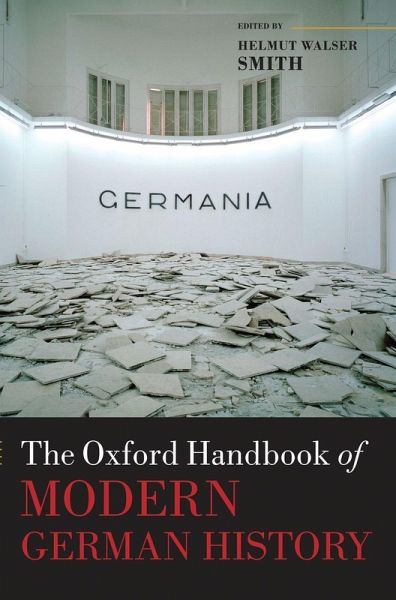
Smith
OHB MODERN GERMAN HISTORY OHBK C
Smith
OHB MODERN GERMAN HISTORY OHBK C
- Gebundenes Buch
Andere Kunden interessierten sich auch für
Du Plessis Et AlOHB ROMAN LAW OHBK C193,99 €
Sam A. MustafaGermany in the Modern World133,99 €
Mary FulbrookA Concise History of Germany96,99 €
Zef M. SegalThe Political Fragmentation of Germany38,99 €
Zef M. SegalThe Political Fragmentation of Germany57,99 €
Brittany LehmanTeaching Migrant Children in West Germany and Europe, 1949-199253,99 €
Jelena PetrovicWomen's Authorship in Interwar Yugoslavia57,99 €-
-
-
Produktdetails
- Verlag: ACADEMIC
- Seitenzahl: 890
- Erscheinungstermin: 29. September 2011
- Englisch
- Abmessung: 250mm x 175mm x 52mm
- Gewicht: 1683g
- ISBN-13: 9780199237395
- ISBN-10: 0199237395
- Artikelnr.: 33243957
- Herstellerkennzeichnung
- Libri GmbH
- Europaallee 1
- 36244 Bad Hersfeld
- gpsr@libri.de
Helmut Walser Smith is Martha Rivers Ingram Professor of History and Director of the Max Kade Center for European and German Studies at Vanderbilt University. A scholar of German nationalism, religious history, and anti-Semitism, he is a specialist on Imperial Germany and has written on the long continuities of German history.
* 1: Helmut Walser Smith: Introduction
* Part I: History
* 2: Robert von Friedeburg: The Origins of Modern Germany
* 3: Celia Applegate: Senses of Place
* 4: Ann Goldberg: Women and Men: 1760-1960
* Part II: States, People and Nation, 1760-1860
* 5: Ute Planert: International Conflict, War, and the Making of Modern
Germany, 1740-1815
* 6: 1. Jÿrgen Osterhammel and Franz Leander Fillafer: Cosmopolitanism
and the German Enlightenment
* 7: Jonathan Sperber: The Atlantic Revolutions in the German Lands,
1776-1849
* 8: James M. Brophy: The End of the Economic Old Order: The Great
Transition, 1750-1860
* 9: Ernest Benz: Escaping Malthus: Population Explosion and Human
Movement, 1760-1884
* 10: George S. Williamson: Protestants, Catholics, and Jews:
Enlightenment, Emancipation, New Forms of Piety
* 11: Christian Jansen: The Formation of German Nationalism, 1740-1850
* 12: Ritchie Robertson: German Literature and Thought from 1810 to1890
* Part III: Germany: The Nation State
* 13: Siegfried Weichlein: Nation State, Conflict Resolution, and
Culture War, 1850-1878
* 14: Helmut Walser Smith: Authoritarian State, Dynamic Society, Failed
Imperialist Power, 1878-1914
* 15: Cornelius Torp: The Great Transformation: German Economy and
Society, 1850-1914
* 16: Andrew Zimmerman: Race and World Politics: Germany in the Age of
Imperialism, 1878-1914
* 17: Benjamin Ziemann: Germany 1914-1918. Total War as a Catalyst of
Change
* 18: J. Adam Tooze: The German National Economy in an Era of Crisis
and War, 1917-1945
* 19: Thomas Mergel: Democracy and Dictatorship
* 20: Rebekka Habermas: Piety, Power and Powerlessness: Religion and
Religious Groups in Germany, 1870-1945
* 21: 1. Steve Dowden and Meike G. Werner: The Place of German
Modernism
* 22: Pieter M. Judson: Nationalism in the Era of the Nation State,
1870-1945
* 23: Thomas Kuhne: Todesraum: War, Peace, and the Experience of Mass
Death, 1914-1945
* 24: William H. Hagen: The Three Horsemen of the Holocaust:
Antisemitism, East European Empire, Aryan Folk Community
* 25: 1. Sebastian Conrad and Philipp Ther: The Uprooted: Expulsion,
Exile, Flight, Forced Labor, Expulsion, 1880-1948
* Part IV: Germany 1945-1989
* 26: Stefan Ludwig Hoffman: The Occupation of Germany, a Rubble
Society
* 27: Andrew I. Port: Democracy and Dictatorship in the Cold War: the
Two Germanies, 1949-1961
* 28: Uta Poiger: Generations: The Revolution of the 1960s
* 29: Donna Harsch: Industrialization, Mass Consumption, Postindustrial
Society
* 30: Benjamin Ziemann: Religion and the Search for Meaning, 1945-1990
* 31: Lutz Koepnik: Culture in the Shadow of Trauma?
* 32: Andreas Daum: The Two German States in the International World
* Part V: Contemporary Germany
* 33: David F. Patton: Annus Mirabilis: 1989 and German Unification
* 34: Kiran Patel: Germany and European Integrations since 1945
* 35: William A. Barbieri, Jr.: Toward a Multicultural Society?
* Index

* Part I: History
* 2: Robert von Friedeburg: The Origins of Modern Germany
* 3: Celia Applegate: Senses of Place
* 4: Ann Goldberg: Women and Men: 1760-1960
* Part II: States, People and Nation, 1760-1860
* 5: Ute Planert: International Conflict, War, and the Making of Modern
Germany, 1740-1815
* 6: 1. Jÿrgen Osterhammel and Franz Leander Fillafer: Cosmopolitanism
and the German Enlightenment
* 7: Jonathan Sperber: The Atlantic Revolutions in the German Lands,
1776-1849
* 8: James M. Brophy: The End of the Economic Old Order: The Great
Transition, 1750-1860
* 9: Ernest Benz: Escaping Malthus: Population Explosion and Human
Movement, 1760-1884
* 10: George S. Williamson: Protestants, Catholics, and Jews:
Enlightenment, Emancipation, New Forms of Piety
* 11: Christian Jansen: The Formation of German Nationalism, 1740-1850
* 12: Ritchie Robertson: German Literature and Thought from 1810 to1890
* Part III: Germany: The Nation State
* 13: Siegfried Weichlein: Nation State, Conflict Resolution, and
Culture War, 1850-1878
* 14: Helmut Walser Smith: Authoritarian State, Dynamic Society, Failed
Imperialist Power, 1878-1914
* 15: Cornelius Torp: The Great Transformation: German Economy and
Society, 1850-1914
* 16: Andrew Zimmerman: Race and World Politics: Germany in the Age of
Imperialism, 1878-1914
* 17: Benjamin Ziemann: Germany 1914-1918. Total War as a Catalyst of
Change
* 18: J. Adam Tooze: The German National Economy in an Era of Crisis
and War, 1917-1945
* 19: Thomas Mergel: Democracy and Dictatorship
* 20: Rebekka Habermas: Piety, Power and Powerlessness: Religion and
Religious Groups in Germany, 1870-1945
* 21: 1. Steve Dowden and Meike G. Werner: The Place of German
Modernism
* 22: Pieter M. Judson: Nationalism in the Era of the Nation State,
1870-1945
* 23: Thomas Kuhne: Todesraum: War, Peace, and the Experience of Mass
Death, 1914-1945
* 24: William H. Hagen: The Three Horsemen of the Holocaust:
Antisemitism, East European Empire, Aryan Folk Community
* 25: 1. Sebastian Conrad and Philipp Ther: The Uprooted: Expulsion,
Exile, Flight, Forced Labor, Expulsion, 1880-1948
* Part IV: Germany 1945-1989
* 26: Stefan Ludwig Hoffman: The Occupation of Germany, a Rubble
Society
* 27: Andrew I. Port: Democracy and Dictatorship in the Cold War: the
Two Germanies, 1949-1961
* 28: Uta Poiger: Generations: The Revolution of the 1960s
* 29: Donna Harsch: Industrialization, Mass Consumption, Postindustrial
Society
* 30: Benjamin Ziemann: Religion and the Search for Meaning, 1945-1990
* 31: Lutz Koepnik: Culture in the Shadow of Trauma?
* 32: Andreas Daum: The Two German States in the International World
* Part V: Contemporary Germany
* 33: David F. Patton: Annus Mirabilis: 1989 and German Unification
* 34: Kiran Patel: Germany and European Integrations since 1945
* 35: William A. Barbieri, Jr.: Toward a Multicultural Society?
* Index
* 1: Helmut Walser Smith: Introduction
* Part I: History
* 2: Robert von Friedeburg: The Origins of Modern Germany
* 3: Celia Applegate: Senses of Place
* 4: Ann Goldberg: Women and Men: 1760-1960
* Part II: States, People and Nation, 1760-1860
* 5: Ute Planert: International Conflict, War, and the Making of Modern
Germany, 1740-1815
* 6: 1. Jÿrgen Osterhammel and Franz Leander Fillafer: Cosmopolitanism
and the German Enlightenment
* 7: Jonathan Sperber: The Atlantic Revolutions in the German Lands,
1776-1849
* 8: James M. Brophy: The End of the Economic Old Order: The Great
Transition, 1750-1860
* 9: Ernest Benz: Escaping Malthus: Population Explosion and Human
Movement, 1760-1884
* 10: George S. Williamson: Protestants, Catholics, and Jews:
Enlightenment, Emancipation, New Forms of Piety
* 11: Christian Jansen: The Formation of German Nationalism, 1740-1850
* 12: Ritchie Robertson: German Literature and Thought from 1810 to1890
* Part III: Germany: The Nation State
* 13: Siegfried Weichlein: Nation State, Conflict Resolution, and
Culture War, 1850-1878
* 14: Helmut Walser Smith: Authoritarian State, Dynamic Society, Failed
Imperialist Power, 1878-1914
* 15: Cornelius Torp: The Great Transformation: German Economy and
Society, 1850-1914
* 16: Andrew Zimmerman: Race and World Politics: Germany in the Age of
Imperialism, 1878-1914
* 17: Benjamin Ziemann: Germany 1914-1918. Total War as a Catalyst of
Change
* 18: J. Adam Tooze: The German National Economy in an Era of Crisis
and War, 1917-1945
* 19: Thomas Mergel: Democracy and Dictatorship
* 20: Rebekka Habermas: Piety, Power and Powerlessness: Religion and
Religious Groups in Germany, 1870-1945
* 21: 1. Steve Dowden and Meike G. Werner: The Place of German
Modernism
* 22: Pieter M. Judson: Nationalism in the Era of the Nation State,
1870-1945
* 23: Thomas Kuhne: Todesraum: War, Peace, and the Experience of Mass
Death, 1914-1945
* 24: William H. Hagen: The Three Horsemen of the Holocaust:
Antisemitism, East European Empire, Aryan Folk Community
* 25: 1. Sebastian Conrad and Philipp Ther: The Uprooted: Expulsion,
Exile, Flight, Forced Labor, Expulsion, 1880-1948
* Part IV: Germany 1945-1989
* 26: Stefan Ludwig Hoffman: The Occupation of Germany, a Rubble
Society
* 27: Andrew I. Port: Democracy and Dictatorship in the Cold War: the
Two Germanies, 1949-1961
* 28: Uta Poiger: Generations: The Revolution of the 1960s
* 29: Donna Harsch: Industrialization, Mass Consumption, Postindustrial
Society
* 30: Benjamin Ziemann: Religion and the Search for Meaning, 1945-1990
* 31: Lutz Koepnik: Culture in the Shadow of Trauma?
* 32: Andreas Daum: The Two German States in the International World
* Part V: Contemporary Germany
* 33: David F. Patton: Annus Mirabilis: 1989 and German Unification
* 34: Kiran Patel: Germany and European Integrations since 1945
* 35: William A. Barbieri, Jr.: Toward a Multicultural Society?
* Index
* Part I: History
* 2: Robert von Friedeburg: The Origins of Modern Germany
* 3: Celia Applegate: Senses of Place
* 4: Ann Goldberg: Women and Men: 1760-1960
* Part II: States, People and Nation, 1760-1860
* 5: Ute Planert: International Conflict, War, and the Making of Modern
Germany, 1740-1815
* 6: 1. Jÿrgen Osterhammel and Franz Leander Fillafer: Cosmopolitanism
and the German Enlightenment
* 7: Jonathan Sperber: The Atlantic Revolutions in the German Lands,
1776-1849
* 8: James M. Brophy: The End of the Economic Old Order: The Great
Transition, 1750-1860
* 9: Ernest Benz: Escaping Malthus: Population Explosion and Human
Movement, 1760-1884
* 10: George S. Williamson: Protestants, Catholics, and Jews:
Enlightenment, Emancipation, New Forms of Piety
* 11: Christian Jansen: The Formation of German Nationalism, 1740-1850
* 12: Ritchie Robertson: German Literature and Thought from 1810 to1890
* Part III: Germany: The Nation State
* 13: Siegfried Weichlein: Nation State, Conflict Resolution, and
Culture War, 1850-1878
* 14: Helmut Walser Smith: Authoritarian State, Dynamic Society, Failed
Imperialist Power, 1878-1914
* 15: Cornelius Torp: The Great Transformation: German Economy and
Society, 1850-1914
* 16: Andrew Zimmerman: Race and World Politics: Germany in the Age of
Imperialism, 1878-1914
* 17: Benjamin Ziemann: Germany 1914-1918. Total War as a Catalyst of
Change
* 18: J. Adam Tooze: The German National Economy in an Era of Crisis
and War, 1917-1945
* 19: Thomas Mergel: Democracy and Dictatorship
* 20: Rebekka Habermas: Piety, Power and Powerlessness: Religion and
Religious Groups in Germany, 1870-1945
* 21: 1. Steve Dowden and Meike G. Werner: The Place of German
Modernism
* 22: Pieter M. Judson: Nationalism in the Era of the Nation State,
1870-1945
* 23: Thomas Kuhne: Todesraum: War, Peace, and the Experience of Mass
Death, 1914-1945
* 24: William H. Hagen: The Three Horsemen of the Holocaust:
Antisemitism, East European Empire, Aryan Folk Community
* 25: 1. Sebastian Conrad and Philipp Ther: The Uprooted: Expulsion,
Exile, Flight, Forced Labor, Expulsion, 1880-1948
* Part IV: Germany 1945-1989
* 26: Stefan Ludwig Hoffman: The Occupation of Germany, a Rubble
Society
* 27: Andrew I. Port: Democracy and Dictatorship in the Cold War: the
Two Germanies, 1949-1961
* 28: Uta Poiger: Generations: The Revolution of the 1960s
* 29: Donna Harsch: Industrialization, Mass Consumption, Postindustrial
Society
* 30: Benjamin Ziemann: Religion and the Search for Meaning, 1945-1990
* 31: Lutz Koepnik: Culture in the Shadow of Trauma?
* 32: Andreas Daum: The Two German States in the International World
* Part V: Contemporary Germany
* 33: David F. Patton: Annus Mirabilis: 1989 and German Unification
* 34: Kiran Patel: Germany and European Integrations since 1945
* 35: William A. Barbieri, Jr.: Toward a Multicultural Society?
* Index