- Broschiertes Buch
- Merkliste
- Auf die Merkliste
- Bewerten Bewerten
- Teilen
- Produkt teilen
- Produkterinnerung
- Produkterinnerung
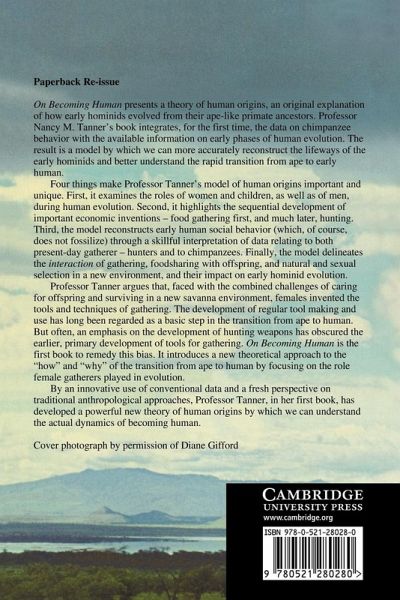
A powerful new theory of human origins by which we can understand the actual dynamics of becoming human.
Andere Kunden interessierten sich auch für
Alan FixMigration and Colonization in Human Microevolution48,99 €
Jean Baptiste Pierre Antoine De LamarckZoological Philosophy47,99 €
Helena CroninThe Ant and the Peacock40,99 €
Georges Louis Le Clerc BuffonThe Natural History of Birds - Volume 665,99 €
Joseph Le ConteEvolution49,99 €
Georges Louis Le Clerc BuffonThe Natural History of Birds - Volume 864,99 €
Darwin's Biological Work51,99 €-
-
-
A powerful new theory of human origins by which we can understand the actual dynamics of becoming human.
Produktdetails
- Produktdetails
- Verlag: Cambridge University Press
- Seitenzahl: 392
- Erscheinungstermin: 15. März 2009
- Englisch
- Abmessung: 229mm x 152mm x 23mm
- Gewicht: 635g
- ISBN-13: 9780521280280
- ISBN-10: 0521280281
- Artikelnr.: 26985566
- Herstellerkennzeichnung
- Libri GmbH
- Europaallee 1
- 36244 Bad Hersfeld
- gpsr@libri.de
- Verlag: Cambridge University Press
- Seitenzahl: 392
- Erscheinungstermin: 15. März 2009
- Englisch
- Abmessung: 229mm x 152mm x 23mm
- Gewicht: 635g
- ISBN-13: 9780521280280
- ISBN-10: 0521280281
- Artikelnr.: 26985566
- Herstellerkennzeichnung
- Libri GmbH
- Europaallee 1
- 36244 Bad Hersfeld
- gpsr@libri.de
List of illustrations
Preface
Acknowledgements
1. Darwin and the descent of 'man'
2. Models in evolution
3. African apes and human evolution
4. Chimpanzees as a model of the ancestral population: locomotion, tools and diet
5. Chimpanzees as a model of the ancestral population: social organisation and interaction
6. Chimpanzees as a model of ancestral population: mental capacities, communication and sociation - bases for the evolution of the capacity for culture
7. The transition to Australopithecus: natural and sexual selection in human origins
8. Evidence on the transition: what can the earliest hominid fossils reveal about the ancestral population and the transition?
9. Gathering and the australopithecine way of life
10. Early hominid lifeways: the critical role of an interpretive framework
11. Conclusion: becoming human
Bibliography
Acknowledgements and bibliography for illustrations
Indexes.

Preface
Acknowledgements
1. Darwin and the descent of 'man'
2. Models in evolution
3. African apes and human evolution
4. Chimpanzees as a model of the ancestral population: locomotion, tools and diet
5. Chimpanzees as a model of the ancestral population: social organisation and interaction
6. Chimpanzees as a model of ancestral population: mental capacities, communication and sociation - bases for the evolution of the capacity for culture
7. The transition to Australopithecus: natural and sexual selection in human origins
8. Evidence on the transition: what can the earliest hominid fossils reveal about the ancestral population and the transition?
9. Gathering and the australopithecine way of life
10. Early hominid lifeways: the critical role of an interpretive framework
11. Conclusion: becoming human
Bibliography
Acknowledgements and bibliography for illustrations
Indexes.
List of illustrations
Preface
Acknowledgements
1. Darwin and the descent of 'man'
2. Models in evolution
3. African apes and human evolution
4. Chimpanzees as a model of the ancestral population: locomotion, tools and diet
5. Chimpanzees as a model of the ancestral population: social organisation and interaction
6. Chimpanzees as a model of ancestral population: mental capacities, communication and sociation - bases for the evolution of the capacity for culture
7. The transition to Australopithecus: natural and sexual selection in human origins
8. Evidence on the transition: what can the earliest hominid fossils reveal about the ancestral population and the transition?
9. Gathering and the australopithecine way of life
10. Early hominid lifeways: the critical role of an interpretive framework
11. Conclusion: becoming human
Bibliography
Acknowledgements and bibliography for illustrations
Indexes.
Preface
Acknowledgements
1. Darwin and the descent of 'man'
2. Models in evolution
3. African apes and human evolution
4. Chimpanzees as a model of the ancestral population: locomotion, tools and diet
5. Chimpanzees as a model of the ancestral population: social organisation and interaction
6. Chimpanzees as a model of ancestral population: mental capacities, communication and sociation - bases for the evolution of the capacity for culture
7. The transition to Australopithecus: natural and sexual selection in human origins
8. Evidence on the transition: what can the earliest hominid fossils reveal about the ancestral population and the transition?
9. Gathering and the australopithecine way of life
10. Early hominid lifeways: the critical role of an interpretive framework
11. Conclusion: becoming human
Bibliography
Acknowledgements and bibliography for illustrations
Indexes.