This work has been selected by scholars as being culturally important, and is part of the knowledge base of civilization as we know it. This work is in the "public domain in the United States of America, and possibly other nations. Within the United States, you may freely copy and distribute this work, as no entity (individual or corporate) has a copyright on the body of the work. Scholars believe, and we concur, that this work is important enough to be preserved, reproduced, and made generally available to the public. We appreciate your support of the preservation process, and thank you for…mehr
This work has been selected by scholars as being culturally important, and is part of the knowledge base of civilization as we know it. This work is in the "public domain in the United States of America, and possibly other nations. Within the United States, you may freely copy and distribute this work, as no entity (individual or corporate) has a copyright on the body of the work. Scholars believe, and we concur, that this work is important enough to be preserved, reproduced, and made generally available to the public. We appreciate your support of the preservation process, and thank you for being an important part of keeping this knowledge alive and relevant.
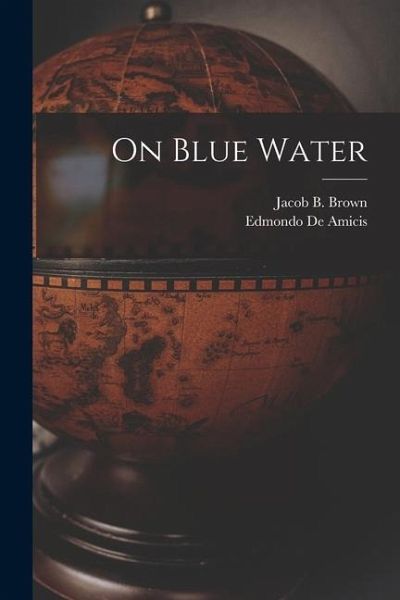
Edmondo de Amicis was an Italian writer, journalist, and educator, best known for his deeply moralistic and patriotic novel Cuore (Heart). Born in Oneglia, in the Kingdom of Sardinia, De Amicis was a significant literary figure in post-unification Italy, where his works contributed to the shaping of national identity and civic values. He remains a key author in the tradition of 19th-century European literature focused on education, morality, and social consciousness. De Amicis gained widespread recognition with Cuore (1886), a novel structured as the diary of a young Italian schoolboy, Enrico Bottini, during one academic year. Intended as a moral guide for children, the book highlights themes such as patriotism, compassion, discipline, and the importance of education. Interspersed with monthly "stories of virtue" - tales of selflessness and heroism among children - Cuore became a foundational text in Italian school curricula and was translated into dozens of languages, resonating with audiences far beyond Italy. De Amicis's influence on Italian society was profound, especially during the formative years of the Italian nation-state. Cuore, in particular, became a tool for instilling civic values in generations of students and was embraced by both liberal and nationalist movements. Despite critiques of its sentimental tone, the novel's clear moral messaging and portrayal of diverse Italian regions helped foster a sense of national cohesion. He was also a pioneer in using literature as a means of promoting social change, blending narrative storytelling with pedagogical purpose. His later embrace of socialism marked a significant shift in his ideology, demonstrating his commitment to aligning literature with social progress.
Es gelten unsere Allgemeinen Geschäftsbedingungen: www.buecher.de/agb
Impressum
www.buecher.de ist ein Internetauftritt der buecher.de internetstores GmbH
Geschäftsführung: Monica Sawhney | Roland Kölbl | Günter Hilger
Sitz der Gesellschaft: Batheyer Straße 115 - 117, 58099 Hagen
Postanschrift: Bürgermeister-Wegele-Str. 12, 86167 Augsburg
Amtsgericht Hagen HRB 13257
Steuernummer: 321/5800/1497
USt-IdNr: DE450055826