
Andere Kunden interessierten sich auch für
 Doing Field Projects44,99 €
 Wandering Souls26,99 €
 On Ethnography28,99 €
 Introducing Anthropology38,99 €
 Social Control30,99 €
 In Humboldt's Shadow27,99 €
 Social Control80,99 €






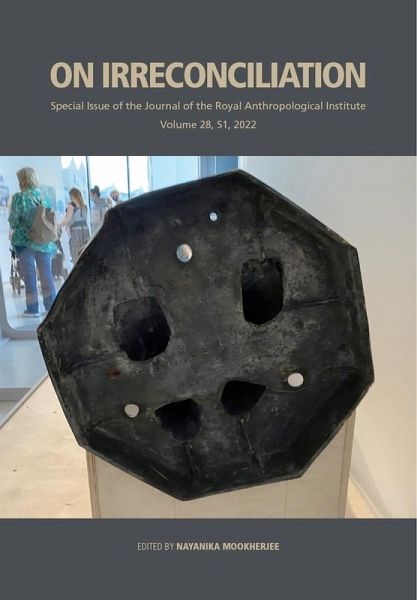
On Irreconciliation focuses on the less examined but frequent ethnographic instances when survivors refuse to forgive in response to persistent impunity of past injustices, particularly, in the face of absence-presence of the rule of law and staged processes of justice which serve the powerful.
_ An ethnographically-informed, interdisciplinary theorisation which makes irreconciliation visible in the contexts of Northern Ireland, Papua New Guinea, Mozambique, Bangladesh, Canada, Argentina, Sri Lanka, Colombia, USA and UK
_ Triangulates a discussion of the rule of law within processes of unresolved genocidal injustices, debates relating to statues of slave owners, racial prejudice and institutional responses
_ Contributors demonstrate the relationship of irreconciliation with law, aesthetics, temporality, resistance and the limits of the concept
_ Makes a theoretical and ethnographic case for irreconciliation as both a social and political phenomenon
_ Proposes an understanding of the past based on a positive commitment to 'irreconciliation' which might interest anthropologists, historians, philosophers, critical legal and political theorists, peace, conflict resolution and transitional justice scholars
_ An ethnographically-informed, interdisciplinary theorisation which makes irreconciliation visible in the contexts of Northern Ireland, Papua New Guinea, Mozambique, Bangladesh, Canada, Argentina, Sri Lanka, Colombia, USA and UK
_ Triangulates a discussion of the rule of law within processes of unresolved genocidal injustices, debates relating to statues of slave owners, racial prejudice and institutional responses
_ Contributors demonstrate the relationship of irreconciliation with law, aesthetics, temporality, resistance and the limits of the concept
_ Makes a theoretical and ethnographic case for irreconciliation as both a social and political phenomenon
_ Proposes an understanding of the past based on a positive commitment to 'irreconciliation' which might interest anthropologists, historians, philosophers, critical legal and political theorists, peace, conflict resolution and transitional justice scholars