
Andere Kunden interessierten sich auch für
 The Construction of Cranes and Other Lifting Machinery22,99 €
 An Elementary Treatise On Hoisting Machinery Including the Elements of Crane Construction and Descriptions of the Various Types of Cranes in Use24,99 €
![]() "Cahall" Water Tube Steam Boilers: Cahall Vertical and Cahall-Babcock & Wilcox: Manufactured by the Aultman & Taylor Machinery Co17,99 €
"Cahall" Water Tube Steam Boilers: Cahall Vertical and Cahall-Babcock & Wilcox: Manufactured by the Aultman & Taylor Machinery Co17,99 € The Repair and Maintenance of Machinery: A Handbook of Practical Notes and Memoranda for Engineers and Machinery Users25,99 €
 The Early History Of Brass And The Brass Manufactures Of Birmingham20,99 €
 Machine Design: A Manual of Practical Instruction in the Art of Creating Machinery for Specific Purposes, including Many Working Hints20,99 €
 The Mechanics of Machinery29,99 €


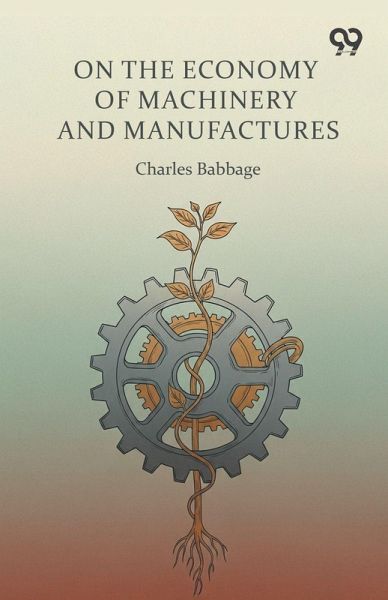
On the economy of machinery and manufactures explores the relationship between technology, labor, and industrial progress. The book examines how machinery transforms production processes and improves efficiency within various manufacturing sectors. Drawing from extensive observation of European factories and workshops, it discusses how mechanical systems shape productivity, cost, and labor distribution. The work analyzes the division of labor, the role of invention in economic development, and the increasing importance of mechanical precision in industrial organization. It emphasizes the necessity of understanding these systems for the growth of national prosperity and social stability. Through clear explanations and practical examples, it connects the workings of machines to broader economic and social outcomes, illustrating how industrial innovation influences both workers and capital. The text's analytical tone and systematic approach make it one of the earliest efforts to bridge technical detail with economic reasoning, highlighting the enduring relationship between scientific advancement and societal improvement.