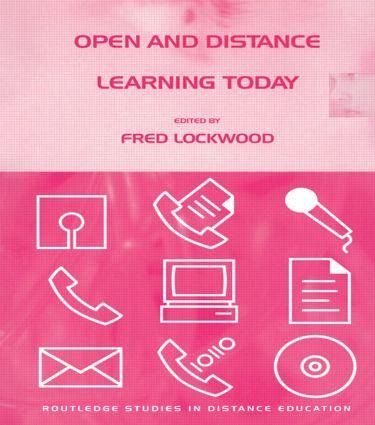
Open and Distance Learning Today
Herausgeber: Lockwood, Fred
Open and Distance Learning Today
Herausgeber: Lockwood, Fred
- Broschiertes Buch
- Merkliste
- Auf die Merkliste
- Bewerten Bewerten
- Teilen
- Produkt teilen
- Produkterinnerung
- Produkterinnerung
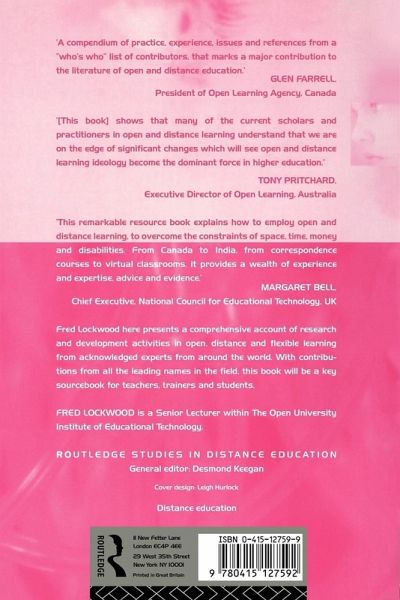
Fred Lockwood presents a comprehensive account of research and development in open, distance and flexible learning from a range of acknowledged experts from around the world. An essential purchase for teachers and students alike.
Andere Kunden interessierten sich auch für
Ormond SimpsonSupporting Students in Online Open and Distance Learning64,99 €
Helen Lentell / Hilary Perraton (eds.)Policy for Open and Distance Learning93,99 €
Andrea Hope / Patrick GuitonStrategies for Sustainable Open and Distance Learning58,99 €
Ormond SimpsonStudent Retention in Online, Open and Distance Learning69,99 €
Colin Latchem / Bernadette Robinson (eds.)Teacher Education Through Open and Distance Learning76,99 €
Greville Rumble (LecturerThe Costs and Economics of Open and Distance Learning64,99 €
Reginald F. MeltonPlanning and Developing Open and Distance Learning73,99 €-
-
-
Fred Lockwood presents a comprehensive account of research and development in open, distance and flexible learning from a range of acknowledged experts from around the world. An essential purchase for teachers and students alike.
Produktdetails
- Produktdetails
- Verlag: Routledge
- Seitenzahl: 396
- Erscheinungstermin: 15. Juni 1995
- Englisch
- Abmessung: 234mm x 156mm x 21mm
- Gewicht: 600g
- ISBN-13: 9780415127592
- ISBN-10: 0415127599
- Artikelnr.: 21105801
- Herstellerkennzeichnung
- Libri GmbH
- Europaallee 1
- 36244 Bad Hersfeld
- gpsr@libri.de
- Verlag: Routledge
- Seitenzahl: 396
- Erscheinungstermin: 15. Juni 1995
- Englisch
- Abmessung: 234mm x 156mm x 21mm
- Gewicht: 600g
- ISBN-13: 9780415127592
- ISBN-10: 0415127599
- Artikelnr.: 21105801
- Herstellerkennzeichnung
- Libri GmbH
- Europaallee 1
- 36244 Bad Hersfeld
- gpsr@libri.de
Fred Lockwood
I: Trends and Directions
1: The Big Bang Theory in Distance Education
2: A Practical Agenda for Theorists of Distance Education
3: Trends, Directions and Needs
4: American Distance Education
5: Creating the Future
II: The Student Experience
6: Student Learning and Students' Experiences
7: The Potential of Research with Students to Inform Development
8: Still Seeking the Audience?
III: Information Technology
9: Information Technology and Disabled Students
10: See What i Mean?
11: Teaching and Learning by Satellite in a European Virtual Classroom
12: A Dimension of Image Types in Educational Multimedia Materials
IV: Learner Use of Media
13: Over the Threshold
14: The Empathy Templates
15: Electronic Highway or Weaving Loom?
16: Use of Hypermedia and Telecommunications for Case-Study Discussions in Distance Education
V: Course Design and Assessment
17: The Challenge Facing Course Design
18: A Model-Based Design Approach for the Flexibilisation of Courses
19: Students' Perception of, and Response to, Formative and Summative Assessment Material
20: Using Electronic Networking for Assessment
VI: Learner Support and Management
21: Research and Pragmatism in Learner Support
22: Student Support in Open and Distance Learning
23: Support for the In-Company Learner
24: Implementing Experiences From Small-Scale Courses to Large Education Systems
25: Managing Learning Support
VII: Textual Materials
VII 26: The Layout and Design of Textual Materials for Distance Learning
VII 27: Using Instructional Illustrations for Distance Education
VII 28: The Development of Printed Materials
VII 29: Contemporary Developments in the Typographical Design of Instructional Texts for open and Distance Learning
VII 30: Electronic Layout and Design Visions of the Future
VIII: Evaluation and Quality
VIII 31: Building Good Quality in, Rather than Inspecting Bad Quality out
VIII 32: Course Evaluation and Academic Quality
VIII 33: A String of Pearls? A Broader Approach to Course Evaluation
VIII 34: Evaluation and Self-improving Systems
1: The Big Bang Theory in Distance Education
2: A Practical Agenda for Theorists of Distance Education
3: Trends, Directions and Needs
4: American Distance Education
5: Creating the Future
II: The Student Experience
6: Student Learning and Students' Experiences
7: The Potential of Research with Students to Inform Development
8: Still Seeking the Audience?
III: Information Technology
9: Information Technology and Disabled Students
10: See What i Mean?
11: Teaching and Learning by Satellite in a European Virtual Classroom
12: A Dimension of Image Types in Educational Multimedia Materials
IV: Learner Use of Media
13: Over the Threshold
14: The Empathy Templates
15: Electronic Highway or Weaving Loom?
16: Use of Hypermedia and Telecommunications for Case-Study Discussions in Distance Education
V: Course Design and Assessment
17: The Challenge Facing Course Design
18: A Model-Based Design Approach for the Flexibilisation of Courses
19: Students' Perception of, and Response to, Formative and Summative Assessment Material
20: Using Electronic Networking for Assessment
VI: Learner Support and Management
21: Research and Pragmatism in Learner Support
22: Student Support in Open and Distance Learning
23: Support for the In-Company Learner
24: Implementing Experiences From Small-Scale Courses to Large Education Systems
25: Managing Learning Support
VII: Textual Materials
VII 26: The Layout and Design of Textual Materials for Distance Learning
VII 27: Using Instructional Illustrations for Distance Education
VII 28: The Development of Printed Materials
VII 29: Contemporary Developments in the Typographical Design of Instructional Texts for open and Distance Learning
VII 30: Electronic Layout and Design Visions of the Future
VIII: Evaluation and Quality
VIII 31: Building Good Quality in, Rather than Inspecting Bad Quality out
VIII 32: Course Evaluation and Academic Quality
VIII 33: A String of Pearls? A Broader Approach to Course Evaluation
VIII 34: Evaluation and Self-improving Systems
I: Trends and Directions
1: The Big Bang Theory in Distance Education
2: A Practical Agenda for Theorists of Distance Education
3: Trends, Directions and Needs
4: American Distance Education
5: Creating the Future
II: The Student Experience
6: Student Learning and Students' Experiences
7: The Potential of Research with Students to Inform Development
8: Still Seeking the Audience?
III: Information Technology
9: Information Technology and Disabled Students
10: See What i Mean?
11: Teaching and Learning by Satellite in a European Virtual Classroom
12: A Dimension of Image Types in Educational Multimedia Materials
IV: Learner Use of Media
13: Over the Threshold
14: The Empathy Templates
15: Electronic Highway or Weaving Loom?
16: Use of Hypermedia and Telecommunications for Case-Study Discussions in Distance Education
V: Course Design and Assessment
17: The Challenge Facing Course Design
18: A Model-Based Design Approach for the Flexibilisation of Courses
19: Students' Perception of, and Response to, Formative and Summative Assessment Material
20: Using Electronic Networking for Assessment
VI: Learner Support and Management
21: Research and Pragmatism in Learner Support
22: Student Support in Open and Distance Learning
23: Support for the In-Company Learner
24: Implementing Experiences From Small-Scale Courses to Large Education Systems
25: Managing Learning Support
VII: Textual Materials
VII 26: The Layout and Design of Textual Materials for Distance Learning
VII 27: Using Instructional Illustrations for Distance Education
VII 28: The Development of Printed Materials
VII 29: Contemporary Developments in the Typographical Design of Instructional Texts for open and Distance Learning
VII 30: Electronic Layout and Design Visions of the Future
VIII: Evaluation and Quality
VIII 31: Building Good Quality in, Rather than Inspecting Bad Quality out
VIII 32: Course Evaluation and Academic Quality
VIII 33: A String of Pearls? A Broader Approach to Course Evaluation
VIII 34: Evaluation and Self-improving Systems
1: The Big Bang Theory in Distance Education
2: A Practical Agenda for Theorists of Distance Education
3: Trends, Directions and Needs
4: American Distance Education
5: Creating the Future
II: The Student Experience
6: Student Learning and Students' Experiences
7: The Potential of Research with Students to Inform Development
8: Still Seeking the Audience?
III: Information Technology
9: Information Technology and Disabled Students
10: See What i Mean?
11: Teaching and Learning by Satellite in a European Virtual Classroom
12: A Dimension of Image Types in Educational Multimedia Materials
IV: Learner Use of Media
13: Over the Threshold
14: The Empathy Templates
15: Electronic Highway or Weaving Loom?
16: Use of Hypermedia and Telecommunications for Case-Study Discussions in Distance Education
V: Course Design and Assessment
17: The Challenge Facing Course Design
18: A Model-Based Design Approach for the Flexibilisation of Courses
19: Students' Perception of, and Response to, Formative and Summative Assessment Material
20: Using Electronic Networking for Assessment
VI: Learner Support and Management
21: Research and Pragmatism in Learner Support
22: Student Support in Open and Distance Learning
23: Support for the In-Company Learner
24: Implementing Experiences From Small-Scale Courses to Large Education Systems
25: Managing Learning Support
VII: Textual Materials
VII 26: The Layout and Design of Textual Materials for Distance Learning
VII 27: Using Instructional Illustrations for Distance Education
VII 28: The Development of Printed Materials
VII 29: Contemporary Developments in the Typographical Design of Instructional Texts for open and Distance Learning
VII 30: Electronic Layout and Design Visions of the Future
VIII: Evaluation and Quality
VIII 31: Building Good Quality in, Rather than Inspecting Bad Quality out
VIII 32: Course Evaluation and Academic Quality
VIII 33: A String of Pearls? A Broader Approach to Course Evaluation
VIII 34: Evaluation and Self-improving Systems