22,99 €
inkl. MwSt.
Versandkostenfrei*Erscheint vorauss. 31. Januar 2026
Melden Sie sich
hier
hier
für den Produktalarm an, um über die Verfügbarkeit des Produkts informiert zu werden.

11 °P sammeln
Andere Kunden interessierten sich auch für
 Sanctuary Denied21,99 €
 The Anti-Federalist Papers and the Constitutional Convention Debates8,49 €
 Limiting Arbitrary Power36,99 €
 Environmental Compliance Handbook, Volume 463,99 €
 The Cambridge Constitutional History of the United Kingdom 2 Volume Hardback Set204,99 €
 The Last Day, the Last Hour43,99 €
 The Adventures of the Constituent Power50,99 €






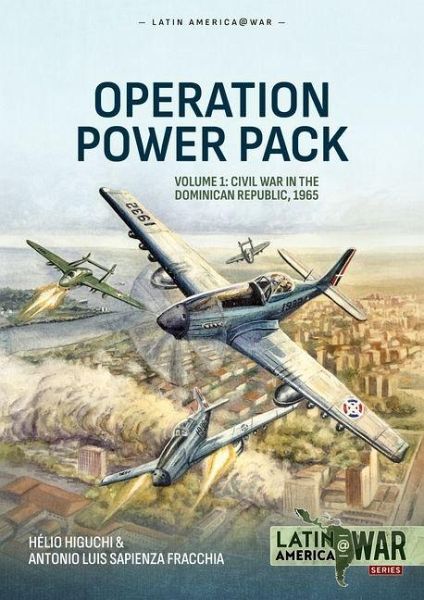
In 1965 rival factions within the Dominican Republic vied for control of the nation. The so-called Loyalist faction sought to uphold rule by conservative traditionalists; the Constitutionalists, including some left-wing elements, sought to return the Dominican Republic to democratic processes. As conflict between the parties erupted into open warfare the US launched a military intervention. The Dominican Republic had a long and troubled history and a difficult relationship with democracy. Following an occupation by the US military in the early twentieth century, Rafael Trujillo controlled the country as president, or through his sons and proxies, until his assassination in 1961. On 27 February 1963, Juan Emilio Bosch Gaviño, the first democratically elected president of the Dominican Republic, was sworn into office, only to be toppled by a military coup in September of the same year and replaced by Donald Reid Cabral. Reid failed to attract popular support and several factions became involved in a power struggle. The so-called Lealistas (Loyalists), headed by Generals Pedro Benoit and Antonio Imbert, aimed to uphold a military dictatorship. The Constitutionalistas (Constitutionalists), headed by General Francisco Caamaño, and allied with the Dominican Revolutionary Party, supported Bosch. In April 1965, three junior officers demanded a meeting with President Reid. When he refused, and sent Chief of Staff Riviera Cuesta instead, the latter was arrested. A group of constitutionalists from within the military then seized Radio Santo Domingo and issued calls for sedition, prompting several units to defect and abandon their position, while other officers began distributing arms to their civilian sympathisers. Appointing General Wessin y Wessin as the new Chief of Staff, Reid attempted to rally the remaining armed forces around himself and suppress the rebellion. Conflict spread, drawing in elements of the Dominican Republic's army, navy and air force, and the country teetered on the edge of a full-blown civil war. At that point in time, the United States of America became involved. Initially planned as an evacuation of about 3,500 US citizens, early on 27 April over 1,100 expatriates were airlifted out of the country by the US military. However, as Lealista troops marched on the capital, rebels secured their positions and executed a number of police officers, and a US Marine was killed by a rebel sniper, the US Ambassador declared the insurgents to be communists and demanded that US President Lyndon B Johnson act immediately. Johnson ordered a transformation of evacuation into an all-out military intervention: Operation Power Pack. The first overt US military intervention in Latin America in more than 30 years was initiated early on 30 April 1965, and saw the involvement of 22,500 troops, including elements of the USMC and 82nd Airborne Division, two aircraft carriers and over 200 aircraft and helicopters. Operation Power Pack is the first military history of the civil war and the interventions in the Dominican Republic in 1965. This volume examines the wider history of the Dominican Republic and the rise from obscurity of Rafael Trujillo to leave an indelible mark upon the country, and the history, equipment and organisation of the nation's armed forces up to the eve of the civil war, the outbreak of war and the intervention by the US military. This volume is richly illustrated throughout with original photographs and included the @War series' signature custom drawn colour profiles of the vehicles and ships involved in this conflict.