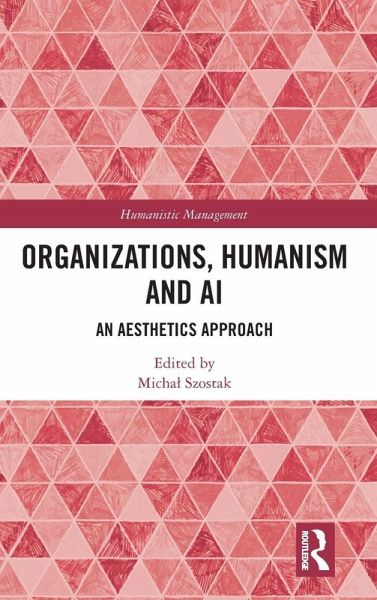
This volume explores the role of the aesthetics of the synergy between humanism and AI on the level of institutions and organisations, influencing individuals' well-being.
This volume explores the role of the aesthetics of the synergy between humanism and AI on the level of institutions and organisations, influencing individuals' well-being.
Michä Szostak (PhD, Doctor Habil.), is Associate Professor, Vice-Rector for Scientific Research and International Affairs, and Head of the Institute for Management Research at Civitas University.
Inhaltsangabe
Introduction: Framing the aesthetic-humanistic foundations of using AI in institutions 1. Aesthetics of humanism and AI in institutional governance: Research perspectives Part I. Synergy of humanism and AI in politics and governance: Toward better institutions 2. AI-driven solutions as pharmakon in political decision-making: Depoliticisation, technocracy, and the aesthetic dimensions of governance 3. Aesthetic dimensions of civic digital integrity: Openness and order in AI-supported public administration 4. Aesthetic-ethical AI governance: Harmony and balance in Islamic and Confucian traditions 5. Aesthetic mediation of AI in civic education: Institutional trust, engagement, and democratic resilience 6. Aesthetic leadership in AI-supported change management: Models for public sector transformation Part II: Synergy of humanism and AI in media and public perception: Toward better communication 7. Positioning humanity in AI discourse: Media aesthetics and narrative constructions across national contexts 8. Ethical competence and aesthetic beauty in media: Dilemmas and challenges associated with AI-powered solutions 9. Consequences of AI-enhanced communicative competence: Between effectiveness, appropriateness and aesthetics 10. Political leaders and AI-supported tools: The aesthetics of public image management Part III: Synergy of Humanism and AI in care and social services: Toward an individual's well-being 11. Aesthetics of care: AI-supported psychological practice between empathy and alienation 12. AI-powered solutions in social services for seniors: Well-being of care recipients or caregivers? 13. Aesthetics of dialogue and encounter in human-centred migrants' integration: AI, ICT, and the well-being of individuals Conclusion: AI-human aesthetic synergy as an institutional imperative
Introduction: Framing the aesthetic-humanistic foundations of using AI in institutions 1. Aesthetics of humanism and AI in institutional governance: Research perspectives Part I. Synergy of humanism and AI in politics and governance: Toward better institutions 2. AI-driven solutions as pharmakon in political decision-making: Depoliticisation, technocracy, and the aesthetic dimensions of governance 3. Aesthetic dimensions of civic digital integrity: Openness and order in AI-supported public administration 4. Aesthetic-ethical AI governance: Harmony and balance in Islamic and Confucian traditions 5. Aesthetic mediation of AI in civic education: Institutional trust, engagement, and democratic resilience 6. Aesthetic leadership in AI-supported change management: Models for public sector transformation Part II: Synergy of humanism and AI in media and public perception: Toward better communication 7. Positioning humanity in AI discourse: Media aesthetics and narrative constructions across national contexts 8. Ethical competence and aesthetic beauty in media: Dilemmas and challenges associated with AI-powered solutions 9. Consequences of AI-enhanced communicative competence: Between effectiveness, appropriateness and aesthetics 10. Political leaders and AI-supported tools: The aesthetics of public image management Part III: Synergy of Humanism and AI in care and social services: Toward an individual's well-being 11. Aesthetics of care: AI-supported psychological practice between empathy and alienation 12. AI-powered solutions in social services for seniors: Well-being of care recipients or caregivers? 13. Aesthetics of dialogue and encounter in human-centred migrants' integration: AI, ICT, and the well-being of individuals Conclusion: AI-human aesthetic synergy as an institutional imperative
Es gelten unsere Allgemeinen Geschäftsbedingungen: www.buecher.de/agb
Impressum
www.buecher.de ist ein Internetauftritt der buecher.de internetstores GmbH
Geschäftsführung: Monica Sawhney | Roland Kölbl | Günter Hilger
Sitz der Gesellschaft: Batheyer Straße 115 - 117, 58099 Hagen
Postanschrift: Bürgermeister-Wegele-Str. 12, 86167 Augsburg
Amtsgericht Hagen HRB 13257
Steuernummer: 321/5800/1497
USt-IdNr: DE450055826