
Andere Kunden interessierten sich auch für
 Overlapping Regional Organizations in South America and Africa83,99 €
 Liquid Regionalism in the Americas91,99 €
 The Challenges for Building Regional Integration in the Global South98,99 €
 The Challenges for Building Regional Integration in the Global South98,99 €
 EU-MERCOSUR Interregionalism106,99 €
 EU-MERCOSUR Interregionalism106,99 €
 Regional Integration and Migration Governance in the Global South113,99 €


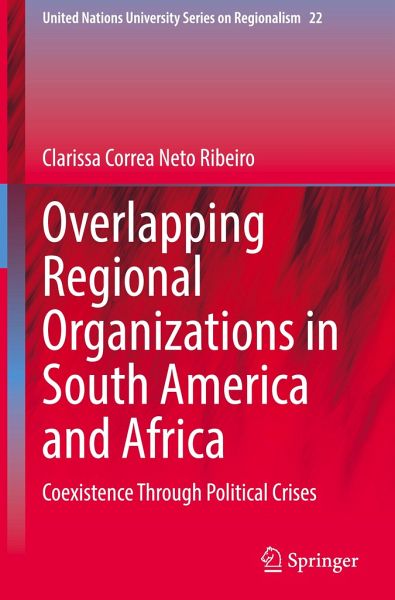
This book discusses the interaction between and the impact of overlapping actions by regional organizations while dealing with critical events. It compares all the sub-regions in South America and Africa from this perspective and creates new knowledge through cross-regional gleanings. The book analyses types of institutional interaction among regional organizations and the effects of overlapping actions on the coexistence or fracturing of regional processes. It examines and compares the dynamics of these interactions in both South America and Africa. The book contributes to the study of comparative regionalism by providing generalization and institutional learning based on a cross-regional approach. It gives to students, researchers and interested readers an understanding of the complexity of regional affairs in multi-organizational environments.
The book acknowledges the limitations and criticisms of previous studies on comparative regionalism and highlights the need for a deep multidisciplinary understanding of complex contexts and peoples. It emphasises the importance of studying regional initiatives from non-European perspectives to avoid Eurocentrism and cultural relativism, which contributes to a more comprehensive analysis. ... the book demonstrates a strong awareness of the complexities involved in studying regionalism and offers a comprehensive framework for analysing regional organisations in South America and Africa. (Frank Mattheis, Yearbook on the African Union, Issue 3, 2022)