The Oxford Handbook of Economics and Human Biology provides an extensive and insightful overview of how economic conditions affect human well-being and how human health influences economic outcomes. Among the topics explored are how variations in height, whether over time, among different socio-economic groups, and in different locations, are important indicators of changes in economic growth and economic development, levels of economic inequality, and economic opportunities for individuals. The book covers a broad geographic range: Africa, Latin and North America, Asia, and Europe. Its…mehr
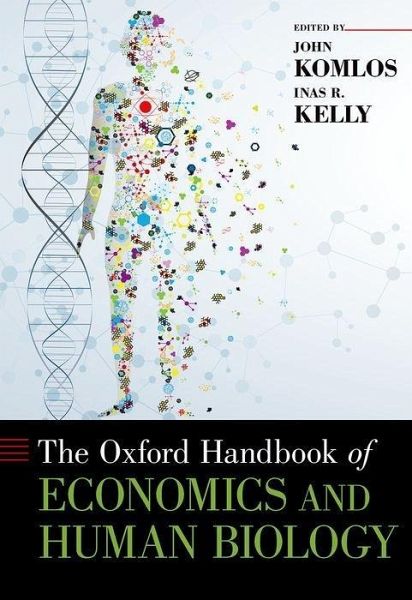
The Oxford Handbook of Economics and Human Biology provides an extensive and insightful overview of how economic conditions affect human well-being and how human health influences economic outcomes. Among the topics explored are how variations in height, whether over time, among different socio-economic groups, and in different locations, are important indicators of changes in economic growth and economic development, levels of economic inequality, and economic opportunities for individuals. The book covers a broad geographic range: Africa, Latin and North America, Asia, and Europe. Its temporal scope ranges from the late Iron Age to the present. Taking advantage of recent improvements in data and economic methods, the book also explores how humans' biological conditions influence and are influenced by their economic circumstances, including poverty. Among the issues addressed are how height, body mass index (BMI), and obesity can affect and are affected by productivity, wages, and wealth. How family environment affects health and well-being is examined, as is the importance of both pre-birth and early childhood conditions for subsequent economic outcomes. Reflecting this dynamic and expanding area of research, the volume shows that well-being is a salient aspect of economics, and the new toolkit of evidence from biological living standards enhances understanding of industrialization, commercialization, income distribution, the organization of health care, social status, and the redistributive state affect such human attributes as physical stature, weight, and the obesity epidemic in historical and contemporary populations.
John Komlos is Professor Emeritus of Economics and Economic History at the University of Munich. He has also taught at Duke University, Harvard University, the University of North Carolina at Chapel Hill, and the University of Vienna. He received PhDs in both history and economics from the University of Chicago. Komlos founded the field of Economics and Human Biology with the journal of the same name in 2003. He is among the very few scholars to publish in major journals of five disciplines: economics, history, biology, statistics, and demography. His work has been cited extensively around the globe. Inas R. Kelly is Associate Professor of Economics at Queens College and the City University of New York Graduate Center. She is a research associate in the Health Economics program at the National Bureau of Economic Research (NBER) and has been co-editor of the journal Economics and Human Biology since January 2013. She has published extensively in the field of health economics.
Inhaltsangabe
* PART I: INTRODUCTION TO ECONOMICS AND HUMAN BIOLOGY * Introduction * John Komlos and Inas R. Kelly * 1. Growth Faltering in the First Thousand Days after Conception and Catch-up Growth * Jere Behrman * 2. Biological Measures of Well-Being * Richard Steckel * 3. Crisis and Human Biology * Prashant Bharadwaj and Tom Vogl * 4. The biological standard of living in Europe from the Late Iron Age to the Little Ice Age * Nikola Koepke * 5. Econometrics of Economics and Human Biology * Gregory Colman and Dhaval Dave * PART II: BIOLOGICAL MEASURES AS AN OUTCOME * 6. Body Mass Index Through Time * Scott A. Carson * 7. Health, body weight, and obesity * Darius Lakdawalla and Julian Reif * 8. Inequality and Heights * Matthias Blum * 9. Adult Weight and Height of Native Populations * Asher Rosinger and Ricardo Godoy * 10. Slave Heights * Richard Steckel * 11. Female Heights and Economic Development: Theory and Practice * Deborah Oxley * 12. The Impact of Socioeconomic Inequality On Children's Health and Wellbeing * Baltica Cabieses, Kate E. Pickett, and Richard G. Wilkinson * 13. Growth and Maturation of Children and Adolescents: Variability Due to Genetic and Environmental Factors * Alan Rogol * 14. Global Perspectives on Economics and Biology * Nicholas Meinzer and Jörg Baten * 15. Global BMI Trends * Katrin Kromeyer-Hauschild, Anja Moss, and Martin Wabitsch * 16. Poverty and Obesity in Developed Countries * Chad D. Meyerhoefer and Muzhe Yang * PART III: BIOLOGICAL MEASURES AS AN INPUT TO MONETARY OUTCOMES, PRODUCTIVITY, AND WELFARE * 17. Biomarkers as Inputs * Steven Lehrer * 18. How Genetics Can Inform Health Economics * George Wehby * 19. Twins Studies in Economics * Jere Behrman * 20. Public and Private Returns to Investing in Nutrition * Harold Alderman and David E. Sahn * 21. The Double Burden of Malnutrition * Susan L. Averett and Yang Wang * 22. Biological health risks and economic development * Elizabeth Frankenberg, Jessica Ho, and Duncan Thomas * 23. Obesity and Income Inequality in OECD Countries * Dejun Su * 24. Height and Wages * Olaf Hübler * 25. Why do people with higher body weight earn lower wages? * Jane Greve * 26. Wealth and Weight * Jay L. Zagorsky * 27. Family Economics and Obesity * Sven E. Wilson * 28. Obesity and Welfare Regimes * Avner Offer * 29. Children's Anthropometrics and Later Disease Incidence * Karri Silventoinen * 30. Birth Weight as an Indicator of Human Welfare * W. Peter Ward * 31. A Pound of Flesh: birth weight as a measure of endowment in economics research * Florencia Torche and Dalton Conley * 32. Neuroeconomics: A Flourishing Field * Jason A. Aimone and Daniel Houser * PART IV: REGIONAL STUDIES * 33. The African Enigma: The Mystery of Tall African Adults Despite Low Incomes * Alexander Moradi and Kalle Hirvonen * 34. East Asia on the Rise: The Anthropometric History of China, Japan, and Korea * Daniel Jong Schwekendiek * 35. Economics and Human Biology in Latin America * Moramay López-Alonso * 36. Racial Differences in Health in the USA: A Long-Run Perspective * Leah Boustan and Robert A. Margo * 37. Antebellum Puzzle: The Decline in Heights at the Onset of Modern Economic Growth * Lee A. Craig * 38. The Anthropometric History of the Mediterranean World * Brian A'Hearn
* PART I: INTRODUCTION TO ECONOMICS AND HUMAN BIOLOGY * Introduction * John Komlos and Inas R. Kelly * 1. Growth Faltering in the First Thousand Days after Conception and Catch-up Growth * Jere Behrman * 2. Biological Measures of Well-Being * Richard Steckel * 3. Crisis and Human Biology * Prashant Bharadwaj and Tom Vogl * 4. The biological standard of living in Europe from the Late Iron Age to the Little Ice Age * Nikola Koepke * 5. Econometrics of Economics and Human Biology * Gregory Colman and Dhaval Dave * PART II: BIOLOGICAL MEASURES AS AN OUTCOME * 6. Body Mass Index Through Time * Scott A. Carson * 7. Health, body weight, and obesity * Darius Lakdawalla and Julian Reif * 8. Inequality and Heights * Matthias Blum * 9. Adult Weight and Height of Native Populations * Asher Rosinger and Ricardo Godoy * 10. Slave Heights * Richard Steckel * 11. Female Heights and Economic Development: Theory and Practice * Deborah Oxley * 12. The Impact of Socioeconomic Inequality On Children's Health and Wellbeing * Baltica Cabieses, Kate E. Pickett, and Richard G. Wilkinson * 13. Growth and Maturation of Children and Adolescents: Variability Due to Genetic and Environmental Factors * Alan Rogol * 14. Global Perspectives on Economics and Biology * Nicholas Meinzer and Jörg Baten * 15. Global BMI Trends * Katrin Kromeyer-Hauschild, Anja Moss, and Martin Wabitsch * 16. Poverty and Obesity in Developed Countries * Chad D. Meyerhoefer and Muzhe Yang * PART III: BIOLOGICAL MEASURES AS AN INPUT TO MONETARY OUTCOMES, PRODUCTIVITY, AND WELFARE * 17. Biomarkers as Inputs * Steven Lehrer * 18. How Genetics Can Inform Health Economics * George Wehby * 19. Twins Studies in Economics * Jere Behrman * 20. Public and Private Returns to Investing in Nutrition * Harold Alderman and David E. Sahn * 21. The Double Burden of Malnutrition * Susan L. Averett and Yang Wang * 22. Biological health risks and economic development * Elizabeth Frankenberg, Jessica Ho, and Duncan Thomas * 23. Obesity and Income Inequality in OECD Countries * Dejun Su * 24. Height and Wages * Olaf Hübler * 25. Why do people with higher body weight earn lower wages? * Jane Greve * 26. Wealth and Weight * Jay L. Zagorsky * 27. Family Economics and Obesity * Sven E. Wilson * 28. Obesity and Welfare Regimes * Avner Offer * 29. Children's Anthropometrics and Later Disease Incidence * Karri Silventoinen * 30. Birth Weight as an Indicator of Human Welfare * W. Peter Ward * 31. A Pound of Flesh: birth weight as a measure of endowment in economics research * Florencia Torche and Dalton Conley * 32. Neuroeconomics: A Flourishing Field * Jason A. Aimone and Daniel Houser * PART IV: REGIONAL STUDIES * 33. The African Enigma: The Mystery of Tall African Adults Despite Low Incomes * Alexander Moradi and Kalle Hirvonen * 34. East Asia on the Rise: The Anthropometric History of China, Japan, and Korea * Daniel Jong Schwekendiek * 35. Economics and Human Biology in Latin America * Moramay López-Alonso * 36. Racial Differences in Health in the USA: A Long-Run Perspective * Leah Boustan and Robert A. Margo * 37. Antebellum Puzzle: The Decline in Heights at the Onset of Modern Economic Growth * Lee A. Craig * 38. The Anthropometric History of the Mediterranean World * Brian A'Hearn
Es gelten unsere Allgemeinen Geschäftsbedingungen: www.buecher.de/agb
Impressum
www.buecher.de ist ein Internetauftritt der buecher.de internetstores GmbH
Geschäftsführung: Monica Sawhney | Roland Kölbl | Günter Hilger
Sitz der Gesellschaft: Batheyer Straße 115 - 117, 58099 Hagen
Postanschrift: Bürgermeister-Wegele-Str. 12, 86167 Augsburg
Amtsgericht Hagen HRB 13257
Steuernummer: 321/5800/1497
USt-IdNr: DE450055826