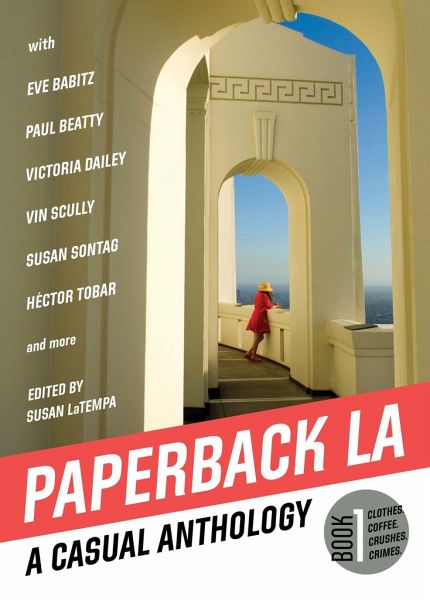
Paperback LA is a surprising and witty collection of some of the best writing ever about Los Angeles. More than a dozen major selections include new work and fresh discoveries: a radio broadcast, a ballad, a magazine article, excerpts from prizewinning novels and memoirs. These pieces are punctuated by perceptive photo essays, a quotable lineup of one-liners, and other quick hits. In the company of a virtuosic band of storytellers, Paperback LA roams across the decades, from just after the Mission era to just after Hollywood's golden age, from the post-hardcore punk scene to a reimagined…mehr
Paperback LA is a surprising and witty collection of some of the best writing ever about Los Angeles. More than a dozen major selections include new work and fresh discoveries: a radio broadcast, a ballad, a magazine article, excerpts from prizewinning novels and memoirs. These pieces are punctuated by perceptive photo essays, a quotable lineup of one-liners, and other quick hits. In the company of a virtuosic band of storytellers, Paperback LA roams across the decades, from just after the Mission era to just after Hollywood's golden age, from the post-hardcore punk scene to a reimagined today. With Susan Sontag, we visit Thomas Mann. With Paul Beatty, we turn a Metro ride into a PCH party. With Héctor Tobar, we search for people who lived somewhere around here. With Victoria Dailey, we look in on the boys in the backroom. Photographers share vivid moments of street sights, skaters at play, and activists on the march. Paperback LA's contributors have attitude, and they have information. Each inspired work illuminates some aspect of the city's rich, spread-out reality. Some shine a quick klieg light on a moment or person, others gradually reveal a dawning sense of place--in settings that range from a 1920s rural dance pavilion to 1960s Dodger Stadium, with subject matter that sprawls from bookselling to bodysurfing. Contributions include: Eve Babitz - Paul Beatty - Dan Bern - Arna Bontemps - Carlos Bulosan - Cecil Castelucci - Victoria Dailey - William Heath Davis - Robert Landau - Justin Andrew Marks - Steve Martin - Hugo Reid - Vin Scully - Susan Sontag - Clancy Sigel - Hector Tobar - Victor and Mary Lau Valle - Elysa Voshell/Venice Arts
Susan LaTempa is a Los Angeles editor. At LA Style, West Coast Plays, Padua Hills Theater Festival, Westways, The Los Angeles Times, and Liberty Hill Foundation, she's worked with journalists, playwrights, novelists, recipe developers, landscapers, photographers, and videographers. She's concentrated on addressing LA's vast, cosmopolitan audiences, in the process helping shape dozens of memorable articles, reviews, memoirs, parodies, essays, theater pieces, and videos that have illuminated so many aspects of LA.
Inhaltsangabe
Style of Dress of the Wealthy Californios ......................................William Heath Davis. An appreciation of fashion-forwardness in the 1830s. Excerpted from the book Seventy-Five Years in California Culture & Porn: L.A. Bookshops in the 20s and 30s .................. Victoria Dailey In Raymond Chandler's L.A., the porn racket was part of the rarified world of the wealthy. Here's the true history behind L.A. Prohibition Era bookstores with back rooms. Mudtown: Watts Pastorale, 1915-20 ........................Arna Bontemps Former St. Louis jockey Little Augie finds the rural high life in L.A.'s "Mudtown" at Leake's Lake on-trend dance pavilion. From the Harlem Renaissance writer's novel God Sends Sunday (1931). One-liners............................................................................Various writers From H.L. Mencken's "The whole place stank of orange blossoms" to Michael Connelly's "Twelve million people and all of them ready to make a break for it if necessary," we've got you covered for punch lines. A Day's Work ..............................................................................Carlos Bulosan In Depression-era L.A., this poet, immigrant and labor organizer learned that it was a crime to be Pilipino. He describes his first day in town in the spare prose of a weary young migrant, frightened at every turn as L.A. cops make their violent way through the community. From America is in the Heart (1941). Hollywood Agent Attire, Blacklist-Era style..................................................Clancy Sigal In this excerpt from his 2016 memoir Black Sunset, young Clancy is broke in midcentury Los Angeles. He's a movie buff and radicalized WWII vet with borrowed pants and a pair of FBI guys trailing, when he's hired as rookie Hollywood agent. He needs haberdashery. Pilgrimage ..........................................................................Susan Sontag Before Susan Sontag was America's "social critic with verve" as the New York Times obit described her, before she was an internationally acclaimed intellectual, feminist and LGBTQ icon, she was a teenager in the Valley in L.A. In a piece for the New Yorker, she remembered how as a teen in 1958, she had tea with her literary idol German expatriate novelist Thomas Mann. Frozen Looks...........................................................................Eve Babitz Eve Babitz's bio often gets more attention than her incandescent, rapturous prose about her beloved L.A. After all, the Doors song "L.A. Woman" is about her, and well, there's more. This account of her teenaged self at the beach from Eve's Hollywood captures all the knowing, rough-edged angst of local youth in the Rebel Without a Cause era. Call of Sandy Koufax's perfect game..................................................... Vin Scully Ask Angelenos what L.A. means to them and a significant percentage will answer "The Dodgers." And for decades, the Dodgers experience meant Baseball Hall of Famer Vin Scully. We bring you his unforgettably dramatic broadcast call of the ninth inning of the perfect game pitched on September 9, 1965 by Sandy Koufax. Route Riff I: The Ballad of Dave and Eddie..........................................Dan Bern Los Angeles singer-songwriter Dan Bern overhears what some might call a stoner moment. His ballad is also a spot-on expression of the beach-city mindset celebrated in the film The Big Lebowski. Basically, Dave and Eddie decide they need another freeway. First published in Zyzzyva, Summer 1991. Children of Mayaguez.......................................................Victor and Mary Lau Valle Pulitzer-prize winning Chicanx/Latinx iournalist and ethnic studies professor Victor Valle is an L.A. native who remembers his Uncle Teofilo showing him in the mid-1980s how to make pulque from backyard maguey. Excerpted from the cookbook/memoir Recipes of Memory: Five Generations of Mexican Cuisine (1995), which he wrote with his wife, Mary Lau Valle. Thirty-Ninth Street ......................................................................................Hector Tobar Best-selling Chicanx/Latinx author Hector Tobar's 2011 Barbarian Nurseries was named a New York Times Notable Book and Boston Globe Best Fiction Book that year for its masterful shaping of a widescreen view of L.A. In this excerpt, Araceli Ramirez, housekeeper and artist, on a quest through the city, steps to the end of one of L.A.'s billions of dead end streets and finds a portal to self-discovery. Route Riff II: Exact Change......................................................................................Paul Beatty Forget car culture. A Metro bus turned amphibious landing vehicle is one of the vivid images from the Man Booker Prize winning The Sellout (2016) by African American novelist, poet and satirist Paul Beatty. Beatty, born and raised in L.A. uses echoes of history to re-dream of the present, as in this excerpt, in which we join a renegade party cruise up Pacific Coast Highway.
Style of Dress of the Wealthy Californios ......................................William Heath Davis. An appreciation of fashion-forwardness in the 1830s. Excerpted from the book Seventy-Five Years in California Culture & Porn: L.A. Bookshops in the 20s and 30s .................. Victoria Dailey In Raymond Chandler's L.A., the porn racket was part of the rarified world of the wealthy. Here's the true history behind L.A. Prohibition Era bookstores with back rooms. Mudtown: Watts Pastorale, 1915-20 ........................Arna Bontemps Former St. Louis jockey Little Augie finds the rural high life in L.A.'s "Mudtown" at Leake's Lake on-trend dance pavilion. From the Harlem Renaissance writer's novel God Sends Sunday (1931). One-liners............................................................................Various writers From H.L. Mencken's "The whole place stank of orange blossoms" to Michael Connelly's "Twelve million people and all of them ready to make a break for it if necessary," we've got you covered for punch lines. A Day's Work ..............................................................................Carlos Bulosan In Depression-era L.A., this poet, immigrant and labor organizer learned that it was a crime to be Pilipino. He describes his first day in town in the spare prose of a weary young migrant, frightened at every turn as L.A. cops make their violent way through the community. From America is in the Heart (1941). Hollywood Agent Attire, Blacklist-Era style..................................................Clancy Sigal In this excerpt from his 2016 memoir Black Sunset, young Clancy is broke in midcentury Los Angeles. He's a movie buff and radicalized WWII vet with borrowed pants and a pair of FBI guys trailing, when he's hired as rookie Hollywood agent. He needs haberdashery. Pilgrimage ..........................................................................Susan Sontag Before Susan Sontag was America's "social critic with verve" as the New York Times obit described her, before she was an internationally acclaimed intellectual, feminist and LGBTQ icon, she was a teenager in the Valley in L.A. In a piece for the New Yorker, she remembered how as a teen in 1958, she had tea with her literary idol German expatriate novelist Thomas Mann. Frozen Looks...........................................................................Eve Babitz Eve Babitz's bio often gets more attention than her incandescent, rapturous prose about her beloved L.A. After all, the Doors song "L.A. Woman" is about her, and well, there's more. This account of her teenaged self at the beach from Eve's Hollywood captures all the knowing, rough-edged angst of local youth in the Rebel Without a Cause era. Call of Sandy Koufax's perfect game..................................................... Vin Scully Ask Angelenos what L.A. means to them and a significant percentage will answer "The Dodgers." And for decades, the Dodgers experience meant Baseball Hall of Famer Vin Scully. We bring you his unforgettably dramatic broadcast call of the ninth inning of the perfect game pitched on September 9, 1965 by Sandy Koufax. Route Riff I: The Ballad of Dave and Eddie..........................................Dan Bern Los Angeles singer-songwriter Dan Bern overhears what some might call a stoner moment. His ballad is also a spot-on expression of the beach-city mindset celebrated in the film The Big Lebowski. Basically, Dave and Eddie decide they need another freeway. First published in Zyzzyva, Summer 1991. Children of Mayaguez.......................................................Victor and Mary Lau Valle Pulitzer-prize winning Chicanx/Latinx iournalist and ethnic studies professor Victor Valle is an L.A. native who remembers his Uncle Teofilo showing him in the mid-1980s how to make pulque from backyard maguey. Excerpted from the cookbook/memoir Recipes of Memory: Five Generations of Mexican Cuisine (1995), which he wrote with his wife, Mary Lau Valle. Thirty-Ninth Street ......................................................................................Hector Tobar Best-selling Chicanx/Latinx author Hector Tobar's 2011 Barbarian Nurseries was named a New York Times Notable Book and Boston Globe Best Fiction Book that year for its masterful shaping of a widescreen view of L.A. In this excerpt, Araceli Ramirez, housekeeper and artist, on a quest through the city, steps to the end of one of L.A.'s billions of dead end streets and finds a portal to self-discovery. Route Riff II: Exact Change......................................................................................Paul Beatty Forget car culture. A Metro bus turned amphibious landing vehicle is one of the vivid images from the Man Booker Prize winning The Sellout (2016) by African American novelist, poet and satirist Paul Beatty. Beatty, born and raised in L.A. uses echoes of history to re-dream of the present, as in this excerpt, in which we join a renegade party cruise up Pacific Coast Highway.
Es gelten unsere Allgemeinen Geschäftsbedingungen: www.buecher.de/agb
Impressum
www.buecher.de ist ein Internetauftritt der buecher.de internetstores GmbH
Geschäftsführung: Monica Sawhney | Roland Kölbl | Günter Hilger
Sitz der Gesellschaft: Batheyer Straße 115 - 117, 58099 Hagen
Postanschrift: Bürgermeister-Wegele-Str. 12, 86167 Augsburg
Amtsgericht Hagen HRB 13257
Steuernummer: 321/5800/1497
USt-IdNr: DE450055826