
Andere Kunden interessierten sich auch für
 Parassiti degli animali selvatici51,99 €
 Paso¿yty dzikich zwierz¿t51,99 €
 Parasiten von Wildtieren79,90 €
 Parasites des animaux sauvages51,99 €
 Parasitas de animais selvagens51,99 €
 Physico-Chemicals and Plankton Composition of Ajiwa Reservoir41,99 €
 Fish,Plankton Diversity of Kangsabati Reservoir, West Bengal, India49,99 €

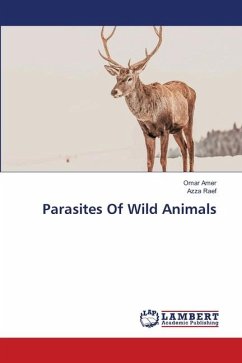
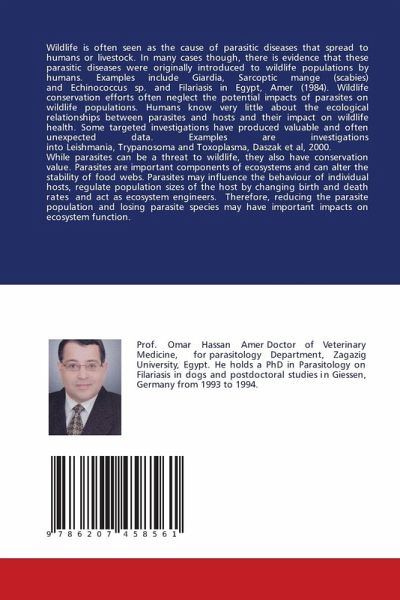
Wildlife is often seen as the cause of parasitic diseases that spread to humans or livestock. In many cases though, there is evidence that these parasitic diseases were originally introduced to wildlife populations by humans. Examples include Giardia, Sarcoptic mange (scabies) and Echinococcus sp. and Filariasis in Egypt, Amer (1984). Wildlife conservation efforts often neglect the potential impacts of parasites on wildlife populations. Humans know very little about the ecological relationships between parasites and hosts and their impact on wildlife health. Some targeted investigations have produced valuable and often unexpected data. Examples are investigations into Leishmania, Trypanosoma and Toxoplasma, Daszak et al, 2000. While parasites can be a threat to wildlife, they also have conservation value. Parasites are important components of ecosystems and can alter the stability of food webs. Parasites may influence the behaviour of individual hosts, regulate population sizes of the host by changing birth and death rates and act as ecosystem engineers. Therefore, reducing the parasite population and losing parasite species may have important impacts on ecosystem function.