
Andere Kunden interessierten sich auch für
 Parental Involvement in Children's Academic Achievement in Cambodia40,99 €
 Parental involvement in education36,99 €
 Promoting Positiv Parental Perceptions39,99 €
 State graduates' parental behaviors toward passing the state exam36,99 €
 Motivating students and Improving Language and Interpersonal skills32,99 €
 Essays on Higher Education, Parental Altruism, and Granger Causality41,99 €
 Influence of Teachers' Biographic Attributes on Their Job Performance43,99 €




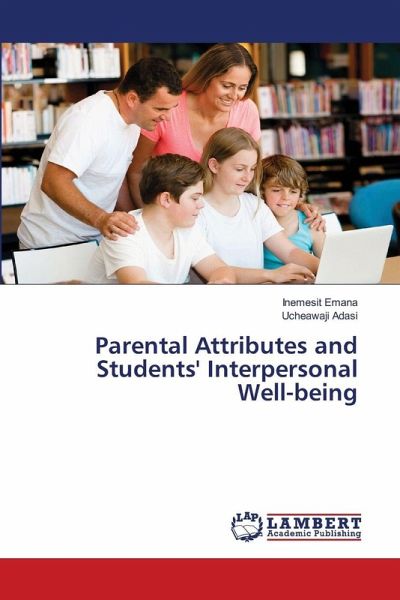
Interpersonal wellbeing in adolescence is not formed in isolation but shaped by the financial, emotional, and behavioural patterns within the family. The study demonstrates that parental attributes are pivotal determinants of secondary school students' interpersonal wellbeing. While basic levels of parental education and SES lay the groundwork for effective communication and social engagement, higher tiers particularly tertiary education and sound parental mental health amplify adolescents' capacity for empathy, conflict resolution, and emotional regulation. Authoritative parenting emerges as the optimal style for fostering robust social skills, whereas permissive or uninvolved approaches significantly undermine interpersonal competence. Similarly, parental mental wellbeing is a pathway to strengthen students' interpersonal functioning. Collectively, these findings underscore the family's central role in adolescent social development and point to targeted areas for intervention.