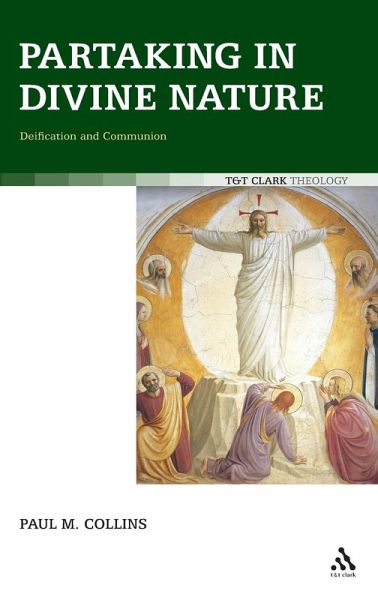
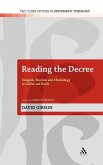
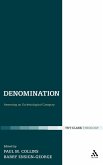
With strong application and relevance to contemporary ecclesiological questions, this is an investigation of how understandings of theosis in the Christian Tradition have related to understandings of divine nature in terms of koinonia.
With strong application and relevance to contemporary ecclesiological questions, this is an investigation of how understandings of theosis in the Christian Tradition have related to understandings of divine nature in terms of koinonia.
Introduction to the thesis of the book and its contents Deification in pre-Christian traditions including Greek and Indian traditions; assessment of the influence of these upon Christian understandings of incarnation and salvation. Deification in Eastern Orthodox Tradition including discussion of salvation in terms of recapitulation; understandings of 'the Cross'; an examination of the development of theosis in patristic and medieval authors: e.g. Origen, Athanasius, the Cappadocian fathers, Ps-Dionysius, Maximus the Confessor, Symeon the Theologian, Gregory Palamas; and modern authors such as Bulgakov and Staniloae. This will also include and examination of how divine nature is understood in relation to theosis. Deification in Western Traditions including Thomas Aquinas, Martin Luther, the Caroline Divines and the Wesleys; as well as recent authors both Catholic and Protestant e.g. Karl Rahner, Catherine Mowry LaCugna, Lars Thunberg, Norman Russell; as well as an assessment of the place of 'deification' alongside other models and understandings of salvation in the West. Deification and Relationality: imago trinitatis discussion of divine nature understood in terms of koinonia i.e. in terms of a hermeneutic of relationality; discussion of this hermeneutic in the works of Zizioulas, Barth, Torrance, Gunton, Hardy, Schwöbel; discussion of Rahner's place in & contribution to this debate; discussion of dialectical understandings of difference and repetition (inc. Deleuze) and how these concepts inform a relational understanding of theosis. Deification: Transformation and Community [a] discussion of the implications and applications of these findings in relation to Christian community (Church) and Christian life (discipleship). [b] theosis and the body 'garments of skin': asceticism, materiality and sexuality; [c] theosis and the Virtues: imitation of Christ; participating in the sacraments; [d] Christological focus of transformation: the Hypostatic Union and the Transfiguration: application for the Church? Church community as the locus of formation for partaking in the relationality of the divine: discipleship and deification. Conclusion / Summary of findings
Introduction to the thesis of the book and its contents Deification in pre-Christian traditions including Greek and Indian traditions; assessment of the influence of these upon Christian understandings of incarnation and salvation. Deification in Eastern Orthodox Tradition including discussion of salvation in terms of recapitulation; understandings of 'the Cross'; an examination of the development of theosis in patristic and medieval authors: e.g. Origen, Athanasius, the Cappadocian fathers, Ps-Dionysius, Maximus the Confessor, Symeon the Theologian, Gregory Palamas; and modern authors such as Bulgakov and Staniloae. This will also include and examination of how divine nature is understood in relation to theosis. Deification in Western Traditions including Thomas Aquinas, Martin Luther, the Caroline Divines and the Wesleys; as well as recent authors both Catholic and Protestant e.g. Karl Rahner, Catherine Mowry LaCugna, Lars Thunberg, Norman Russell; as well as an assessment of the place of 'deification' alongside other models and understandings of salvation in the West. Deification and Relationality: imago trinitatis discussion of divine nature understood in terms of koinonia i.e. in terms of a hermeneutic of relationality; discussion of this hermeneutic in the works of Zizioulas, Barth, Torrance, Gunton, Hardy, Schwöbel; discussion of Rahner's place in & contribution to this debate; discussion of dialectical understandings of difference and repetition (inc. Deleuze) and how these concepts inform a relational understanding of theosis. Deification: Transformation and Community [a] discussion of the implications and applications of these findings in relation to Christian community (Church) and Christian life (discipleship). [b] theosis and the body 'garments of skin': asceticism, materiality and sexuality; [c] theosis and the Virtues: imitation of Christ; participating in the sacraments; [d] Christological focus of transformation: the Hypostatic Union and the Transfiguration: application for the Church? Church community as the locus of formation for partaking in the relationality of the divine: discipleship and deification. Conclusion / Summary of findings
Es gelten unsere Allgemeinen Geschäftsbedingungen: www.buecher.de/agb
Impressum
www.buecher.de ist ein Internetauftritt der buecher.de internetstores GmbH
Geschäftsführung: Monica Sawhney | Roland Kölbl | Günter Hilger
Sitz der Gesellschaft: Batheyer Straße 115 - 117, 58099 Hagen
Postanschrift: Bürgermeister-Wegele-Str. 12, 86167 Augsburg
Amtsgericht Hagen HRB 13257
Steuernummer: 321/5800/1497
USt-IdNr: DE450055826