
Andere Kunden interessierten sich auch für
 Education of British Culture According to the Project Method32,99 €
 Bringing a Global Education Perspective To Understand the Other52,99 €
 The transition to adulthood - A shared responsibility52,99 €
 The Summer Slide to Underachievement32,99 €
 Education for Girls in the House of the Good Shepherd 1940 to 198039,99 €
 The Right to Education52,99 €
 The Effects of Teachers Feedback on Students Ability to Self-Edit32,99 €
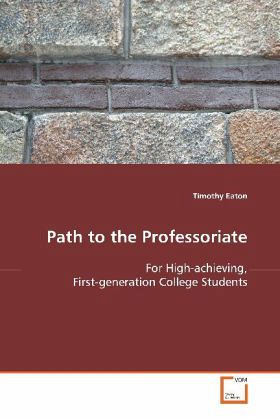
Each year a large high-risk group of students
participate in higher education, it includes peoples
from across ethnicities, religions, genders,
geographic areas, and even socioeconomic levels. The
students in question are those whose parents did not
attend college, known in higher education as first-
generation college students. These students are
under prepared in K-12 schools for access into
postsecondary education, with almost half lacking
the academic qualifications for admission to a 4-
year college. Institutions are poorly equipped to
help and the disadvantage continues through the
attainment of degrees. The author conducted
interviews with high-achieving first-generation
college students who were able to overcome
difficulties in order to gain access to higher
education, persist through the maze of obstacles
that confronts all students, and attain advanced
degrees on their path to the professoriate. The
insights on educational success should be read by
instructors and administrators in K-12 schools,
community colleges, public or private colleges and
universities, as well as, other post-secondary
institutions.
participate in higher education, it includes peoples
from across ethnicities, religions, genders,
geographic areas, and even socioeconomic levels. The
students in question are those whose parents did not
attend college, known in higher education as first-
generation college students. These students are
under prepared in K-12 schools for access into
postsecondary education, with almost half lacking
the academic qualifications for admission to a 4-
year college. Institutions are poorly equipped to
help and the disadvantage continues through the
attainment of degrees. The author conducted
interviews with high-achieving first-generation
college students who were able to overcome
difficulties in order to gain access to higher
education, persist through the maze of obstacles
that confronts all students, and attain advanced
degrees on their path to the professoriate. The
insights on educational success should be read by
instructors and administrators in K-12 schools,
community colleges, public or private colleges and
universities, as well as, other post-secondary
institutions.