
Andere Kunden interessierten sich auch für
 Patients atteints de pemphigus: esthétique de l'existence32,99 €
 Patienten mit Pemphigus: Ästhetik des Daseins49,90 €
 Circulation of children and adolescents in downtown São Paulo:36,99 €
 Cartography of mental health care19,99 €
") The Questions of Existence (Volume 1)47,99 €
The Questions of Existence (Volume 1)47,99 € Effects of cognitive rehabilitation on patients with schizophrenia36,99 €
 Cognitive Distortions in Patients with Type II Diabetes36,99 €


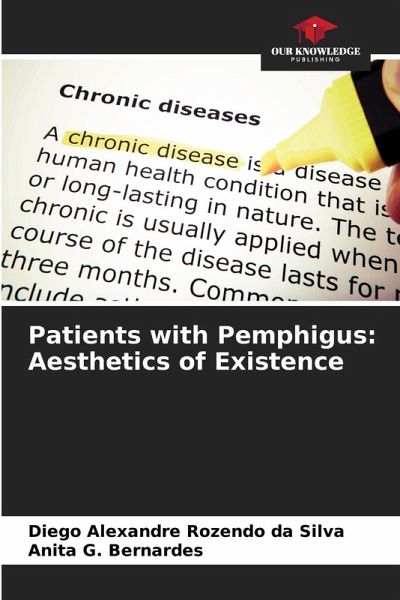
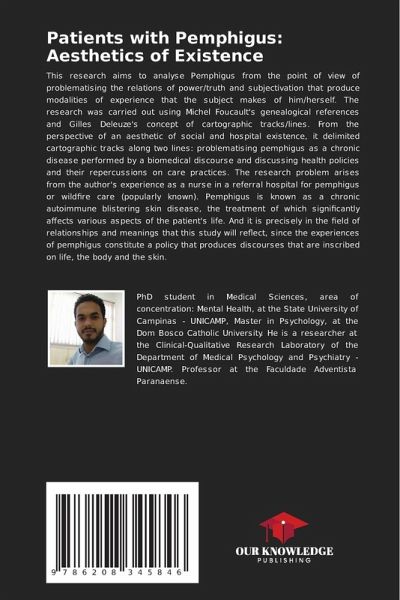
This research aims to analyse Pemphigus from the point of view of problematising the relations of power/truth and subjectivation that produce modalities of experience that the subject makes of him/herself. The research was carried out using Michel Foucault's genealogical references and Gilles Deleuze's concept of cartographic tracks/lines. From the perspective of an aesthetic of social and hospital existence, it delimited cartographic tracks along two lines: problematising pemphigus as a chronic disease performed by a biomedical discourse and discussing health policies and their repercussions on care practices. The research problem arises from the author's experience as a nurse in a referral hospital for pemphigus or wildfire care (popularly known). Pemphigus is known as a chronic autoimmune blistering skin disease, the treatment of which significantly affects various aspects of the patient's life. And it is precisely in the field of relationships and meanings that this study will reflect, since the experiences of pemphigus constitute a policy that produces discourses that are inscribed on life, the body and the skin.