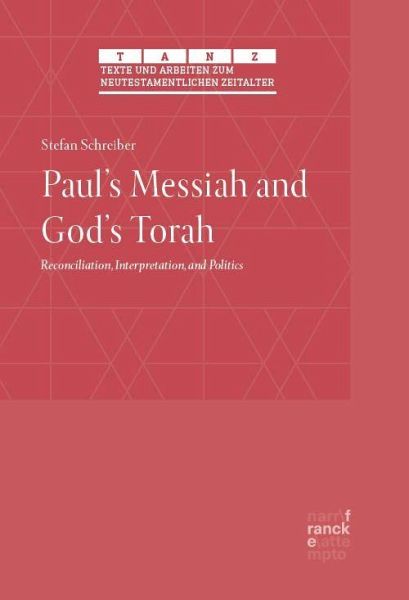
At the heart of this volume is a new study on the question of how Paul understands and applies the Torah in the letter to the Romans after his calling to Christ. While exegetical research has often postulated an abolition of the Torah in Paul, freedom from the law, or fulfillment through Christ, Schreiber interprets the statements in Romans as an application of the Torah, which remains, to be sure, valid for Paul as a Jew, but is understood through a new hermeneutical lens.The study is complemented by contributions from the author, published here for the first time in English. These essays…mehr
At the heart of this volume is a new study on the question of how Paul understands and applies the Torah in the letter to the Romans after his calling to Christ. While exegetical research has often postulated an abolition of the Torah in Paul, freedom from the law, or fulfillment through Christ, Schreiber interprets the statements in Romans as an application of the Torah, which remains, to be sure, valid for Paul as a Jew, but is understood through a new hermeneutical lens.The study is complemented by contributions from the author, published here for the first time in English. These essays address the understanding of the Torah in Galatians, the interpretation of the death of Jesus as a "gift of reconciliation" in Romans 3:25, and a political reading of Romans 13:1-7 (which has gained new relevance today). The volume concludes with a study on the reception history of Paul: his appearance before the Roman Jews in Acts 28:16-31.
Produktdetails
Produktdetails
Texte und Arbeiten zum neutestamentlichen Zeitalter (TANZ) 73
Prof. Dr. Stefan Schreiber ist Inhaber des Lehrstuhls für Neues Testament an der Universität Augsburg.
Inhaltsangabe
Preface Introduction Chapter 1: God's Votive Offering: A New Reading of Jesus' Death in Romans 3:25 1. The Atoning Death of Jesus According to Paul: A Critical Examination 2. The Text: Romans 3:21-26 3. Two Common Interpretations 4. An Alternative: the Votive Offering 5. But What is a Votive Offering? 6. The Metaphor of the Votive Offering in Paul 7. Results Bibliography Chapter 2: Thinking Further: God's Reconciling Votive Offering in Romans 3:25 1. The Starting Point: Challenges in Deriving hilasterion from Leviticus 16 LXX 2. A Semantic Alternative: hilasterion as Votive Offering 3. The Application in Romans 3:25 4. Conclusion Bibliography Chapter 3: Christ as hilasterion in Romans 3:25: God's Gift of Reconciliation 1. Interpretation in Light of the Day of Atonement in Leviticus 16 2. The Horizon of Reception of the Addressees in Rome 3. The Alternative: A Reconciliatory Votive Offering 4. Application: Christ as the "Gift of Reconciliation" in Romans 3:25 5. The Gift of Reconciliation in the Context of Romans 3:23-26 6. Conclusions Bibliography Chapter 4: Violators of the Law and the Curse of the Law: The Perception of the Torah in the Psalms of Solomon and in Paul's Letter to the Galatians 1. The Psalms of Solomon and the Torah 2. Paul's Letter to the Galatians and the Torah 3. Conclusion Bibliography Chapter 5: Paul's Hermeneutics of the Torah in Romans 1. Paul, his Jewish Identity, and the Torah 2. Qualifications of the Torah in Romans 2:12-3:20 3. God's Saving Care in Christ - and the Law: Romans 3:21-31 4. Abraham's Trust, Sin, and the Torah: Romans 4-6 5. Paul's Hermeneutics of the Torah in Romans 7 6. The Question of Israel and the Role of the Torah in Romans 9-11 7. The Love Commandment and the Torah's Fulfillment in Romans 13:8-10 8. Concluding Reflections Bibliography Chapter 6: Imperium Romanum and Roman Communities: Dimensions of Political Language in Romans 13 1. Terminological Clarification: What Is "Politics"? 2. On the State of Research 3. A Sociological Theory of Political Modes of Speech 4. Text and Context 5. Ad (1): Socio-Historical Contexts 6. Ad (2): Differentiation between Public and Hidden Transcripts 7. Ad (3): The Function of the Hidden Transcript 8. Coordinates of a Hermeneutic Bibliography Chapter 7: The Final Word of a Major Apologia: Paul, Isaiah, and the Jews in Rome (Acts 28:16-31) 1. The Narrative Context: Paul's Accusation and Defense Before the Jews 2. At the End: Focus on the Jews in Rome 3. Paul and the Roman Jews in Acts 28:16-31 4. Conclusion Bibliography
Preface Introduction Chapter 1: God's Votive Offering: A New Reading of Jesus' Death in Romans 3:25 1. The Atoning Death of Jesus According to Paul: A Critical Examination 2. The Text: Romans 3:21-26 3. Two Common Interpretations 4. An Alternative: the Votive Offering 5. But What is a Votive Offering? 6. The Metaphor of the Votive Offering in Paul 7. Results Bibliography Chapter 2: Thinking Further: God's Reconciling Votive Offering in Romans 3:25 1. The Starting Point: Challenges in Deriving hilasterion from Leviticus 16 LXX 2. A Semantic Alternative: hilasterion as Votive Offering 3. The Application in Romans 3:25 4. Conclusion Bibliography Chapter 3: Christ as hilasterion in Romans 3:25: God's Gift of Reconciliation 1. Interpretation in Light of the Day of Atonement in Leviticus 16 2. The Horizon of Reception of the Addressees in Rome 3. The Alternative: A Reconciliatory Votive Offering 4. Application: Christ as the "Gift of Reconciliation" in Romans 3:25 5. The Gift of Reconciliation in the Context of Romans 3:23-26 6. Conclusions Bibliography Chapter 4: Violators of the Law and the Curse of the Law: The Perception of the Torah in the Psalms of Solomon and in Paul's Letter to the Galatians 1. The Psalms of Solomon and the Torah 2. Paul's Letter to the Galatians and the Torah 3. Conclusion Bibliography Chapter 5: Paul's Hermeneutics of the Torah in Romans 1. Paul, his Jewish Identity, and the Torah 2. Qualifications of the Torah in Romans 2:12-3:20 3. God's Saving Care in Christ - and the Law: Romans 3:21-31 4. Abraham's Trust, Sin, and the Torah: Romans 4-6 5. Paul's Hermeneutics of the Torah in Romans 7 6. The Question of Israel and the Role of the Torah in Romans 9-11 7. The Love Commandment and the Torah's Fulfillment in Romans 13:8-10 8. Concluding Reflections Bibliography Chapter 6: Imperium Romanum and Roman Communities: Dimensions of Political Language in Romans 13 1. Terminological Clarification: What Is "Politics"? 2. On the State of Research 3. A Sociological Theory of Political Modes of Speech 4. Text and Context 5. Ad (1): Socio-Historical Contexts 6. Ad (2): Differentiation between Public and Hidden Transcripts 7. Ad (3): The Function of the Hidden Transcript 8. Coordinates of a Hermeneutic Bibliography Chapter 7: The Final Word of a Major Apologia: Paul, Isaiah, and the Jews in Rome (Acts 28:16-31) 1. The Narrative Context: Paul's Accusation and Defense Before the Jews 2. At the End: Focus on the Jews in Rome 3. Paul and the Roman Jews in Acts 28:16-31 4. Conclusion Bibliography
Es gelten unsere Allgemeinen Geschäftsbedingungen: www.buecher.de/agb
Impressum
www.buecher.de ist ein Internetauftritt der buecher.de internetstores GmbH
Geschäftsführung: Monica Sawhney | Roland Kölbl | Günter Hilger
Sitz der Gesellschaft: Batheyer Straße 115 - 117, 58099 Hagen
Postanschrift: Bürgermeister-Wegele-Str. 12, 86167 Augsburg
Amtsgericht Hagen HRB 13257
Steuernummer: 321/5800/1497
USt-IdNr: DE450055826