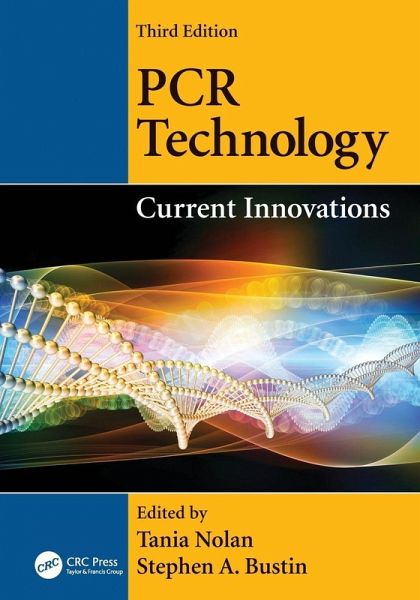
A huge amount of innovation surrounds PCR as a molecular technique, as researchers continually think of new ways to tweak, adapt, and re-formulate concepts and applications. This volume provides a critical reference point for anyone wishing to use this technology. Topics include the purification and handling of PCR templates, the effect of the manufacture and purification of the oligonucleotide on PCR behavior, optimum buffer composition, probe options, and the design and optimization of qPCR assays. The book also explores the development and refinement of instrumentation and effective…mehr
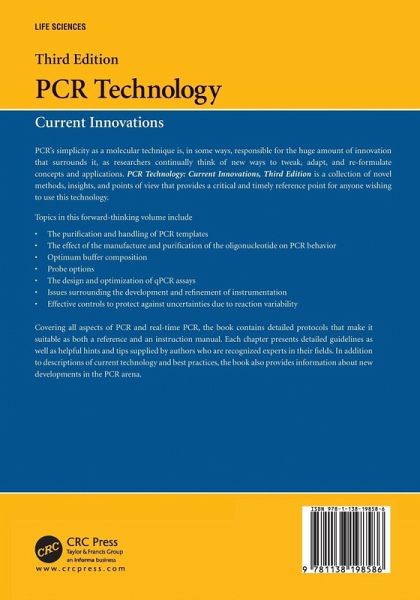
A huge amount of innovation surrounds PCR as a molecular technique, as researchers continually think of new ways to tweak, adapt, and re-formulate concepts and applications. This volume provides a critical reference point for anyone wishing to use this technology. Topics include the purification and handling of PCR templates, the effect of the manufacture and purification of the oligonucleotide on PCR behavior, optimum buffer composition, probe options, and the design and optimization of qPCR assays. The book also explores the development and refinement of instrumentation and effective controls to protect against uncertainties due to reaction variability.
Dr. Tania Nolan is an internationally recognized molecular biologist with a reputation for expertise in the field of mRNA quantification using RT-qPCR. She was a significant coauthor of the specialist textbook The A-Z of Quantitative PCR along with numerous other book chapters and peer-reviewed papers. She has presented several plenary lectures and chaired sessions at major international qPCR meetings. Stephen A. Bustin, BS(Mod) PhD FSB acquired his first qPCR instrument in 1997 and has published numerous peer-reviewed papers that describe and use this technology. He wrote and edited the A-Z of Quantitative PCR, universally acknowledged as the "qPCR Bible," edited The PCR Revolution, and has written a series of Definitive qPCR ebooks. He also led the international consortium that drew up the MIQE guidelines.
Inhaltsangabe
Template Preparation. Pre-PCR Processing Strategies. Use of a Liposomal Internal Control Vehicle for Whole-Process Quality Assurance of Nucleic Acid Amplification. Reaction Components. Oligonucleotide Synthesis and Purification. Augmenting PCR: Effects of Additives in the Polymerase Chain Reaction. Real-Time Fluorescent PCR by Labeled Primer with a Single Fluorescent Molecule. Using Scorpion Primers for Genotyping. LNA: Adding New Functionality to PCR. Modified dNTPs: A Toolbox for Use in PCR. Instruments. Thermocycler Calibration and Analytical Assay Validation. Ultra-High-Speed PCR Instrument Development. Dropletization of Bioreactions: How Single-Cell Quantitative Analyses May Improve Gene Measurement and Cancer Diagnosis. Design, Optimization, QC, and Standardization. Assay Design for Real-Time qPCR. Primer Design for Large-Scale Multiplex PCR and Arrayed Primer Extension. Development and Use of qPCR Assays for Detection and Study of Neglected Tropical and Emerging Infectious Diseases. MIQE: Guidelines for Reliable Design and Transparent Reporting of Real-Time PCR Assays. Data Analysis. Hypothesis-Driven Approaches to Multivariate Analysis of qPCR Data. Experiment Design, Data Management, and Univariate Statistical Analysis of Gene-Expression Data Obtained by Real-Time Quantitative PCR. Biomarker Discovery via RT-qPCR and Bioinformatical Validation. Optimization of Quantitative Real-Time PCR for Studies in Cartilage Mechanobiology. Applications. Enriching DNA Sequences with Nucleotide Variation by Thymidine Glycosylases Combined with Suppression PCR. Chromosome Walking by Inverse PCR. Expression Profiling of MicroRNAs by Quantitative Real-Time PCR: The Good, the Bad, and the Ugly. Dye-Based High-Throughput qPCR in Microfluidic Platform BioMark(TM). Surface Plasmon Resonance-Based Biosensor Technology for Real-Time Detection of PCR Products. Current Innovations in the Development and Application of the qPCR in a Resource-Limited Setting. A Review of Isothermal Nucleic Acid Amplification Technologies. Proximity Ligation Assay for Protein Quantification. High-Resolution Melt Analysis. Index.
Template Preparation. Pre-PCR Processing Strategies. Use of a Liposomal Internal Control Vehicle for Whole-Process Quality Assurance of Nucleic Acid Amplification. Reaction Components. Oligonucleotide Synthesis and Purification. Augmenting PCR: Effects of Additives in the Polymerase Chain Reaction. Real-Time Fluorescent PCR by Labeled Primer with a Single Fluorescent Molecule. Using Scorpion Primers for Genotyping. LNA: Adding New Functionality to PCR. Modified dNTPs: A Toolbox for Use in PCR. Instruments. Thermocycler Calibration and Analytical Assay Validation. Ultra-High-Speed PCR Instrument Development. Dropletization of Bioreactions: How Single-Cell Quantitative Analyses May Improve Gene Measurement and Cancer Diagnosis. Design, Optimization, QC, and Standardization. Assay Design for Real-Time qPCR. Primer Design for Large-Scale Multiplex PCR and Arrayed Primer Extension. Development and Use of qPCR Assays for Detection and Study of Neglected Tropical and Emerging Infectious Diseases. MIQE: Guidelines for Reliable Design and Transparent Reporting of Real-Time PCR Assays. Data Analysis. Hypothesis-Driven Approaches to Multivariate Analysis of qPCR Data. Experiment Design, Data Management, and Univariate Statistical Analysis of Gene-Expression Data Obtained by Real-Time Quantitative PCR. Biomarker Discovery via RT-qPCR and Bioinformatical Validation. Optimization of Quantitative Real-Time PCR for Studies in Cartilage Mechanobiology. Applications. Enriching DNA Sequences with Nucleotide Variation by Thymidine Glycosylases Combined with Suppression PCR. Chromosome Walking by Inverse PCR. Expression Profiling of MicroRNAs by Quantitative Real-Time PCR: The Good, the Bad, and the Ugly. Dye-Based High-Throughput qPCR in Microfluidic Platform BioMark(TM). Surface Plasmon Resonance-Based Biosensor Technology for Real-Time Detection of PCR Products. Current Innovations in the Development and Application of the qPCR in a Resource-Limited Setting. A Review of Isothermal Nucleic Acid Amplification Technologies. Proximity Ligation Assay for Protein Quantification. High-Resolution Melt Analysis. Index.
Es gelten unsere Allgemeinen Geschäftsbedingungen: www.buecher.de/agb
Impressum
www.buecher.de ist ein Internetauftritt der buecher.de internetstores GmbH
Geschäftsführung: Monica Sawhney | Roland Kölbl | Günter Hilger
Sitz der Gesellschaft: Batheyer Straße 115 - 117, 58099 Hagen
Postanschrift: Bürgermeister-Wegele-Str. 12, 86167 Augsburg
Amtsgericht Hagen HRB 13257
Steuernummer: 321/5800/1497
USt-IdNr: DE450055826