
Andere Kunden interessierten sich auch für
 Cultural mobility at the University of Music and Performing Arts Graz33,99 €
 Performing the Gendered Self in Intercultural Communication21,60 €
 The Performing Arts80,99 €
 A Study on the Usage of Internet by Working Women of Vadodara City for Performing Their Household Responsibilities49,99 €
 Inhabiting Ustopia: Science Fiction in Film, Performing Arts, and Digital Media115,99 €
 The Courage of Hopelessness9,99 €
 Performing Craft in Mexico119,99 €


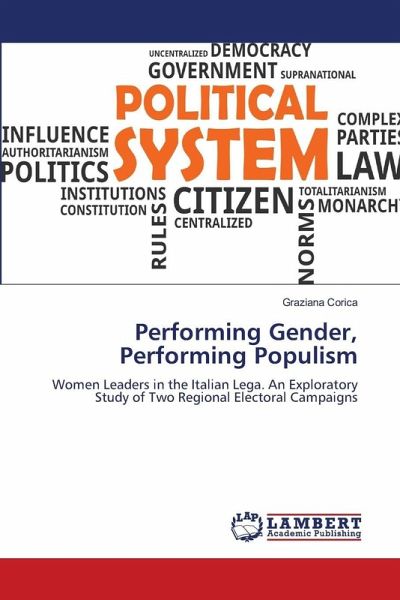
This book explores the intersection of gender, political representation, and regional governance within populist radical right (PRR) parties in Italy. It examines how PRR parties construct gendered narratives to shape political identities, mobilise support, and influence social policies at the subnational level. Focusing on the regional electoral campaigns and leadership styles of two prominent Lega politicians, Lucia Borgonzoni and Susanna Ceccardi, the study reveals the dual role of women as both political actors and symbolic figures within PRR discourse. Drawing on extensive fieldwork and qualitative content analysis, the book uncovers the complex and sometimes contradictory ways in which gender is mobilised in regional populist politics. By centring on regional case studies, it offers fresh insights into the gendered dynamics of populism, contributing to broader debates on gender, right-wing politics, and decentralised governance. This work is particularly relevant in the current European context, where PRR parties are gaining influence and subnational arenas are becoming key battlegrounds over gender, identity, and social policy.