

Andere Kunden interessierten sich auch für
 Performing Corporate Bodies123,99 €
 Independent Performing Arts in Europe38,99 €
 Performing for the Don41,99 €
 Black Activists Write Wheatley and Washington137,99 €
 Dressaged Animality123,99 €
 Politics as Public Art35,99 €
 Theatre and Human Rights137,99 €



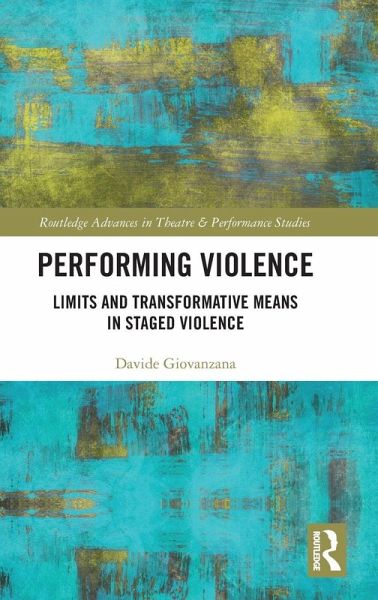
This book offers an exhaustive approach to all forms of staged violence and an in-depth analysis of their emergence and repercussions (dramaturgically and physically).
This study explores instruments to surpass the dichotomic opposition victim-oppressor, to demystify the spell of violence, and to get rid of the morbid voyeurism often connected to staged violence, and eventually, it proposes transformative tools to explore empowering experiences through violence. Considering all the aspects of a theatre performance engaging with staged violence (the story displaying violence, the actors' embodiment of violence, the spectators' experiences of being exposed to violence, and the process of performing violence), this book proposes analytical and practical tools to explore the limit and to transform the experience of performing violence.
This book will be of great interest to students and scholars in theatre and performance studies.
The Open Access version of this book, available at http://www.taylorfrancis.com, has been made available under a Creative Commons [Attribution-Non Commercial-No Derivatives (CC BY-NC-ND)] 4.0 license.
This study explores instruments to surpass the dichotomic opposition victim-oppressor, to demystify the spell of violence, and to get rid of the morbid voyeurism often connected to staged violence, and eventually, it proposes transformative tools to explore empowering experiences through violence. Considering all the aspects of a theatre performance engaging with staged violence (the story displaying violence, the actors' embodiment of violence, the spectators' experiences of being exposed to violence, and the process of performing violence), this book proposes analytical and practical tools to explore the limit and to transform the experience of performing violence.
This book will be of great interest to students and scholars in theatre and performance studies.
The Open Access version of this book, available at http://www.taylorfrancis.com, has been made available under a Creative Commons [Attribution-Non Commercial-No Derivatives (CC BY-NC-ND)] 4.0 license.
Davide Giovanzana's work at the crossroads of theater practice and theory has for more than two decades pushed for a new understanding of not just the performing arts and their research, but of excess and ethics in general. Performing Violence [work title] is a highly recommendable read for scholars and practitioners in all arts, without forgetting philosophers, who might find interest in Giovanzana's novel way of reflecting on philosophical questions through experimental theater practice. Central for both traditional and digital theater, violence forces the audience to engage with the performance both psychologically and somatically. The topic might be a perennial one, but Giovanzana's hand-on methods of dealing with it provide new solid results, especially helpful for the practitioner.
Max Ryynänen, Principal Lecturer, Aalto University, Department of Art and Media
Max Ryynänen, Principal Lecturer, Aalto University, Department of Art and Media