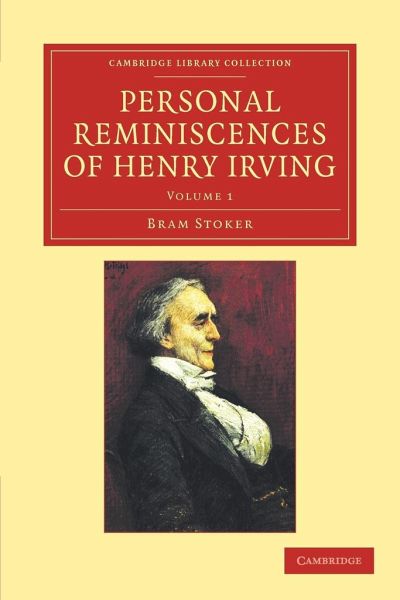
The greatest actor of his day, Sir Henry Irving (1838-1905) thrilled audiences with his tragedy and melodrama, his Hamlet and Richard III, most famously at the Lyceum Theatre in London. Born John Henry Brodribb, he took the name Irving for his first professional stage appearance in 1856. A long and exhausting apprenticeship followed, during which he played some 700 roles in theatres up and down the country before establishing his reputation in 1871 in the psychological thriller The Bells. In 1878, he took over the Lyceum and here, with his business manager Bram Stoker (1847-1912) and actress…mehr
The greatest actor of his day, Sir Henry Irving (1838-1905) thrilled audiences with his tragedy and melodrama, his Hamlet and Richard III, most famously at the Lyceum Theatre in London. Born John Henry Brodribb, he took the name Irving for his first professional stage appearance in 1856. A long and exhausting apprenticeship followed, during which he played some 700 roles in theatres up and down the country before establishing his reputation in 1871 in the psychological thriller The Bells. In 1878, he took over the Lyceum and here, with his business manager Bram Stoker (1847-1912) and actress Ellen Terry (rumoured to be his mistress), he became the theatrical icon of his age. This engaging two-volume tribute by Stoker, his closest friend, was first published in 1906. Volume 1 includes reminiscences of Irving's Shakespeare, performances of The Bells, Faust and Tennyson's plays, Ellen Terry's acting and his appearances in America.
"Bram Stoker, born in Dublin in 1847, overcame a childhood illness to become an accomplished athlete and scholar at Trinity College. His career took a pivotal turn when he became the personal assistant to the famous actor Sir Henry Irving and managed London's Lyceum Theatre for 27 years, immersing himself in high society. While best known for his 1897 novel Dracula, Stoker wrote several other works of gothic fiction. Dracula, in particular, drew on his fascination with folklore and became an iconic influence in vampire literature and popular culture.Stoker's life was shaped by his wide range of interests, including literature, theatre, and travel. His time managing the Lyceum Theatre gave him access to London's literary and artistic circles, where he met figures like Sir Arthur Conan Doyle and Walt Whitman. His travels to places like Whitby, England, and Cruden Bay, Scotland, helped inspire the eerie settings in Dracula. Although he never visited Eastern Europe, Stoker's extensive research into its folklore gave his most famous work a haunting authenticity.In his later years, Stoker faced declining health and financial struggles, yet he remained productive until his death in 1912. Dracula was not initially recognized as a literary masterpiece but has since become one of the most influential horror novels ever written, cementing Stoker's place in literary history. His unique blend of gothic horror, folklore, and Victorian anxieties continues to captivate readers and inspire adaptations across all forms of media."
Inhaltsangabe
Preface 1. Earliest recollections of Henry Irving 2. The old school and the new 3. Friendship 4. Honours from Dublin university 5. Converging streams 6. Joining forces 7. The Lyceum productions 8. Irving begins management 9. Shakespeare plays - 1 10. Shakespeare plays - 2 11. Shakespeare plays - 3 12. Shakespeare plays - 4 13. Irving's method 14. Art-sense 15. Stage effects 16. The value of experiment 17. The pulse of the public 18. Tennyson and his plays - 1 19. Tennyson and his plays - 2 20. Tennyson and his plays - 3 21. Tennyson and his plays - 4 22. Waterloo - King Arthur - Don Quixote 23. Art and hazard 24. Vandenhoff 25. Charles Matthews 26. Charles Dickens and Henry Irving 27. Mr J. M. Levy 28. Visits to America 29. William Winter 30. Performance at West Point 31. American reporters 32. Tours-de-force 33. Christmas 34. Irving as a social force 35. Visits of foreign warships 36. Irving's last reception at the Lyceum 37. The voice of England 38. Rival towns 39. Two stories 40. Sir Richard Burton 41. Sir Henry Morton Stanley 42. Arminius Vambéry.
Preface 1. Earliest recollections of Henry Irving 2. The old school and the new 3. Friendship 4. Honours from Dublin university 5. Converging streams 6. Joining forces 7. The Lyceum productions 8. Irving begins management 9. Shakespeare plays - 1 10. Shakespeare plays - 2 11. Shakespeare plays - 3 12. Shakespeare plays - 4 13. Irving's method 14. Art-sense 15. Stage effects 16. The value of experiment 17. The pulse of the public 18. Tennyson and his plays - 1 19. Tennyson and his plays - 2 20. Tennyson and his plays - 3 21. Tennyson and his plays - 4 22. Waterloo - King Arthur - Don Quixote 23. Art and hazard 24. Vandenhoff 25. Charles Matthews 26. Charles Dickens and Henry Irving 27. Mr J. M. Levy 28. Visits to America 29. William Winter 30. Performance at West Point 31. American reporters 32. Tours-de-force 33. Christmas 34. Irving as a social force 35. Visits of foreign warships 36. Irving's last reception at the Lyceum 37. The voice of England 38. Rival towns 39. Two stories 40. Sir Richard Burton 41. Sir Henry Morton Stanley 42. Arminius Vambéry.
Es gelten unsere Allgemeinen Geschäftsbedingungen: www.buecher.de/agb
Impressum
www.buecher.de ist ein Internetauftritt der buecher.de internetstores GmbH
Geschäftsführung: Monica Sawhney | Roland Kölbl | Günter Hilger
Sitz der Gesellschaft: Batheyer Straße 115 - 117, 58099 Hagen
Postanschrift: Bürgermeister-Wegele-Str. 12, 86167 Augsburg
Amtsgericht Hagen HRB 13257
Steuernummer: 321/5800/1497
USt-IdNr: DE450055826