
Andere Kunden interessierten sich auch für
 Besteuerung von Erdöl54,90 €
 Tassazione del petrolio36,99 €
 Tributação do Petróleo36,99 €
 Analysis of Legal Regulation of Mining Tax in the Russian Federation26,99 €
 African Tax Treaties Encourage Dependence Tax Evasions in Africa41,99 €
 Taxation of non-residents in South Africa24,99 €
 VAT Credits Management36,99 €
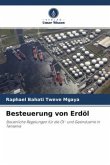
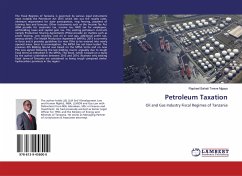
The Fiscal Regimes of Tanzania is governed by various legal instruments most notably the Petroleum Act 2015 which sets out the royalty rates, minimum requirement for state participation, ring fencing, payment of training fees and bonuses. Other instruments such as the Income Tax Act 2004 provide for corporate tax, income tax, PAYE tax for employees, withholding taxes and capital gain tax. The existing petroleum contracts namely Production Sharing Agreements (PSAs) provide on matters such as profit sharing, cost recovery, cost oil or cost gas, additional profit tax, among others. The Model Production Agreement (MPSA), 2013 is currently in force and it provides guidelines for new PSAs to be entered into newly opened areas. Since its promulgation, the MPSA has not been tested. The previous 4th Bidding Round was based on the MPSA terms and no new PSA was signed following the last bidding round, arguably due to tough fiscal terms as embodied in the MPSA. This book, which is based on astudy by the author undertaken between 2013 and 2014, illustrate why existing fiscal terms of Tanzania are considered as being tough compared similar hydrocarbon provinces in the region