
Pharmacology of Plants and Plant Derived Biologically Active Molecules
Herausgeber: Chaurasia, Pankaj Kumar; Singh, Sunita; Bharati, Shashi Lata
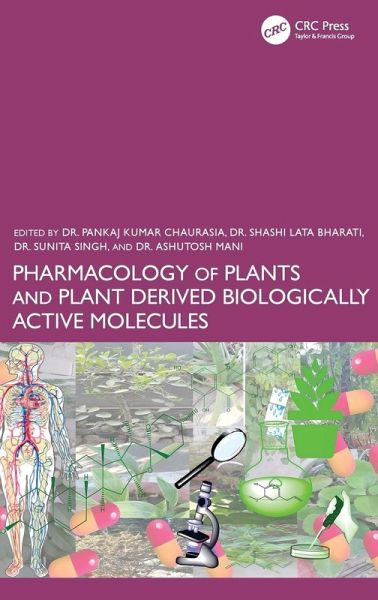
Pharmacology of Plants and Plant Derived Biologically Active Molecules
Herausgeber: Chaurasia, Pankaj Kumar; Singh, Sunita; Bharati, Shashi Lata
- Gebundenes Buch
- Merkliste
- Auf die Merkliste
- Bewerten Bewerten
- Teilen
- Produkt teilen
- Produkterinnerung
- Produkterinnerung
This book delves into the interesting world of phytochemicals and their therapeutic applications. It explores the journey from traditional medicine practices such as Ayurveda to modern scientific understanding, providing a comprehensive analyses of the chemistry, pharmacology, and therapeutic potential of plant-derived compounds.
Andere Kunden interessierten sich auch für
 Hany A. ElazabMethylene Blue Removal using Water Hyacinth Derived Active Carbon27,99 €
 Patrick Bernier / Serge Lefrant / Ralph Setton (eds.)Carbon Molecules and Materials268,99 €
 Bridgid Lai Fui ChinBiomass Derived Syngas Cleaning Technologies34,99 €
 Rashid ShowkatTotal Synthesis of Natural & Imagined Molecules26,99 €
 Camillo FalcoBiomass-derived hydrothermal carbons for energy applications37,99 €
 Gennadiy Vladimirovich ZhizhinChemical Compound Structures and the Higher Dimension of Molecules175,99 €
 Sunetra DherePhysico-chemical properties of sol-gel derived glass coatings47,99 €
-
-
-


This book delves into the interesting world of phytochemicals and their therapeutic applications. It explores the journey from traditional medicine practices such as Ayurveda to modern scientific understanding, providing a comprehensive analyses of the chemistry, pharmacology, and therapeutic potential of plant-derived compounds.
Produktdetails
- Produktdetails
- Verlag: Taylor & Francis Ltd
- Seitenzahl: 464
- Erscheinungstermin: 3. November 2025
- Englisch
- Abmessung: 240mm x 161mm x 29mm
- Gewicht: 806g
- ISBN-13: 9781032908045
- ISBN-10: 1032908041
- Artikelnr.: 73872979
- Herstellerkennzeichnung
- Libri GmbH
- Europaallee 1
- 36244 Bad Hersfeld
- gpsr@libri.de
- Verlag: Taylor & Francis Ltd
- Seitenzahl: 464
- Erscheinungstermin: 3. November 2025
- Englisch
- Abmessung: 240mm x 161mm x 29mm
- Gewicht: 806g
- ISBN-13: 9781032908045
- ISBN-10: 1032908041
- Artikelnr.: 73872979
- Herstellerkennzeichnung
- Libri GmbH
- Europaallee 1
- 36244 Bad Hersfeld
- gpsr@libri.de
Dr. Pankaj Kumar Chaurasia, Ph.D., is an Assistant Professor in the PG Department of Chemistry, L.S. College, B.R. Ambedkar Bihar University, Muzaffarpur. He has experience of more than 7 years in teaching at postgraduate and undergraduate levels. He has a good academic and research career. He qualified in the National Eligibility Test in 2009 as CSIR-JRF (NET) and was awarded SRF-NET in 2012. He earned his Ph.D. in chemistry. He also worked as Guest Faculty (2016-2017) in the Department of Chemistry, University of Allahabad, Prayagraj (a central university of India). He was awarded a Research Associateship by CSIR-New Delhi (India) in 2017 and worked as CSIR-RA in Motilal Nehru NIT, Allahabad/Prayagraaj, India. In his research career, he has more than 80 publications including more than 50 journal publications, 25 book chapters, and nine books, and many of the publications are under pipeline. He has guided one Ph.D. student and is also guiding three Ph.D. research scholars. He has worked in different areas of chemistry and has research expertise in biological chemistry, biotechnology, microbiology, enzymology, organometallic chemistry, and environmental chemistry. Dr. Shashi Lata Bharati (she/her), Ph.D., is working as an Assistant Professor in the Department of Chemistry, North Eastern Regional Institute of Science and Technology, Nirjuli, Arunachal Pradesh, India. She has a good academic and research career. She was awarded the UGC-DSA Fellowship for meritorious students during her Ph.D. program. She obtained her Ph.D. degree in chemistry. She was awarded the UGC Post Doctoral Fellowship for Women in 2013 by UGC New Delhi and worked as a Postdoctoral Fellow in the Department of Chemistry, DDU Gorakhpur University, Gorakhpur, India. She has published more than 55 publications and eight edited books with national and international journals/publishers of repute. She has guided many M.Sc. project students and one Ph.D. research scholar. She has expertise in the field of inorganic chemistry, organometallic chemistry, biological chemistry, and enzymology. Dr. Sunita Singh has been an Assistant Professor of Chemistry at the Navyug Kanya Mahavidyalaya, University of Lucknow, since 2019. She pursued her Ph.D. in the year 2015 on the topic 'Chemistry, antioxidant and antimicrobial activities of essential oils and oleoresins of spices' from DDU Gorakhpur University, Gorakhpur. She has been awarded Junior Research and Senior Research fellowships from the University Grant Commission. She also worked as a Research Assistant (2010-2011) on the project sponsored by CST 'Chemistry, Antioxidant and Antimicrobial activities of Oleoresins extracted from Cardamom, Black pepper and Caraway'. Her work was mainly focused on quantitative and qualitative analyses of essential oils and oleoresins of spices, namely Piper nigrum, Nigella sativa, Mentha longifolia, Anethum graveolans, Brassica juncea, and Sinapis alba. Chemistry, antioxidant, and antimicrobial efficacies of essential oil and oleoresins were investigated using different techniques. She has published 38 research articles in journals of national and international repute. She has authored and coauthored nine book chapters with national and international publishing houses. She has edited books with reputed publishers like Bentham, Nova, and CRC press. She is also on the reviewer board of journals, namely Advances in Clinical Toxicology, MOJ Food Process & Technology, and Pharmaceutical Drug Regulatory Affairs Journal. She has attended a total of 30 conferences and webinars of national and international repute and delivered more than 15 Invited talks and oral presentations. She has presented her work at various global events. She is also an active member of the Association of Chemistry Teachers (India), International Clinical Aromatherapy Network, and Global Harmonization Initiative. Dr Ashutosh Mani earned his M.Sc. and Ph.D. in Bioinformatics from the University of Allahabad, India. He worked as a Visiting Fellow at the School of Life Sciences, Jawaharlal Nehru University, New Delhi, India to complete some part of his Ph.D. work. He joined as an MIUR fellow at the University of Cagliari, Italy, and is currently an Associate Professor in the Department of Biotechnology, Motilal Nehru National Institute of Technology, Allahabad, India. He has more than 12 years of teaching and research experience in the field of molecular and structural biology, genomics, proteomics, and computational biology. His area of interest includes herbal drug discovery against cancer, Alzheimer's disease, diabetes, and plant stress tolerance. Apart from editing two books, Dr. Mani has published more than 50 articles in national and international journals of repute. He has supervised eight Ph.D. students and several undergraduate and postgraduate students. He has completed six sponsored research projects and has received research grants from funding agencies like DST, SERB, CSTUP, and DBT. He has organized several international conferences and workshops in the area of biotechnology. He is a guest editor and a reviewer of various international journals in the area of life sciences. He has reviewed research project proposals for leading funding agencies.
Preface About the editors List of contributors Chapter 1: Chemistry of
phytochemicals and their extractions from the medicinal plants: Advances
and future aspects Chapter 2: Pharmacological effects of medicinal herbs:
Recent development and progress Chapter 3: Plant-derived polyphenolic
compounds: Therapeutic applications and challenges Chapter 4:
Macromolecules of plant origin and their pharmacological
activities/applications: Current status, developments, and future Chapter
5: Recent advances on small-size 'biomolecules' like 'primary' and
'secondary metabolites' and their pharmacological impacts Chapter 6:
Plant-derived alkaloids and terpenoids and their therapeutic potential
Chapter 7: Structure-activity relationship of medicinally functional
biomolecules: Scope and future applicability Chapter 8: Plants extract
versus natural therapy: Advances, challenges and future Chapter 9:
Anticancer molecules from plants and their applicability Chapter 10:
Chemistry and pharmacology of antidiabetic herbs/herbal extract Chapter 11:
Plant-based molecules with antioxidant activities: Detailed chemistry and
pharmacology Chapter 12: Hypocholesterolemic herbs or herbal extracts and
their chemistry: An insight view Chapter 13: Herbal medicines with
allopathic: Research developments, challenges and future prospectus
Chapter 14: Plants in "Homeopathy" as well as "Ayurveda" Chapter 15:
Plant-based remedies in obesity treatment: A holistic approach to
sustainable weight loss and wellness Chapter 16: Herbal formulation for
ocular disease: Integrating traditional medicine with modern ocular care
Chapter 17: Computational and AI approach in phytochemistry and
plant-associated drug-designing Chapter 18: Potential anticancer
biomolecules of the family simaroubaceae: A comprehensive review Chapter
19: Dose dependent studies of medicinal extracts Chapter 20: Naturally
derived antimicrobial agents in food packaging material Chapter 21: Herbal
remedies for ulcers: insights into chemistry and pharmacological effects
Chapter 22: Case studies on herbal extracts and their pharmaceutically
active molecules Index
phytochemicals and their extractions from the medicinal plants: Advances
and future aspects Chapter 2: Pharmacological effects of medicinal herbs:
Recent development and progress Chapter 3: Plant-derived polyphenolic
compounds: Therapeutic applications and challenges Chapter 4:
Macromolecules of plant origin and their pharmacological
activities/applications: Current status, developments, and future Chapter
5: Recent advances on small-size 'biomolecules' like 'primary' and
'secondary metabolites' and their pharmacological impacts Chapter 6:
Plant-derived alkaloids and terpenoids and their therapeutic potential
Chapter 7: Structure-activity relationship of medicinally functional
biomolecules: Scope and future applicability Chapter 8: Plants extract
versus natural therapy: Advances, challenges and future Chapter 9:
Anticancer molecules from plants and their applicability Chapter 10:
Chemistry and pharmacology of antidiabetic herbs/herbal extract Chapter 11:
Plant-based molecules with antioxidant activities: Detailed chemistry and
pharmacology Chapter 12: Hypocholesterolemic herbs or herbal extracts and
their chemistry: An insight view Chapter 13: Herbal medicines with
allopathic: Research developments, challenges and future prospectus
Chapter 14: Plants in "Homeopathy" as well as "Ayurveda" Chapter 15:
Plant-based remedies in obesity treatment: A holistic approach to
sustainable weight loss and wellness Chapter 16: Herbal formulation for
ocular disease: Integrating traditional medicine with modern ocular care
Chapter 17: Computational and AI approach in phytochemistry and
plant-associated drug-designing Chapter 18: Potential anticancer
biomolecules of the family simaroubaceae: A comprehensive review Chapter
19: Dose dependent studies of medicinal extracts Chapter 20: Naturally
derived antimicrobial agents in food packaging material Chapter 21: Herbal
remedies for ulcers: insights into chemistry and pharmacological effects
Chapter 22: Case studies on herbal extracts and their pharmaceutically
active molecules Index
Preface About the editors List of contributors Chapter 1: Chemistry of
phytochemicals and their extractions from the medicinal plants: Advances
and future aspects Chapter 2: Pharmacological effects of medicinal herbs:
Recent development and progress Chapter 3: Plant-derived polyphenolic
compounds: Therapeutic applications and challenges Chapter 4:
Macromolecules of plant origin and their pharmacological
activities/applications: Current status, developments, and future Chapter
5: Recent advances on small-size 'biomolecules' like 'primary' and
'secondary metabolites' and their pharmacological impacts Chapter 6:
Plant-derived alkaloids and terpenoids and their therapeutic potential
Chapter 7: Structure-activity relationship of medicinally functional
biomolecules: Scope and future applicability Chapter 8: Plants extract
versus natural therapy: Advances, challenges and future Chapter 9:
Anticancer molecules from plants and their applicability Chapter 10:
Chemistry and pharmacology of antidiabetic herbs/herbal extract Chapter 11:
Plant-based molecules with antioxidant activities: Detailed chemistry and
pharmacology Chapter 12: Hypocholesterolemic herbs or herbal extracts and
their chemistry: An insight view Chapter 13: Herbal medicines with
allopathic: Research developments, challenges and future prospectus
Chapter 14: Plants in "Homeopathy" as well as "Ayurveda" Chapter 15:
Plant-based remedies in obesity treatment: A holistic approach to
sustainable weight loss and wellness Chapter 16: Herbal formulation for
ocular disease: Integrating traditional medicine with modern ocular care
Chapter 17: Computational and AI approach in phytochemistry and
plant-associated drug-designing Chapter 18: Potential anticancer
biomolecules of the family simaroubaceae: A comprehensive review Chapter
19: Dose dependent studies of medicinal extracts Chapter 20: Naturally
derived antimicrobial agents in food packaging material Chapter 21: Herbal
remedies for ulcers: insights into chemistry and pharmacological effects
Chapter 22: Case studies on herbal extracts and their pharmaceutically
active molecules Index
phytochemicals and their extractions from the medicinal plants: Advances
and future aspects Chapter 2: Pharmacological effects of medicinal herbs:
Recent development and progress Chapter 3: Plant-derived polyphenolic
compounds: Therapeutic applications and challenges Chapter 4:
Macromolecules of plant origin and their pharmacological
activities/applications: Current status, developments, and future Chapter
5: Recent advances on small-size 'biomolecules' like 'primary' and
'secondary metabolites' and their pharmacological impacts Chapter 6:
Plant-derived alkaloids and terpenoids and their therapeutic potential
Chapter 7: Structure-activity relationship of medicinally functional
biomolecules: Scope and future applicability Chapter 8: Plants extract
versus natural therapy: Advances, challenges and future Chapter 9:
Anticancer molecules from plants and their applicability Chapter 10:
Chemistry and pharmacology of antidiabetic herbs/herbal extract Chapter 11:
Plant-based molecules with antioxidant activities: Detailed chemistry and
pharmacology Chapter 12: Hypocholesterolemic herbs or herbal extracts and
their chemistry: An insight view Chapter 13: Herbal medicines with
allopathic: Research developments, challenges and future prospectus
Chapter 14: Plants in "Homeopathy" as well as "Ayurveda" Chapter 15:
Plant-based remedies in obesity treatment: A holistic approach to
sustainable weight loss and wellness Chapter 16: Herbal formulation for
ocular disease: Integrating traditional medicine with modern ocular care
Chapter 17: Computational and AI approach in phytochemistry and
plant-associated drug-designing Chapter 18: Potential anticancer
biomolecules of the family simaroubaceae: A comprehensive review Chapter
19: Dose dependent studies of medicinal extracts Chapter 20: Naturally
derived antimicrobial agents in food packaging material Chapter 21: Herbal
remedies for ulcers: insights into chemistry and pharmacological effects
Chapter 22: Case studies on herbal extracts and their pharmaceutically
active molecules Index