
Andere Kunden interessierten sich auch für
 Pustulose exanthématique aigue généralisée29,99 €
 Cours de Formation Médicale Continue en Pharmacologie Clinique 746,99 €
 Cours de Formation Medicale Continue en Pharmacologie Clinique 346,99 €
 Administration de la sulfadoxine-pyriméthamine lors de la prévention du paludisme saisonnier26,99 €
 La Pharmacovigilance et ses enjeux39,99 €
 Sildénafil et lien possible avec le mélanome26,99 €
 Pharmacovigilance chez la femme enceinte: aspects maternel et néonatal62,99 €



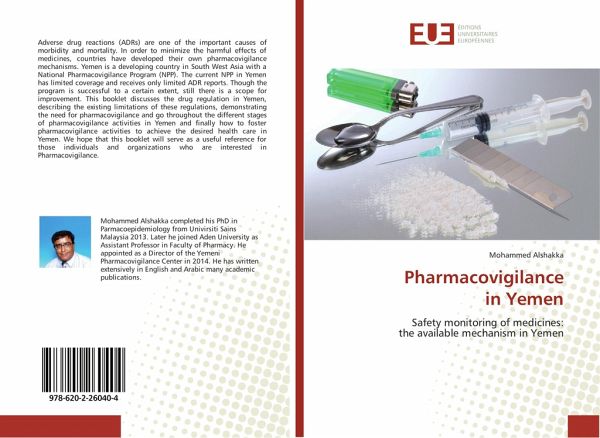
Adverse drug reactions (ADRs) are one of the important causes of morbidity and mortality. In order to minimize the harmful effects of medicines, countries have developed their own pharmacovigilance mechanisms. Yemen is a developing country in South West Asia with a National Pharmacovigilance Program (NPP). The current NPP in Yemen has limited coverage and receives only limited ADR reports. Though the program is successful to a certain extent, still there is a scope for improvement. This booklet discusses the drug regulation in Yemen, describing the existing limitations of these regulations, demonstrating the need for pharmacovigilance and go throughout the different stages of pharmacovigilance activities in Yemen and finally how to foster pharmacovigilance activities to achieve the desired health care in Yemen. We hope that this booklet will serve as a useful reference for those individuals and organizations who are interested in Pharmacovigilance.