
Andere Kunden interessierten sich auch für
 Study of the phenolic fraction of the pistils of olive flowers30,99 €
") The forgotten treasures (quinoa plant)55,99 €
The forgotten treasures (quinoa plant)55,99 € THE MICROALGAE OF THE LAKE OF SIDI MOHAMED BENALI29,99 €
 Bioactive Phenolic Compounds and Flavonoids: Sources and Benefits34,99 €
 Sheep parasites in southern Algeria - the case of Laghouat40,99 €
 Effect of phenolic compounds on NET's production29,99 €
 Effect of olive oil phenolic in experimental diabetes mellitus24,99 €



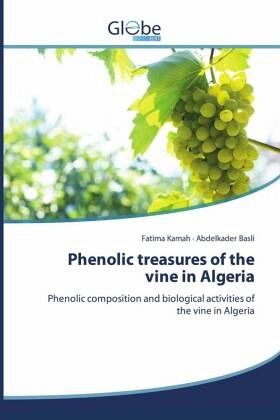
One of the most widely cultivated crops in the world is grapevine knowing that about 77.8 million tons of grapes are produced worldwide each year with around 10,000 varieties in the world. Both of vine growing, pruning and winemaking generate a vast quantity of wastes and byproducts such as skin, seeds, and canes. The aim of the present work is the evaluation of phytochemical composition and in vitro biological activities, of four Algerian grape cane and seed cultivars (Fragola Nera from the hybrid Vitis vinifera-Vitis labrusca, and Cardinal, Red glob, Gros noir, and Sabel from Vitis vinifera). Three different classes of phenolic compounds were detected: flavonoids, phenolic acids, and stilbenes, with flavonoid being the major class quantified followed by phenolic acid and stilbenes in all the extracts. Significant antioxidant and enzymatic activity were detected against all the studied enzymes. All extracts showed a moderate anti-inflammatory activity, given a high sun protection factor, and exhibiting potent antimicrobial activity. These findings imply that grape canes and seeds have a significant potential to be used in pharmaceutical industry.