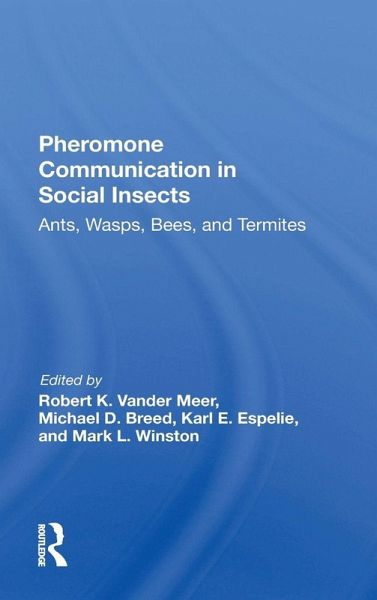
Bringing together for the first time prominent researchers in social insect pheromone communication, including nestmate recognition, this book looks at ants, wasps, bees, and termites, highlighting areas of convergence and divergence among these groups, and identifying areas that need further investigation.
Bringing together for the first time prominent researchers in social insect pheromone communication, including nestmate recognition, this book looks at ants, wasps, bees, and termites, highlighting areas of convergence and divergence among these groups, and identifying areas that need further investigation.
Robert K. Vander Meer is a research chemist with the USDA/ARS. Michael D. Breed is professor of environmental population and organismic biology at the University of Colorado at Boulder. Mark L. Winston is professor of biological sciences at Simon Fraser University. Karl E. Espelie is professor of entomology at the University of Georgia at Athens. Robert K. Vander Meer is a research chemist with the USDA/ARS. Michael D. Breed is professor of environmental population and organismic biology at the University of Colorado at Boulder. Mark L. Winston is professor of biological sciences at Simon Fraser University. Karl E. Espelie is professor of entomology at the University of Georgia at Athens. Robert K. Vander Meer is a research chemist with the USDA/ARS. Michael D. Breed is professor of environmental population and organismic biology at the University of Colorado at Boulder. Mark L. Winston is professor of biological sciences at Simon Fraser University. Karl E. Espelie is professor of entomology at the University of Georgia at Athens. Robert K. Vander Meer is a research chemist with the USDA/ARS. Michael D. Breed is professor of environmental population and organismic biology at the University of Colorado at Boulder. Mark L. Winston is professor of biological sciences at Simon Fraser University. Karl E. Espelie is professor of entomology at the University of Georgia at Athens.
Inhaltsangabe
Foreword Preface Introduction: Sources and Secretions Pheromone Communication in Social Insects: Sources and Secretions The Cuticle and Cuticular Hydrocarbons of Insects: Structure, Function, and Biochemistry Nestmate Recognition in Social Insects Chemical Cues in Kin Recognition: Criteria for Identification, Experimental Approaches, and the Honey Bee as an Example Nestmate Recognition in Ants Nest and Nestmate Discrimination in Independent Founding Paper Wasps Nestmate Recognition in Termites Social Insect Releaser Pheromones Pheromone Directed Behavior in Ants Releaser Pheromones in Termites Chemical Communication in Social Wasps Exocrine Glands and Their Products in Non Apis Bees: Chemical, Functional and Evolutionary Perspectives Mass Action in Honey Bees: Alarm, Swarming and the Role of Releaser Pheromones Social Insect Primer Pheromones Primer Pheromones in Ants Primer Pheromones and Possible Soldier Caste Influence on the Evolution of Sociality in Lower Termites Royal Flavors: Honey Bee Queen Pheromones
Foreword -- Preface -- Introduction: Sources and Secretions -- Pheromone Communication in Social Insects: Sources and Secretions -- The Cuticle and Cuticular Hydrocarbons of Insects: Structure, Function, and Biochemistry -- Nestmate Recognition in Social Insects -- Chemical Cues in Kin Recognition: Criteria for Identification, Experimental Approaches, and the Honey Bee as an Example -- Nestmate Recognition in Ants -- Nest and Nestmate Discrimination in Independent-Founding Paper Wasps -- Nestmate Recognition in Termites -- Social Insect Releaser Pheromones -- Pheromone Directed Behavior in Ants -- Releaser Pheromones in Termites -- Chemical Communication in Social Wasps -- Exocrine Glands and Their Products in Non-Apis Bees: Chemical, Functional and Evolutionary Perspectives -- Mass Action in Honey Bees: Alarm, Swarming and the Role of Releaser Pheromones -- Social Insect Primer Pheromones -- Primer Pheromones in Ants -- Primer Pheromones and Possible Soldier Caste Influence on the Evolution of Sociality in Lower Termites -- Royal Flavors: Honey Bee Queen Pheromones
Foreword Preface Introduction: Sources and Secretions Pheromone Communication in Social Insects: Sources and Secretions The Cuticle and Cuticular Hydrocarbons of Insects: Structure, Function, and Biochemistry Nestmate Recognition in Social Insects Chemical Cues in Kin Recognition: Criteria for Identification, Experimental Approaches, and the Honey Bee as an Example Nestmate Recognition in Ants Nest and Nestmate Discrimination in Independent Founding Paper Wasps Nestmate Recognition in Termites Social Insect Releaser Pheromones Pheromone Directed Behavior in Ants Releaser Pheromones in Termites Chemical Communication in Social Wasps Exocrine Glands and Their Products in Non Apis Bees: Chemical, Functional and Evolutionary Perspectives Mass Action in Honey Bees: Alarm, Swarming and the Role of Releaser Pheromones Social Insect Primer Pheromones Primer Pheromones in Ants Primer Pheromones and Possible Soldier Caste Influence on the Evolution of Sociality in Lower Termites Royal Flavors: Honey Bee Queen Pheromones
Foreword -- Preface -- Introduction: Sources and Secretions -- Pheromone Communication in Social Insects: Sources and Secretions -- The Cuticle and Cuticular Hydrocarbons of Insects: Structure, Function, and Biochemistry -- Nestmate Recognition in Social Insects -- Chemical Cues in Kin Recognition: Criteria for Identification, Experimental Approaches, and the Honey Bee as an Example -- Nestmate Recognition in Ants -- Nest and Nestmate Discrimination in Independent-Founding Paper Wasps -- Nestmate Recognition in Termites -- Social Insect Releaser Pheromones -- Pheromone Directed Behavior in Ants -- Releaser Pheromones in Termites -- Chemical Communication in Social Wasps -- Exocrine Glands and Their Products in Non-Apis Bees: Chemical, Functional and Evolutionary Perspectives -- Mass Action in Honey Bees: Alarm, Swarming and the Role of Releaser Pheromones -- Social Insect Primer Pheromones -- Primer Pheromones in Ants -- Primer Pheromones and Possible Soldier Caste Influence on the Evolution of Sociality in Lower Termites -- Royal Flavors: Honey Bee Queen Pheromones
Es gelten unsere Allgemeinen Geschäftsbedingungen: www.buecher.de/agb
Impressum
www.buecher.de ist ein Internetauftritt der buecher.de internetstores GmbH
Geschäftsführung: Monica Sawhney | Roland Kölbl | Günter Hilger
Sitz der Gesellschaft: Batheyer Straße 115 - 117, 58099 Hagen
Postanschrift: Bürgermeister-Wegele-Str. 12, 86167 Augsburg
Amtsgericht Hagen HRB 13257
Steuernummer: 321/5800/1497
USt-IdNr: DE450055826