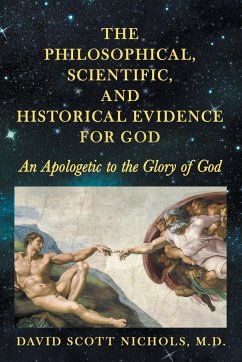
In A Philosophical, Scientific and Theological Defense for the Notion That a God Exists, Hal Flemings presents an overview of the history of the debate on the question of the existence of God. In an objective fashion, Flemings provides equal voice to opposing views while not hiding his own. He treats the problem of evil from a new perspective, which includes moral evil and natural evil (earthquakes, volcanic eruptions, forest fires, etc.) and discusses the relationship between God and the theoretical and factual sciences.
In A Philosophical, Scientific and Theological Defense for the Notion That a God Exists, Hal Flemings presents an overview of the history of the debate on the question of the existence of God. In an objective fashion, Flemings provides equal voice to opposing views while not hiding his own. He treats the problem of evil from a new perspective, which includes moral evil and natural evil (earthquakes, volcanic eruptions, forest fires, etc.) and discusses the relationship between God and the theoretical and factual sciences.
Hal Flemings, former Hebrew Language Instructor at Foundation College in San Diego, is an Insurance and Securities Instructor at the Pioneer School of Insurance.
Inhaltsangabe
Chapter 1 Preface Chapter 2 Acknowledgments Chapter 3 The Question of Relevance: What does "God" Mean? Logically Deduced God and Theologically Deduced God Why Be Concerned? Exploring the Possibility of an Interacting God The "Third Group" Chapter 4 Identifying Viewpoints: What Deists Have Argued What Theists Have Argued What Pantheists Have Argued What Atheists Have Argued What Agnostics Have Argued Chapter 5 A History of the Debate: A Survey from Ancient Times to 500 B.C.E. A Survey from 500 B.C.E. to 500 C.E. A Survey from 1500 C.E. to 1900 C.E. A Survey from 1900 C.E. to the Present Chapter 6 Distilling the Negative Arguments: The Problem of Contradictions The Problem of Evil and Suffering The Problem of Knowing the Unknown The Psychological Argument The Science Explicates and Thus God Vacates Argument Chapter 7 Distilling the Positive Arguments: The Cosmological Argument The Teleological Argument The Anthropological Argument The Ontological Argument The Scientific Argument Chapter 8 Deductions from Creation Pertaining to the Nature of God Chapter 9 Answers to the Atheists and Agnostics: The Ugly History of Religion Only A Priori Propositions are Logically Certain The Loving/Powerful God Controversy Does a Non-Material Being Actually Exist? Can Humans Comprehend God? If God Knows Everythin Chapter 10 A Second Look at the Problem of Evil and Suffering: The Socio-Psychological Response What about Natural Disasters? Theological Responses Chapter 11 The Non- Circular Argument for the Existence of God Using the Bible: Scientific Anticipations Historical Anticipations Chapter 12 Why Not the Other Holy Books?: A Question of Fairness Buddhist Sacred Literature Hindu Sacred Literature Science and Health The Quran Bahai Sacred Literature The Avesta Chapter 13 "Yesh Elohim" Chapter 14 Name Index Chapter 15 Subject Index
Chapter 1 Preface Chapter 2 Acknowledgments Chapter 3 The Question of Relevance: What does "God" Mean? Logically Deduced God and Theologically Deduced God Why Be Concerned? Exploring the Possibility of an Interacting God The "Third Group" Chapter 4 Identifying Viewpoints: What Deists Have Argued What Theists Have Argued What Pantheists Have Argued What Atheists Have Argued What Agnostics Have Argued Chapter 5 A History of the Debate: A Survey from Ancient Times to 500 B.C.E. A Survey from 500 B.C.E. to 500 C.E. A Survey from 1500 C.E. to 1900 C.E. A Survey from 1900 C.E. to the Present Chapter 6 Distilling the Negative Arguments: The Problem of Contradictions The Problem of Evil and Suffering The Problem of Knowing the Unknown The Psychological Argument The Science Explicates and Thus God Vacates Argument Chapter 7 Distilling the Positive Arguments: The Cosmological Argument The Teleological Argument The Anthropological Argument The Ontological Argument The Scientific Argument Chapter 8 Deductions from Creation Pertaining to the Nature of God Chapter 9 Answers to the Atheists and Agnostics: The Ugly History of Religion Only A Priori Propositions are Logically Certain The Loving/Powerful God Controversy Does a Non-Material Being Actually Exist? Can Humans Comprehend God? If God Knows Everythin Chapter 10 A Second Look at the Problem of Evil and Suffering: The Socio-Psychological Response What about Natural Disasters? Theological Responses Chapter 11 The Non- Circular Argument for the Existence of God Using the Bible: Scientific Anticipations Historical Anticipations Chapter 12 Why Not the Other Holy Books?: A Question of Fairness Buddhist Sacred Literature Hindu Sacred Literature Science and Health The Quran Bahai Sacred Literature The Avesta Chapter 13 "Yesh Elohim" Chapter 14 Name Index Chapter 15 Subject Index
Es gelten unsere Allgemeinen Geschäftsbedingungen: www.buecher.de/agb
Impressum
www.buecher.de ist ein Internetauftritt der buecher.de internetstores GmbH
Geschäftsführung: Monica Sawhney | Roland Kölbl | Günter Hilger
Sitz der Gesellschaft: Batheyer Straße 115 - 117, 58099 Hagen
Postanschrift: Bürgermeister-Wegele-Str. 12, 86167 Augsburg
Amtsgericht Hagen HRB 13257
Steuernummer: 321/5800/1497
USt-IdNr: DE450055826